
Published 2 April 2026 | Updated 2 April 2026
Technology
How Much Does It Cost to Develop a Voice Assistant App in 2026?
Voice technology has transformed the way people interact with digital devices. In 2026, voice assistant app development is no longer a luxury—it’s a necessity for businesses aiming to deliver seamless customer experiences. From smart homes to healthcare, retail, and enterprise solutions, AI voice assistants are everywhere. Companies are investing heavily in voice AI solutions to stay competitive, and startups are particularly interested in understanding the voice assistant app cost before diving into development. This blog explores the cost of developing a voice assistant app in 2026, breaking down the factors, features, and integrations that influence pricing.
What is a Voice Assistant App?
A voice assistant app is a software application powered by voice assistant AI that allows users to interact with devices or services using natural language. Think of Siri, Alexa, or Google Assistant but customized for specific industries or businesses. These apps use AI-powered voice assistant technology to understand speech, process commands, and deliver responses in real time. For startups, building the best AI voice assistant means balancing functionality, scalability, and cost. The voice AI solution cost for startups depends on the complexity of the app and the features included.
Key Features of a Voice Assistant App
When estimating AI app development cost, it’s important to consider the features that define a voice assistant app:
Speech Recognition: This feature converts spoken words into text using advanced algorithms. It’s the foundation of any voice assistant AI, enabling the app to capture user commands accurately in real time.
Natural Language Processing (NLP): NLP allows the app to understand the meaning and intent behind user speech. It goes beyond words to interpret context, making the AI-powered voice assistant more conversational and intelligent.
Text-to-Speech (TTS): TTS transforms text responses into natural-sounding voice output. A high-quality TTS engine ensures the best voice AI assistant feels human-like and engaging rather than robotic.
Personalization: The app learns from user behavior and preferences over time. This makes the voice assistant app more useful by tailoring responses, reminders, and suggestions to individual needs.
Multi-language Support: Supporting multiple languages expands the app’s reach globally. It allows businesses to deliver voice assistant app development services to diverse audiences without language barriers.
Integration with IoT/Smart Devices: Voice assistants can connect with smart home appliances, cars, or wearables. This feature enhances usability, turning the app into a central hub for controlling connected devices.
Security & Privacy: Since voice assistants handle sensitive data, strong encryption and compliance with regulations like GDPR or HIPAA are critical. This builds trust and ensures safe usage of voice assistant AI.
Cloud Connectivity: Cloud integration enables real-time updates, scalability, and data storage. It ensures the voice assistant app remains fast, reliable, and capable of handling large volumes of user requests.
These features directly influence the voice assistant app cost because advanced AI models and integrations require more resources.
Types of Voice Assistant Applications
Voice assistant apps can be categorized into different types, each with unique development costs:
| Type of Voice Assistant | Description | Example | Cost Impact |
| Personal Assistants | Help users with daily tasks | Siri, Alexa | Moderate |
| Business Assistants | Automate workflows, scheduling, CRM | Enterprise AI bots | High |
| Healthcare Assistants | Provide medical info, reminders | AI health bots | High |
| Retail Assistants | Guide shopping, recommend products | E-commerce bots | Moderate |
| Custom Industry Assistants | Tailored for niche industries | Banking, logistics | Variable |
The voice AI solution cost for startups varies depending on which type of assistant they want to build.
Factors Affecting the Cost of Voice Assistant App Development
Several factors determine the AI development cost for voice assistants:
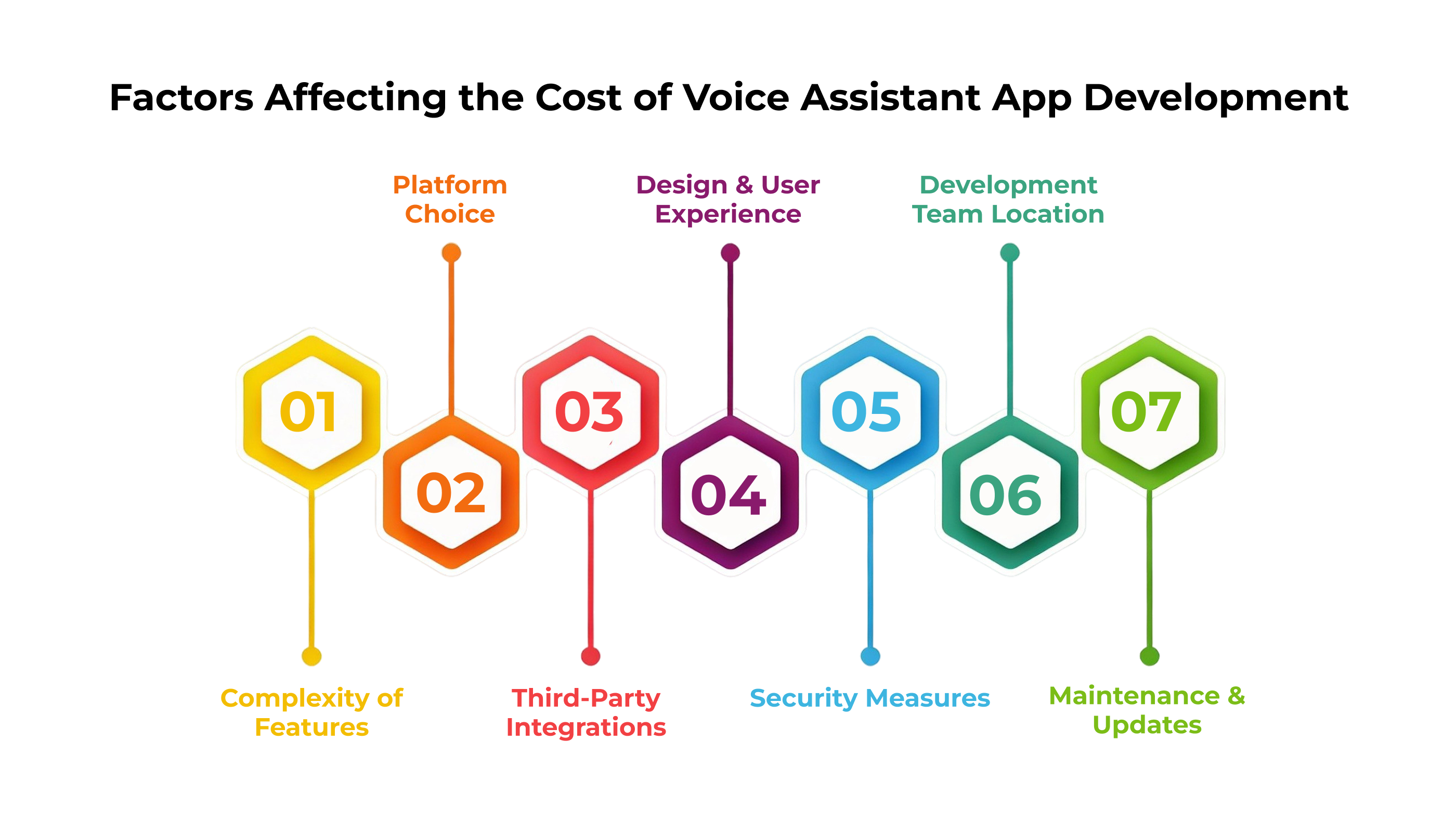
Complexity of Features: The more advanced the app—like adding personalization, multi-language support, or deep NLP—the higher the cost. Complex features require more development time and specialized expertise.
Platform Choice: Building for iOS, Android, or cross-platform directly impacts cost. Cross-platform solutions may save money but sometimes compromise performance compared to native apps.
Third-Party Integrations: APIs for IoT devices, payment gateways, or CRM systems add functionality but also increase expenses. Each integration requires extra coding, testing, and licensing fees.
Design & User Experience: A smooth, intuitive interface is essential for adoption. Skilled designers and usability testing raise costs but ensure better customer satisfaction.
Security Measures: Compliance with regulations like GDPR or HIPAA demands advanced encryption and secure data handling. These safeguards increase development costs but protect user trust.
Development Team Location: Costs vary widely depending on where the team is based. US and European developers charge more, while Asia offers skilled talent at lower rates.
Maintenance & Updates: Post-launch support, bug fixes, and feature upgrades add recurring expenses. Regular updates are crucial to keep the voice assistant AI app competitive and secure.
Cost Breakdown of Developing a Voice Assistant App in 2026
Here’s a detailed breakdown of the voice assistant app cost in 2026:
| Development Stage | Estimated Cost (USD) | Notes |
| Research & Planning | $5,000 – $15,000 | Market analysis, requirement gathering |
| UI/UX Design | $10,000 – $25,000 | Wireframes, prototypes, user testing |
| Core Development | $40,000 – $100,000 | Speech recognition, NLP, TTS |
| Third-Party Integrations | $10,000 – $30,000 | IoT, CRM, payment systems |
| Testing & QA | $8,000 – $20,000 | Performance, security, usability |
| Deployment | $5,000 – $10,000 | App store publishing, cloud setup |
| Maintenance & Updates | $15,000 – $40,000 annually | Bug fixes, upgrades |
Total Estimated Cost in 2026:
$90,000 – $240,000 depending on complexity and features.
For startups, the voice AI solution cost for startups can be optimized by starting with a Minimum Viable Product (MVP) and scaling later.
Third-Party Integrations and Their Cost Impact
Third-party integrations significantly affect the voice assistant app development cost:
IoT Integration: Smart home devices ($10,000 – $20,000).
Payment Gateways: Secure transactions ($5,000 – $10,000).
CRM/ERP Systems: Business automation ($15,000 – $25,000).
Healthcare APIs: HIPAA-compliant medical data ($20,000 – $30,000).
Each integration adds complexity, increasing the AI app development cost.
Tips to Optimize Voice Assistant App Development Cost
Startups and enterprises can reduce the voice assistant app cost by following these tips:
Start with MVP: Focus on building only the essential features first to test the market quickly. This reduces upfront expenses and allows gradual scaling as user demand grows.
Use Pre-built AI Models: Instead of creating NLP or TTS engines from scratch, leverage existing frameworks. This saves time, lowers AI development cost, and ensures reliable performance.
Choose Offshore Development: Hiring skilled developers from Asia or Eastern Europe can cut costs significantly. Offshore teams often deliver high-quality work at a fraction of US or European rates.
Cloud-based Infrastructure: Adopt pay-as-you-go cloud services to avoid heavy upfront investments. This ensures flexibility, scalability, and reduced voice assistant app cost over time.
Partner with Experts: Collaborating with a trusted voice assistant app development company ensures efficient planning and execution. Experienced partners help avoid costly mistakes and deliver scalable solutions.
Why Choose PerfectionGeeks for Voice Assistant App Development
PerfectionGeeks is a trusted voice assistant app development company specializing in AI-powered voice assistant solutions. Here’s why businesses and startups choose us:
Expertise in AI & NLP: We deliver the best voice AI assistant solutions.
Cost-Effective Development: Optimized AI development cost for startups.
Custom Solutions: Tailored voice assistant app development services for different industries.
Scalable Architecture: Future-proof apps that grow with your business.
Proven Track Record: Successful projects in healthcare, retail, and enterprise.
By partnering with PerfectionGeeks, you ensure your voice assistant app development journey is smooth, efficient, and cost-effective.
Frequently Asked Questions
Quick answers related to this article from PerfectionGeeks.
1. How much does it cost to develop a voice assistant app in 2026?
2. What factors influence the AI app development cost?
3. Why should I choose PerfectionGeeks for voice assistant app development?
4. Does PerfectionGeeks provide ongoing support after app launch?
Conclusion
In 2026, the voice assistant app cost ranges between $90,000 and $240,000, depending on complexity, features, and integrations. Startups can manage the voice AI solution cost for startups by focusing on MVPs and leveraging pre-built AI frameworks. Choosing the right voice assistant app development company—like PerfectionGeeks ensures you get the best AI voice assistant tailored to your business needs. Voice technology is no longer optional—it’s the future. Investing in voice assistant app development services today means staying ahead in tomorrow’s digital landscape.

Shrey Bhardwaj is the Director & Founder of PerfectionGeeks Technologies, bringing extensive experience in software development and digital innovation. His expertise spans mobile app development, custom software solutions, UI/UX design, and emerging technologies such as Artificial Intelligence and Blockchain. Known for delivering scalable, secure, and high-performance digital products, Shrey helps startups and enterprises achieve sustainable growth. His strategic leadership and client-centric approach empower businesses to streamline operations, enhance user experience, and maximize long-term ROI through technology-driven solutions.