IoT Application Development Company IIoT, Smart Devices & Edge Computing Solutions
We build end-to-end IoT applications — from device firmware and edge computing to cloud dashboards and real-time analytics. Trusted by enterprises across manufacturing, healthcare and logistics. MQTT · CoAP · AMQP · AWS IoT · Azure IoT Hub.
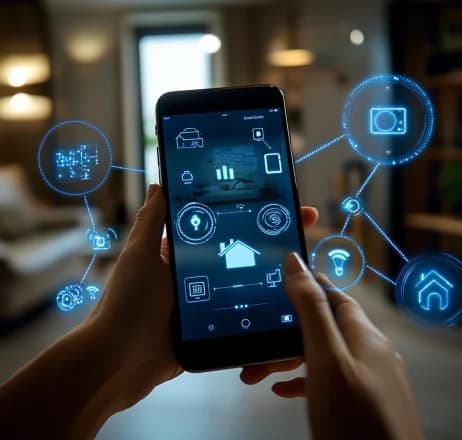
Projected Market Size: $1.5 Trillion by 2030
IoT App Development Services for Global Businesses
PerfectionGeeks provides IoT application development services in India, USA, UK, UAE (Dubai), and Singapore. Our global engineering team helps businesses deploy multi-region IoT systems, low-bandwidth environment solutions, and compliance-ready architectures (GDPR, ISO standards).

Multi-Region Deployments
Delivering IoT solutions across the globe with localized infrastructure and compliance readiness.
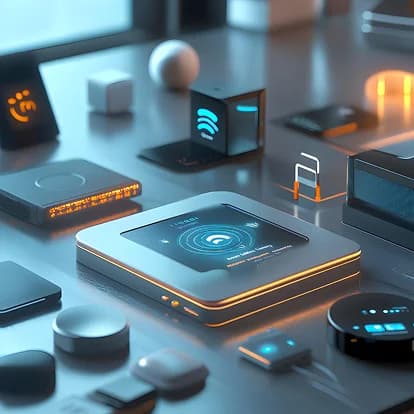
Seamless Device Integration
Connect sensors, wearables, and industrial machines to a unified cloud ecosystem.
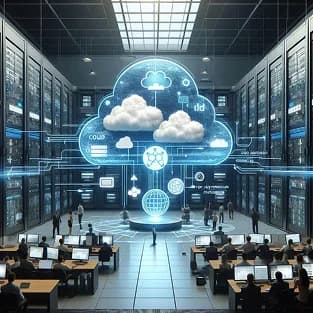
Hybrid Edge + Cloud Architecture
Real-time processing at the edge with scalable cloud analytics for enterprise insights.
Our solutions integrate device management, cloud backend development, and mobile/web applications. Whether you're targeting local markets or scaling globally, our expertise ensures seamless deployment and localization.
Full-Cycle IoT Engineering
Our IoT App Development Services

Custom IoT Application Development
End-to-end IoT applications built around connected devices and business workflows.
• Device connectivity
• Telemetry collection
• Real-time monitoring
• APIs & analytics
• Device management

IoT Cloud Development
Secure cloud-connected IoT systems built for scalable device communication.
• AWS IoT Core
• Azure IoT Hub
• MQTT communication
• Data processing
• Business integrations

IoT Device Integration
Connect sensors, wearables, and industrial equipment with unified software.
• Sensor integration
• Hardware connectivity
• Protocol integration
• Data format handling
• Device interfaces

IoT Mobile App Development
Mobile applications for remote monitoring, alerts, and connected device control.
• Remote monitoring
• Push notifications
• Device control
• Field workflows
• Mobile dashboards

IoT Dashboard Development
Real-time dashboards that turn IoT telemetry into actionable insights.
• Device status
• Sensor readings
• Historical trends
• Alerts
• Fleet monitoring

IoT Backend & API Development
Backend systems connecting devices, applications, and enterprise platforms.
• Device data APIs
• User management
• Device management
• Alerts & analytics
• External integrations
Edge Computing
Process selected data closer to devices for faster and reliable operations.
• Low-latency processing
• Local decision-making
• Reduced bandwidth
• Intermittent connectivity
• Hybrid edge-cloud
Legacy IoT Modernization
Modernize industrial infrastructure while preserving existing systems.
• Legacy PLC integration
• API gateways
• Old-protocol integration
• Data normalization
• Cloud connectivity
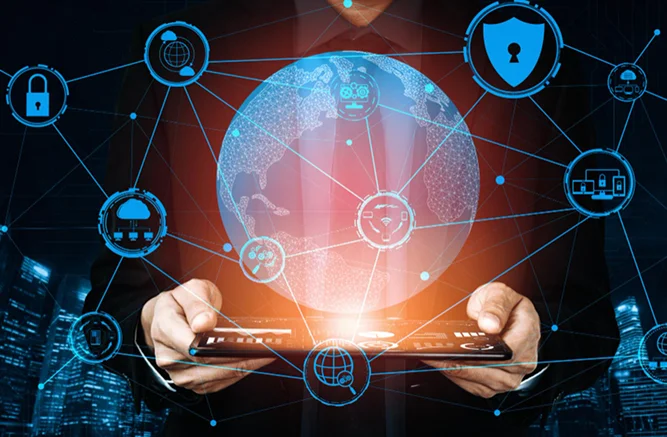
IoT Security & Compliance Standards Compliance
Security is embedded across every layer of the IoT ecosystem.
Why Partner with PerfectionGeeks for IoT

10+ years in software & systems engineering

Expertise in AWS IoT & Azure IoT Hub

Strong AI + IoT integration capabilities

Security-first architecture (OWASP IoT Top 10)

Global deployments (USA, UK, UAE, Singapore)
A successful IoT solution is defined by architecture, not just technology. We build production-ready ecosystems.
IoT App Development Pricing
Flexible and transparent pricing for scalable IoT solutions across industries.
Which industries use
IoT applications
IoT applications are used across industries where connected physical assets generate useful data or require software-controlled actions. PerfectionGeeks develops IoT solutions for manufacturing, logistics, healthcare, smart buildings, agriculture, retail, and smart cities.
Predictive maintenance and machine monitoring
IoT solutions connect machines and sensors to monitor equipment, production activity, and operational performance. Use cases include predictive maintenance, OEE tracking, machine monitoring, and production analytics.
Fleet tracking and asset monitoring
Connected GPS, RFID, and IoT devices provide real-time visibility into vehicles and assets. Businesses can use fleet tracking, geofencing, asset monitoring, and location-based alerts to improve operations.
Connected wearables and remote monitoring
IoT-enabled healthcare devices and wearables can collect and transmit patient or equipment data. Remote monitoring systems help healthcare teams track connected devices and relevant measurements.
HVAC, occupancy, and energy monitoring
Connected HVAC systems, occupancy sensors, lighting controls, and energy meters can provide centralized visibility and automated building management.
Soil and environmental monitoring
IoT sensors can monitor soil conditions, temperature, humidity, and other environmental factors to support data-driven agricultural operations and resource management.
Inventory and smart-shelf monitoring
Connected sensors and devices can provide real-time inventory visibility, smart-shelf monitoring, stock-level information, and automated alerts for retail operations.
Infrastructure and environmental monitoring
IoT networks can connect infrastructure and environmental sensors to monitor public assets, traffic-related systems, environmental conditions, and other city operations.
Connected vehicles and fleet intelligence
IoT technology connects vehicles and transportation assets to collect real-time data on location, vehicle health, fuel usage, and driving behavior. Businesses can use this data for fleet monitoring, predictive maintenance, and operational optimization.
Factors Affecting
IoT Development Cost
Understanding IoT development cost requires looking beyond features. Pricing is driven by device compatibility, network stability requirements, security protocols, and the complexity of edge vs. cloud processing.
Device Compatibility
Sensors, microcontrollers, wearables
Network Infrastructure
MQTT, LoRaWAN, BLE, 5G
Cloud Platform
AWS IoT vs Azure IoT Hub
Security & Compliance
OWASP IoT, ISO 27001
Real-World Application Scenarios (Without Inflated Claims)

Logistics IoT Success
Fleet Tracking Platform
Managed 10,000+ connected devices. Reduced latency by 40% and improved operational efficiency by 25%. Enabled real-time fleet tracking and automated route optimization.
Manufacturing & Industry 4.0
Predictive Maintenance System
Integrated IoT with ERP systems. Reduced equipment downtime by 30% and improved production efficiency by 20%. Enabled real-time vibration analysis and automated alerting.

Healthcare IoT
Remote Patient Monitoring
Integrated wearable devices with cloud dashboards. Improved response time by 35% and reduced hospital visits through real-time health alerts.
Benefits of IoT Application Development
Connected systems drive efficiency, automation, and real-time visibility:
01
Real-time operational insights
IoT enables seamless communication between devices, allowing businesses to collect and act on data instantly. According to Statista (2024), the global IoT market is expected to exceed $1.5 trillion by 2030, growing at over 20% CAGR.
02
Process automation & cost reduction
Automate workflows from smart factories to connected logistics. Gartner reports IoT adoption is rapidly accelerating in manufacturing and logistics due to its ability to improve operational efficiency and decision-making.
03
Predictive maintenance & uptime
Reduce equipment downtime by up to 30% with predictive analytics. Our manufacturing IoT systems integrate with ERP platforms to trigger maintenance alerts before failures occur.
04
Scalable & future-ready architecture
Whether you have 100 or 1 million devices, our hybrid edge + cloud architecture scales effortlessly. We leverage AWS IoT Core, Azure IoT Hub, and Google Cloud for high-performance ecosystems.
Our IoT Development Approach
We follow an architecture-first approach covering discovery, IoT architecture, device integration, backend development, security, testing, deployment, and scale.
Discovery and Use-Case Definition
We establish business objectives, target devices, sensors, connectivity requirements, network constraints, data requirements, latency needs, and user workflows.
Build vs Buy vs Hybrid: Which IoT Approach Is Right?
Buy an existing platform when standard device management and monitoring meet your requirements; build custom software when your devices, workflows, or integrations are differentiated; choose a hybrid when existing infrastructure can handle commodity capabilities while custom software handles your product-specific layer.
| Approach | Best When | Main Trade-off |
|---|---|---|
| Buy | Standard monitoring and device management are sufficient | Less control over specialized workflows |
| Build | Custom devices, workflows, integrations, or data models are central to the product | Higher initial engineering effort |
| Hybrid | Existing IoT infrastructure can handle standard capabilities while the application needs customization | Requires clear system boundaries |
Industrial IoT (IIoT) Solutions
We help manufacturers, plant operators, and supply chain leaders connect legacy industrial equipment to modern cloud systems — unlocking real-time visibility, predictive intelligence, and measurable operational gains.
Predictive maintenance
Monitor vibration, temperature, and pressure in real time. Detect equipment degradation before failure occurs and schedule maintenance proactively.
OEE monitoring
Track Overall Equipment Effectiveness across production lines. Identify idle time, defect rates, and throughput bottlenecks from a single dashboard.
Digital twin platforms
Create virtual replicas of physical assets to simulate performance, test configurations, and optimise production workflows without disrupting operations.
SCADA integration
Connect legacy SCADA and PLC systems to modern IoT cloud backends. Normalise data from older protocols for real-time analytics and remote control.
PLM connectivity
Integrate IoT sensor data directly into Product Lifecycle Management systems. Bridge the gap between design, production, and field performance data.
Industries We Serve with IoT
Connected solutions for modern enterprises — Logistics | Manufacturing | Healthcare | Smart Cities | Agriculture | Retail

Logistics & Fleet
Real-time tracking, route optimization



Smart Cities
Infrastructure monitoring, energy management

Agriculture
Soil sensors, irrigation automation
How Does an IoT Application Work?
An IoT application typically moves data through four connected layers — device, gateway or edge, cloud or backend, and application. The architecture depends on device capabilities, network conditions, latency, security requirements, and telemetry volume.
Devices & Sensors
Collect Physical Data
Devices collect information from the physical environment or equipment using temperature, pressure, vibration, GPS, wearable, industrial, energy, vehicle, and smart-building sensors. Devices can also receive commands to change settings or trigger actuators.
Gateway / Edge
Connect & Process
Gateways aggregate device traffic and securely bridge local devices with cloud systems. Edge computing processes data closer to devices when low latency, local decision-making, reduced bandwidth, or intermittent connectivity is important.
Cloud & Backend
Process, Store & Manage
The backend receives, processes, stores, and exposes device data. It can handle device registration, identity, telemetry ingestion, normalization, rules, alerts, APIs, communication, storage, analytics, and user access.
Web & Mobile Apps
Monitor & Control
The application layer provides real-time dashboards, device status, historical telemetry, alerts, remote controls, fleet views, maintenance workflows, reports, user management, and API-connected business workflows.
Devices & Sensors
Collect Physical Data
Devices collect information from the physical environment or equipment using temperature, pressure, vibration, GPS, wearable, industrial, energy, vehicle, and smart-building sensors. Devices can also receive commands to change settings or trigger actuators.
Gateway / Edge
Connect & Process
Gateways aggregate device traffic and securely bridge local devices with cloud systems. Edge computing processes data closer to devices when low latency, local decision-making, reduced bandwidth, or intermittent connectivity is important.
Cloud & Backend
Process, Store & Manage
The backend receives, processes, stores, and exposes device data. It can handle device registration, identity, telemetry ingestion, normalization, rules, alerts, APIs, communication, storage, analytics, and user access.
Web & Mobile Apps
Monitor & Control
The application layer provides real-time dashboards, device status, historical telemetry, alerts, remote controls, fleet views, maintenance workflows, reports, user management, and API-connected business workflows.
Frequently Asked Questions
Everything you need to know about working with PerfectionGeeks Technologies. Can't find an answer? Reach out to us.