
Published 15 September 2026
Technology
UK HR Software Comparison: Top Platforms Reviewed for 2026
Most HR teams aren't struggling because they lack process. They're struggling because their HR software can't keep up with how their organisation actually works. Getting payroll, compliance, and people data to talk to each other across legacy systems is genuinely hard. After reviewing dozens of platforms built for UK and global businesses, the patterns around adoption friction and multi-jurisdiction compliance stand out clearly. This guide covers five platforms worth serious consideration in 2026, from lean SME tools to mid-market powerhouses.
- The right HR software should match an organisation's size, workforce structure, industry, and growth plans.
- UK businesses should prioritise platforms that support HR management, payroll, compliance, employee data, and self-service.
- SenseHR is well suited to SMEs looking for flexible HR management across multiple sectors.
- BrightHR is a strong choice for small businesses seeking HR tools alongside employment law and compliance support.
- Zenefits focuses on small and medium-sized businesses looking for an integrated, mobile-friendly HR experience.
- Namely combines HR, payroll, benefits, and talent management for small to mid-sized US businesses.
- HiBob is particularly suitable for mid-sized companies managing distributed and international workforces.
- Pricing, integrations, scalability, compliance capabilities, and real-world user feedback should all be considered before choosing an HR platform.
- The best HR software is not necessarily the one with the most features, but the one that fits the organisation's specific requirements and workflows.
How the picks were chosen
Each platform was assessed using publicly available information gathered from official product pages, user review platforms, and published case studies. Feature depth, pricing transparency, and track record across human resources technology were all weighed. Only platforms with a demonstrable history of real-world results made the final list.
→ See the full research breakdown
- SenseHR - Best for SME HR management across multiple sectors
- BrightHR - Best for small business HR management
- Zenefits - Best for small and medium business HR management
- Namely - Best for small to mid-sized company HR and payroll
- HiBob - Best for mid-size companies with distributed workforces
Why HR Software Is Worth the Investment
Picking the wrong platform doesn't just cost money. It costs time, people, and compliance risk that builds up quietly until something breaks. Connecting HR software to existing payroll and ERP systems is rarely plug-and-play, and every workaround adds friction that slows down your whole team. As organisations expand across regions, multi-jurisdiction compliance becomes genuinely complex, and a platform without that depth will leave gaps that audits and regulators will find.
The right choice gives HR teams back hours every week. That time compounds into faster hiring cycles, better manager visibility, and the kind of employee experience that actually moves retention numbers. When the tooling fits the organisation, the HR-to-employee ratio improves and the whole function runs leaner.
HR Software Comparison Table
Note: All data in this table is sourced from review platforms and the official websites of the listed companies.
| Company Name | Years Operating | Team Size | Headquartered In |
| SenseHR | Est. 2022 | 11-50 employees | Epworth, England |
| BrightHR | Est. 2015 | 614 employees | Manchester, United Kingdom |
| Zenefits | Est. 2013 | 250 employees | San Francisco, USA |
| Namely | Est. 2012 | 500+ employees | New York, USA |
| HiBob | Est. 2015 | ~2,000 employees | New York, USA |
SenseHR - Best for SME HR Management Across Multiple Sectors
Which Markets Does SenseHR Serve?
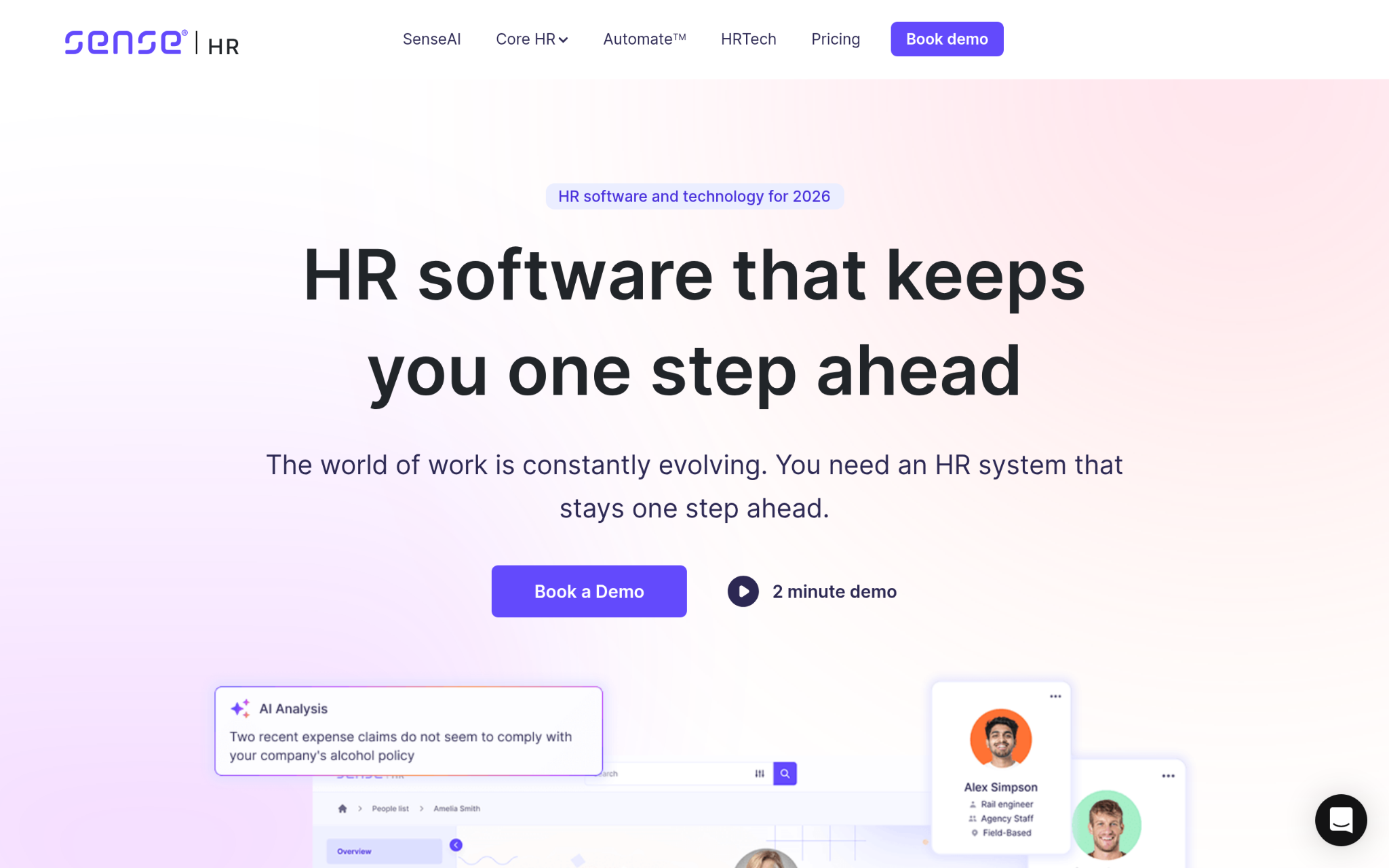
SenseHR serves small and mid-sized organisations that need proper people management without enterprise-level overhead. They cover employee record management, holiday and event tracking, document storage with e-signature support, and time and attendance monitoring. What sets them apart is the AI co-pilot feature for HR admins and wearable hardware options for frontline workers, a combination you genuinely don't see often at this price point (starting from £2 per employee per month, which is hard to argue with).
Why Pick SenseHR for HR Software?
SenseHR fills a real gap: SMEs that have outgrown spreadsheets but don't need a six-figure enterprise system. Built by people with HR systems experience stretching back to 2005, the focus on flexible, customisable workflows means organisations aren't forced to adapt their processes to fit the software.
The Review Roundup:
SenseHR draws consistent praise for its accessibility and the depth of features delivered at its price point. Users highlight the customisable workflows and AI tools as standouts, and the platform's flexibility tends to work well with HR teams managing varied or complex workforce structures.
BrightHR - Best for Small Business HR Management
Which Markets Does BrightHR Serve?
BrightHR focuses squarely on small business owners across the UK and beyond, serving around 120,000 businesses across five countries. Their platform covers HRIS, document management, leave management, and analytics, and they extend that with add-ons like BrightGuru for employment law advice, BrightSafe for health and safety, and BrightLearn for e-learning. That breadth is genuinely useful for small teams who need expert guidance alongside software, rather than just a database to log staff details.
Why Pick BrightHR for HR Software?
BrightHR solves the problem small business owners face most: getting proper HR support without the budget or headcount to build an internal team. The combination of affordable software and 24/7 employment law advice means smaller organisations get a level of cover that would otherwise require an external consultant.
The Review Roundup:
BrightHR has a strong following in the small business space, and recognition from awards like SME Awards HR Provider of the Year and Prolific North SaaS Company of the Year reflects that. Users frequently mention the customer experience and the practical value of having legal guidance built into the same platform.
Zenefits - Best for Small and Medium Business HR Management
Which Markets Does Zenefits Serve?
Zenefits serves small and medium-sized businesses that want a fully mobile HR experience without piecing together multiple tools. They cover payroll, employee benefits management, PTO tracking, time management, and automated tax labour law compliance, all inside one platform. With around 10,000 customers and pricing starting at $8 per employee per month, they sit in a competitive spot for businesses that want a clean, modern interface and solid options for connecting to other tools, without a steep learning curve.
Why Pick Zenefits for HR Software?
Zenefits built its reputation by making HRIS feel modern at a time when most platforms still looked like they were designed in 2003, and that commitment to interface quality has continued. For small and medium businesses that want fast self-service adoption without lengthy training programmes, that design-first approach translates into a measurably shorter setup period.
The Review Roundup:
Zenefits users respond well to the clean interface and the breadth of connections to other tools. The platform's focus on customer education reflects what reviewers often note: clear, accessible support that helps teams get up to speed without hand-holding.
Namely - Best for Small to Mid-Sized Company HR and Payroll
Which Markets Does Namely Serve?
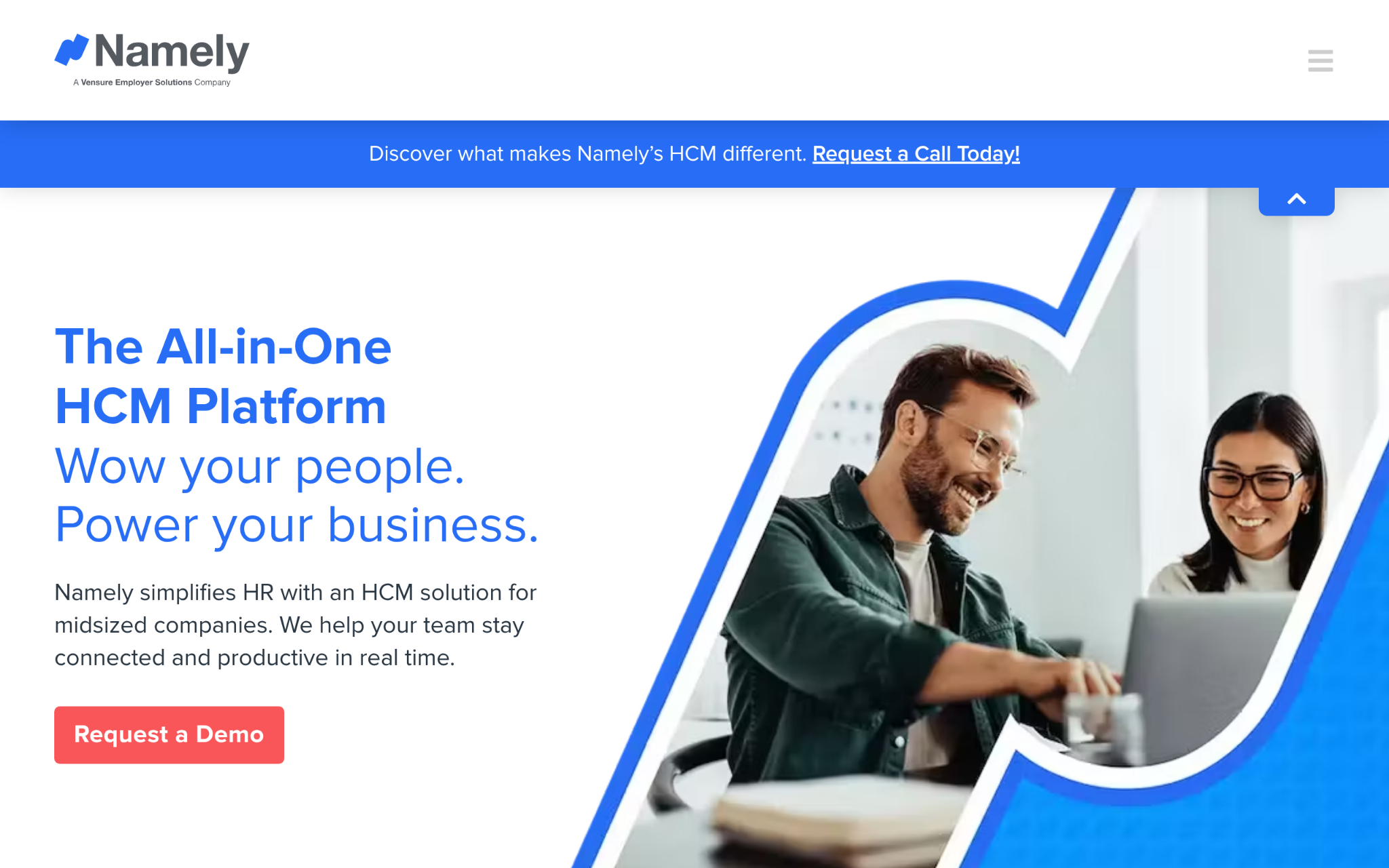
Namely targets small to mid-sized companies in the US market, pulling together HR, payroll, benefits, and talent management into a single cloud-native platform. Their positioning as "the first HR platform employees actually enjoy using" is more than marketing copy. The social media-like interface reduces the usual resistance HR teams face when rolling out new systems, and their managed services option for payroll and benefits means companies can choose how much they want to self-serve versus hand off.
Why Pick Namely for HR Software?
Namely tackles one of the most persistent problems in HR technology: most platforms are built for HR teams but largely ignored by everyone else. Their employee-centric design philosophy means self-service adoption rates tend to be stronger than what you'd see from more traditionally structured platforms.
The Review Roundup:
Namely's reputation spans both the product and the workplace culture side. Recognition as Overall HR Solution Provider of the Year at the 2022 RemoteTech Breakthrough Awards and placement on Crain's Best Places to Work both point to a company that takes quality seriously across the board.
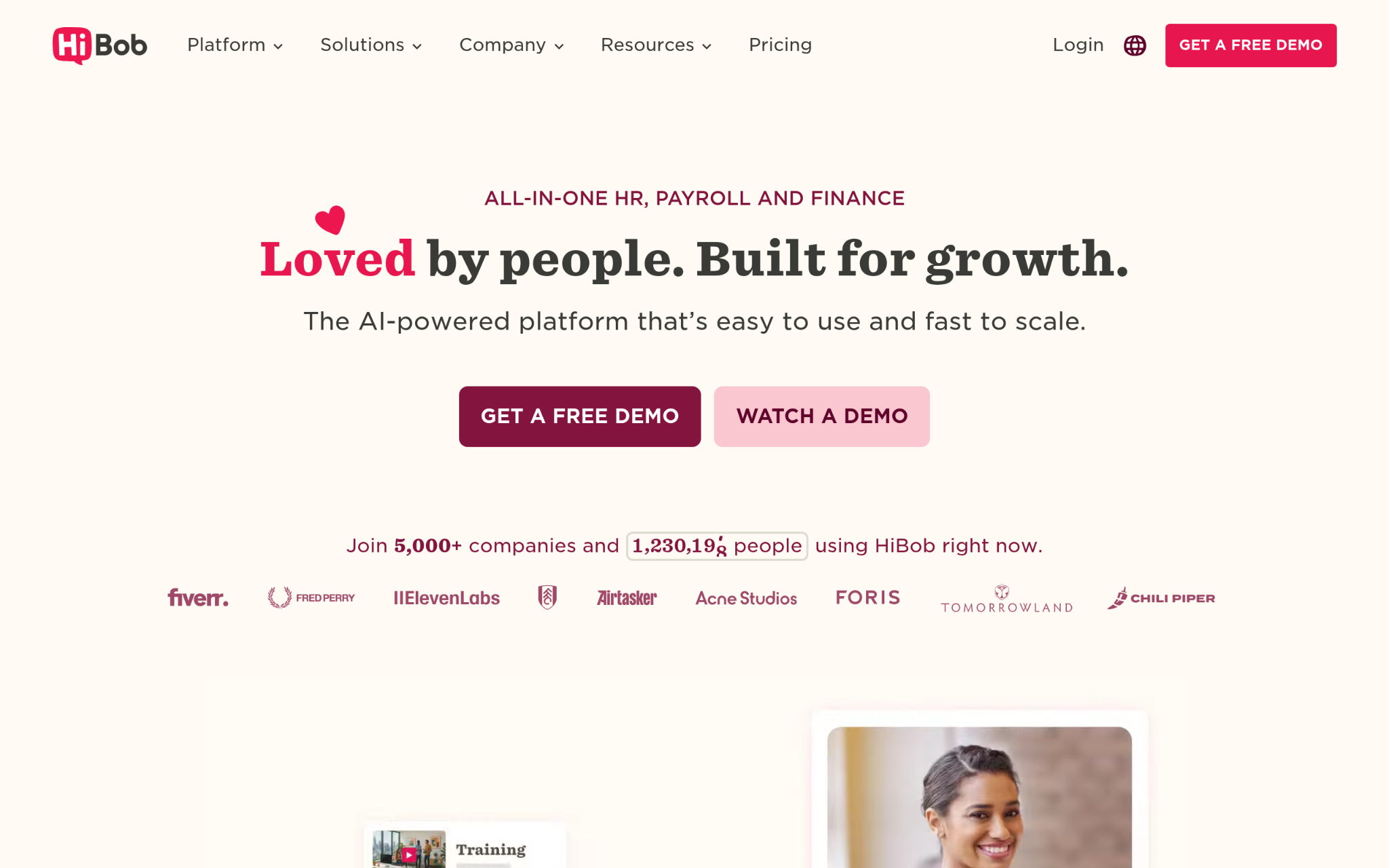
HiBob - Best for Mid-Size Companies with Distributed Workforces
Which Markets Does HiBob Serve?
HiBob serves mid-size companies with international, distributed teams, which is precisely the use case where many HR platforms start to struggle. They cover employee induction, time off, timesheets, performance evaluations, compensation, and analytics, all built around employee engagement as a central feature rather than an afterthought. Serving over 4,400 global customers, they've also been expanding their capabilities through acquisitions, picking up Pento in 2024 for payroll and Mosaic in 2025 for financial management (that kind of consolidation is rare in this space and worth paying attention to).
Why Pick HiBob for HR Software?
HiBob addresses the specific challenge of keeping HR processes consistent across multiple countries and time zones, which is where fragmented point tools tend to fall apart. Their ranking as number one in mid-market HRMS for both how people interact with the platform and vendor satisfaction in the Sapient Insights 2025-2026 HR Systems Survey is the kind of independent signal that cuts through marketing noise.
The Review Roundup:
HiBob's reviews reflect a platform that people actually use rather than one they tolerate. Awards from Time Magazine's 200 Best Inventions and back-to-back Forbes Cloud 100 recognition in 2023 and 2024 back up what users consistently say: this is a platform built with the actual employee in mind, not just the HR admin.
Selection Framework: How Each Pick Was Evaluated
Putting this list together required a structured process rather than a quick scan of feature pages. The aim was to surface platforms with real evidence behind them, not just polished marketing.
What Gets Collected First
The starting point was building a broad longlist from multiple sources. HR-specific directories, software review platforms, and published case studies were all used to identify platforms with meaningful market presence in the human resources technology space. Official product pages were reviewed alongside third-party commentary to build a picture of what each platform actually delivers rather than what it claims to.
Initial Filtering Step
Once the longlist was assembled, options without sufficient evidence of real-world use were removed. Review patterns were analysed closely: platforms with thin review histories, inconsistent feedback, or patterns suggesting low actual adoption were filtered out at this stage. The goal was to keep only platforms with a demonstrable track record across genuine HR use cases.
Checking Accuracy and Source Credibility
Every claim found on official product pages was cross-referenced against independent reviews and published reports from actual users. Where product descriptions made broad claims about features or outcomes, those were checked against what actual users reported. Platforms where marketing language regularly outpaced the lived experience described in reviews did not make the final cut.
Industry Standing Check
Beyond user reviews, each platform was assessed for its standing in the broader human resources technology sector. Awards from credible industry bodies, mentions in relevant HR and technology publications, and participation in original research were all taken into account. Platforms that have earned recognition from established sources carry a different weight than those relying purely on self-promotion.
Real-World HR Software Evidence
The final check focused on whether each platform had concrete evidence of real-world application. Dedicated feature and service pages, verified customer reviews tied to specific use cases, and published case studies were all reviewed. Platforms that could point to outcomes (like improved payroll processing accuracy, reduced time-to-hire, or higher employee self-service adoption) were prioritised over those offering only feature lists.
Choosing the Right HR Software: A Quick Guide
With so many platforms available, narrowing down the right HR software for your organisation comes down to knowing which factors actually matter for your specific situation. Here's what to weigh up before committing.
- Industry/Domain Experience: Look for platforms with a clear focus on businesses like yours. A tool built for enterprise multinationals will feel clunky for an SME, and vice versa.
- Features and Services: Map your current HR pain points to the platform's actual feature set. Payroll, compliance, document management, and self-service tools should all be accounted for.
- Pricing Structure: Per-employee-per-month pricing adds up quickly as headcount grows. Check whether the tier you need is actually affordable at your current and projected team size.
- Results Measurement: Ask how the platform helps you track outcomes like time-to-hire, payroll processing accuracy, and employee self-service adoption. Good HR software makes those numbers visible.
- Industry Knowledge and Compliance: GDPR, FLSA, EEO, and local labour laws all require your platform to stay current. Check how often compliance features are updated and whether multi-jurisdiction support is included or an expensive add-on.
Frequently Asked Questions
Quick answers related to this article from PerfectionGeeks.
1. What is the best HR software for UK businesses in 2026?
2. What features should businesses look for in HR software?
3. How can HR software benefit small and medium-sized businesses?
4. How should a business choose the right HR software?
Conclusion
Choosing the right HR software comes down to fit, not feature count. The platforms reviewed here each solve different problems well, from BrightHR's small business depth to HiBob's distributed workforce focus to SenseHR's flexible, accessible approach for SMEs. As workforces become more distributed and compliance requirements grow more complex, the right platform shifts from a nice-to-have to a foundational part of how modern HR teams actually get their work done.

Written By Devanshi
SEO Content Specialist at PerfectionGeeks Technologies
Devanshi specializes in SEO-focused content for AI, web, and mobile app development. She crafts user-centric, search-optimized content that enhances online visibility, strengthens brand authority, and supports sustainable organic growth through strategic content marketing and audience-focused communication.