
Published 12 February 2026 | Updated 23 September 2026
Technology
How to Monetize a Music App in San Francisco: Revenue Strategies for Startups
Monetizing a music app in San Francisco requires more than great features. You need a smart revenue strategy that balances user growth, artist payouts, and long-term profitability. From subscriptions and ads to freemium models and in-app purchases, choosing the right music app revenue model is essential. This guide explains practical monetization strategies, key challenges, and how startups can build scalable, revenue-focused music platforms in a competitive market.
Transform Your Digital Experience
Music apps in San Francisco can generate revenue through a combination of subscriptions, advertising, freemium models, in-app purchases, artist commissions, affiliate partnerships, and exclusive content. The most successful platforms usually combine multiple monetization methods rather than relying on a single revenue stream.
Subscription plans provide recurring revenue, ad-supported models help attract larger audiences, and freemium strategies balance user growth with premium conversions. Artist-focused features, merchandise integration, and exclusive content can create additional revenue opportunities. Choosing the right monetization model depends on the target audience, content strategy, licensing costs, user acquisition approach, and long-term business goals.
- Subscriptions remain a strong revenue model for music apps because they provide recurring income and predictable cash flow.
- Advertising can support free music experiences, including audio ads, banners, sponsored playlists, and video promotions.
- Freemium models combine growth and monetization, allowing users to start for free and upgrade to premium features later.
- In-app purchases can generate additional revenue through exclusive content, live sessions, premium playlists, or digital experiences.
- Artist commissions and creator tools can support a creator-focused ecosystem while providing additional income streams.
- Affiliate partnerships and merchandise sales can create revenue opportunities without increasing subscription prices.
- Licensing and royalty costs should be considered early, as they significantly affect profitability in music platforms.
- Analytics and user behavior tracking help optimize subscriptions, advertising, and conversion rates.
- Hybrid monetization strategies often perform better than relying on a single revenue model.
- User experience remains important, because excessive ads or aggressive monetization can affect engagement and retention.
Overview of the Music App Industry in San Francisco
San Francisco users are tech-aware and quality-focused. They expect smooth streaming, personalized recommendations, social sharing features, and transparent pricing. Many users already subscribe to global platforms. So if you are launching a music app startup, your monetization plan must be innovative and user-friendly.
The market also supports independent musicians and local events. That means your app can serve both listeners and artists. If designed correctly, your platform can evolve into one of the reliable Music monetization platforms in the region.
Before choosing your monetization approach, define:
- Your target audience
- Your content type (mainstream or independent artists)
- Your value proposition
- Your long-term revenue vision
Once you define these, selecting the right mobile app monetization strategies becomes easier.
Core Music App Monetization Strategies
1. Subscription-Based Music App Revenue Model
The subscription model remains one of the strongest forms of music app monetization. In this model, users pay a monthly or annual fee for premium access.Premium features may include offline downloads, ad-free listening, unlimited skips, high-quality audio, and exclusive releases. Many platforms that aim to become the best music streaming app rely on this model for stable recurring revenue.
In San Francisco, you can experiment with tier-based subscriptions. For example:
- Student plans
- Family plans
- Premium plus plans with exclusive content
Subscriptions provide predictable cash flow and increase investor confidence. However, to convert users from a free music streaming app, your premium offering must clearly justify the cost.
2. Free Music App Monetization Through Ads
Launching as a free music streaming app is a smart way to attract large user numbers quickly. In this strategy, revenue comes from advertising.Ads can be audio ads between songs, banner ads within the app, sponsored playlists, or video ads before streaming. This type of Free music app monetization works well when you have strong daily engagement.
However, ad frequency must be controlled. Too many interruptions can push users toward competitors. Smart ad placement combined with data analytics improves performance without harming user experience.
3. Freemium Model for Scalable Growth
The freemium model combines both subscription and advertising strategies. Users start with free access supported by ads. Over time, they are encouraged to upgrade to a paid plan.This approach is considered one of the best app monetization strategies because it balances growth and revenue. Many apps competing to become the best free music streaming app use this model successfully.
Freemium works especially well for a music app startup because it reduces the barrier to entry. Users can test your app music platform without commitment and upgrade once they see consistent value.
4. In-App Purchases and Exclusive Content
In-app purchases are another effective method among mobile app monetization strategies. Instead of charging all users monthly, you offer specific premium content for purchase.
Examples include:
- Exclusive album drops
- Live concert streaming passes
- Special remix packs
- Limited edition content
This model works well for independent artist-focused apps. It also supports creators who want to learn how to sell music online and make money, making your platform one of the growing Music monetization platforms.
5. Artist Revenue Sharing and Commission
If your app allows artists to upload music, you can generate revenue by taking a commission from their earnings. This could include streaming revenue, digital sales, or live event tickets.
This commission-based music app revenue model strengthens your ecosystem. Artists benefit from exposure and tools. Your platform benefits from recurring income. Users benefit from fresh content.
In San Francisco, where independent artists are active, this model can build strong community loyalty.
6. Affiliate Partnerships and Merchandise Integration
Another strategy is affiliate marketing. Your app can recommend music equipment, production software, or online courses. When users purchase through your links, you earn commission.
This strategy supports artists who are learning how to sell music online and make money while increasing your revenue without raising subscription prices.
Comparison of Popular Music App Revenue Models
| Revenue Model | Revenue Stability | User Growth Potential | Ideal For |
| Subscription | High | Medium | Premium music platforms |
| Advertising | Medium | High | Free music streaming app |
| Freemium | High | High | Scalable music app startup |
| In-App Purchases | Medium | Medium | Exclusive content apps |
| Artist Commission | Medium | Medium | Music monetization platforms |
| Affiliate Marketing | Low to Medium | Medium | Hybrid models |
Choosing the right music app revenue model depends on your business goals and audience behavior.
Case Study: BaySound – A San Francisco Music App Startup
BaySound launched as a free music streaming app focused on independent Bay Area musicians. They initially relied on ad-based Free music app monetization to grow their audience.
After gaining strong traction, they introduced a premium subscription offering ad-free streaming and exclusive live sessions. About 8 percent of users upgraded.Later, they added artist subscription tools and commission-based sales. This turned them into a local Music monetization platform.
Within two years, BaySound achieved profitability and attracted investors. Their success came from combining multiple music app monetization strategies instead of relying on a single revenue stream.
Challenges in Music App Monetization
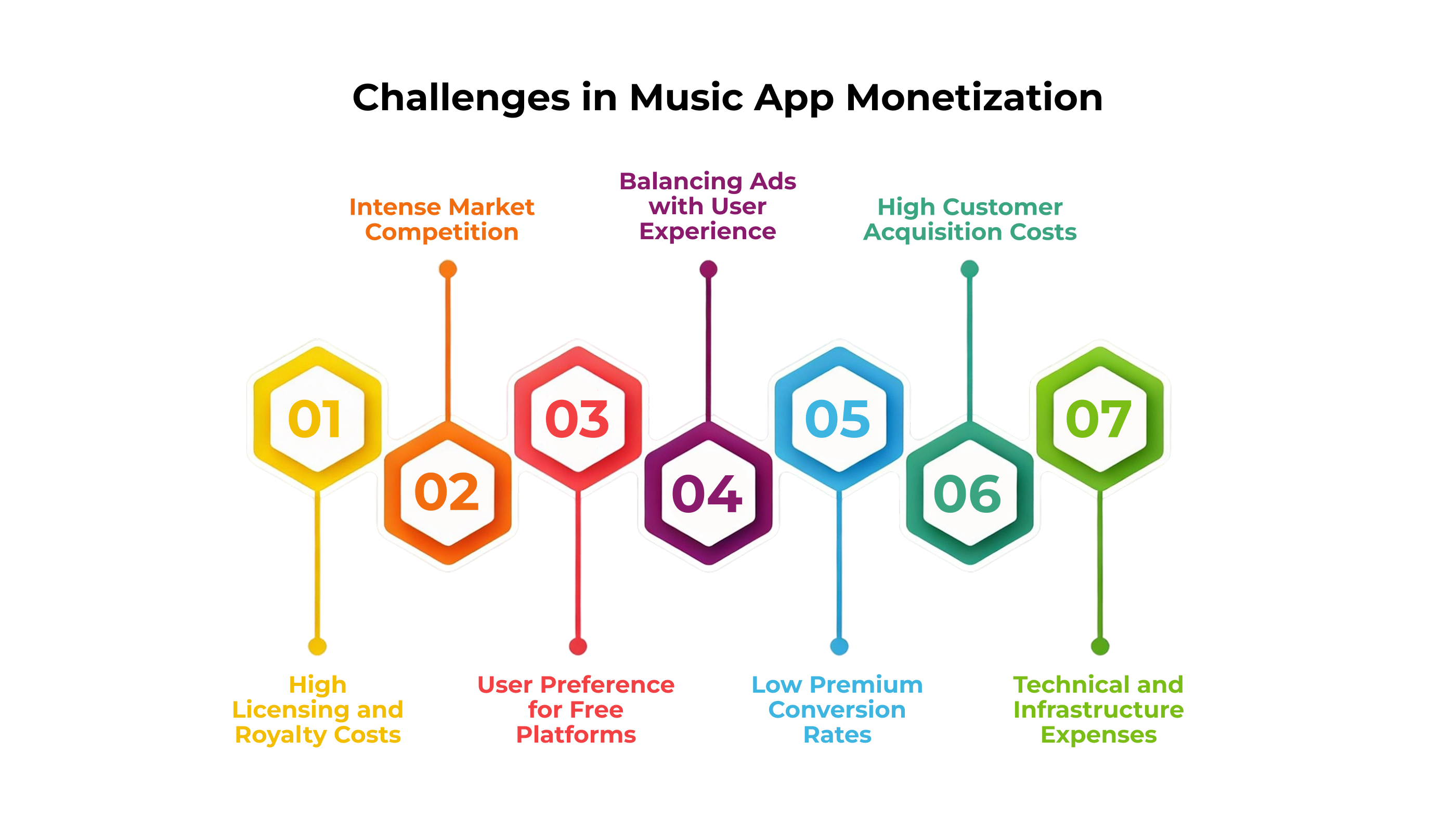
High Licensing and Royalty Costs: Securing music rights and paying royalties to artists and labels can significantly reduce profit margins, especially for startups.
Intense Market Competition: Competing with established platforms that aim to be the best music streaming app makes it harder to attract and retain users.
User Preference for Free Platforms: Many users prefer a free music streaming app, making subscription conversion more challenging.
Balancing Ads with User Experience: Too many ads in free music app monetization can frustrate users and increase uninstall rates.
Low Premium Conversion Rates: Convincing users to upgrade from free to paid plans requires strong value, exclusive content, and better features.
High Customer Acquisition Costs: Marketing and promotional expenses in competitive markets like San Francisco can impact early profitability.
Technical and Infrastructure Expenses: Maintaining secure streaming servers, payment systems, and analytics tools requires continuous investment.
How PerfectionGeeks Builds Revenue-Smart Music Apps in San Francisco
PerfectionGeeks understands that building a music app is not just about design and development. It is about creating a revenue-focused ecosystem.
Here is how PerfectionGeeks builds revenue-smart music apps in San Francisco:
Strategic Monetization Planning
Before development begins, the team defines the right music app revenue model based on your business goals. Whether it is subscription, freemium, or ad-based, the structure is planned from day one.
Scalable Architecture
PerfectionGeeks builds scalable backend systems that support high user traffic, secure payments, and real-time analytics. This ensures smooth implementation of advanced mobile app monetization strategies.
Artist-Centric Features
They develop built-in dashboards that allow creators to track earnings, manage content, and understand audience behavior. This helps position the app as one of the trusted Music monetization platforms.
Data-Driven Optimization
The team integrates analytics tools to monitor user engagement, subscription conversions, and ad performance. Continuous improvement helps identify the best app monetization strategies for long-term growth.
Seamless User Experience
A clean, intuitive interface ensures that monetization elements like subscriptions or in-app purchases feel natural rather than forced.
By combining technology, strategy, and market research, PerfectionGeeks helps startups build profitable and scalable music platforms in San Francisco.
Frequently Asked Questions
Quick answers related to this article from PerfectionGeeks.
1. What are the most effective music app monetization strategies for startups?
2. Can a free music streaming app really generate revenue?
3. What is the best music app revenue model for long-term growth?
4. How does PerfectionGeeks help in building revenue-focused music apps?
5. Can a music app combine multiple monetization models?
Conclusion
Monetizing a music app in San Francisco requires strategic thinking and a clear revenue plan. From subscriptions and advertising to artist commissions and affiliate partnerships, there are multiple music app monetization strategies available. The most successful platforms combine different mobile app monetization strategies to create sustainable revenue. Whether you want to build the best music streaming app or launch the best free music streaming app, focus on delivering real value and building trust.
With the right music app revenue model, strong technology infrastructure, and expert development support from companies like PerfectionGeeks, your music app startup can grow into a profitable and scalable business.

Shrey Bhardwaj is the Director & Founder of PerfectionGeeks Technologies, bringing extensive experience in software development and digital innovation. His expertise spans mobile app development, custom software solutions, UI/UX design, and emerging technologies such as Artificial Intelligence and Blockchain. Known for delivering scalable, secure, and high-performance digital products, Shrey helps startups and enterprises achieve sustainable growth. His strategic leadership and client-centric approach empower businesses to streamline operations, enhance user experience, and maximize long-term ROI through technology-driven solutions.