Published 16 November 2026 | Updated 16 November 2026
Mobile App Development
The Two US Programs
| Alternative billing | External content links | |
|---|---|---|
| What it is | Your own payment system inside the app | A link that sends users to your website to pay |
| Google Play Billing | Optional; you can offer it alongside or not at all | Optional |
| Fee applies to | Every reported US transaction | Purchases completed within 24 hours of following the link |
| Fees and reporting started | 1 October 2026 | 1 October 2026 for purchases; 1 February 2027 for app download fees |
Both programs are available because of the US District Court's order, and Google says it may change or end them if that order changes.
Google's US Service Fees on These Sales
| Purchase type | First USD 1M of annual earnings | Standard | Play Games Level Up or Apps Experience program |
|---|---|---|---|
| Auto-renewing subscriptions | 10% | 10% | 10% |
| Other purchases, new installs | 10% | 20% | 15% |
| Other purchases, existing installs (alternative billing) | 10% | 25% | 20% |
New installs are users whose first install or first update from Google Play happened on or after 30 June 2026. Everyone before that counts as an existing install. For external links, Google's table lists rates for new installs only, so check Play Console for existing installs. From 1 February 2027 a link that leads to an app download carries a fixed fee of USD 2.85 per app install or USD 3.65 per game install.
What You Actually Save
Since 30 June 2026 Google Play Billing in the US is priced as the same service fee plus a 5% billing fee. With alternative billing or a web link you skip the 5%, but you pay your own provider. Stripe's standard US card price is 2.9% + 30 cents per successful payment.
| Price | Google's 5% billing fee | Stripe 2.9% + $0.30 | Saving per sale |
|---|---|---|---|
| $4.99 | $0.25 | $0.44 | -$0.20 (costs more) |
| $9.99 | $0.50 | $0.59 | -$0.09 (costs more) |
| $49.99 | $2.50 | $1.75 | +$0.75 |
| $99.99 | $5.00 | $3.20 | +$1.80 |
The break-even price is about $14.30. Below it, your own checkout costs more per sale than Google Play Billing. If you also use a subscription billing product (Stripe Billing adds 0.7%), break-even rises to about $21.40. And these figures assume every buyer completes your checkout, which is rarely true.
Where it does pay: annual plans, higher-priced one-time purchases, B2B seats, and businesses that already run a web checkout and want one subscription record across web, iOS and Android.
Rules for Alternative Billing
- Offer it only inside the app, after you enroll in the program and integrate Google's APIs.
- Follow PCI-DSS if you handle card data, plus payment and child-protection laws.
- Provide customer support and a way to dispute unauthorised transactions.
- Link users to their order history, subscription management, and refund or support requests.
- If you also offer Google Play Billing, every user must be able to reach it consistently.
- Report every US transaction to Google within 24 hours through the alternative billing APIs, and since 1 October 2026 pay the service fee and report successful downloads.
How to Build It
- Check eligibility and enroll: in Play Console go to Manage account > Play apps settings > Monetization settings > Alternative billing and complete onboarding. For web links, submit the external content links declaration form instead.
- Integrate the Google APIs from the Play Billing Library for alternative billing or external links. For links, these APIs show Google's information screen and apply parental controls.
- Add your payment provider (Stripe, Braintree or Adyen, for example) with a native payment sheet in the app or a hosted checkout on the web.
- Build one entitlement service: your server receives the provider's webhook, confirms the payment and grants access, so web, Android and iOS purchases give access to the same account.
- Report to Google: send each external transaction to the Google Play Developer API within 24 hours, and report refunds through its refund endpoint.
- Handle subscriptions: renewals, failed payments, upgrades, cancellations and the management links Google requires.
- Test and roll out gradually: start with high-priced products, compare checkout completion against Google Play Billing, and keep Google Play Billing where it converts better.
This is information about Google's published program terms, not legal advice. Check the current terms in Play Console before you launch, since they depend on an active court order.
Sources
Quick answer
Under the US court order in Epic v. Google, Android apps serving US users can enroll in Google Play's alternative billing program (your own checkout inside the app) or its external content links program (sending users to your website). Since 1 October 2026 Google charges a service fee on these sales: 10% on subscriptions and the first USD 1 million of annual earnings, otherwise 20% or 25%.
US Android apps can sell through their own payment system or a link to their website, under two Google Play programs created by a court order. Since 1 October 2026 Google charges a service fee on those sales too, so the saving against Google Play Billing is mainly its 5% billing fee, minus what your payment provider charges.
Frequently Asked Questions
Quick answers related to this article from PerfectionGeeks.
1. Do US Android apps still have to use Google Play Billing?
2. Does Google charge fees on alternative billing in the US?
3. How much do I save by using Stripe instead of Google Play Billing?
4. What is a new install for Google's US fees?
5. Do I have to report alternative billing sales to Google?
6. Is there a fee for linking users to download another app?
Conclusion
US Android apps can now sell without Google Play Billing, but the service fee follows the sale. The real saving is the 5% billing fee, which only beats your payment provider's cost above roughly $14 per purchase. Use it for higher-priced plans and shared web accounts, not for every small in-app item. We build payment gateway integrations and Google's reporting for Android apps, and can work out whether alternative billing pays for your price points first. Ask for a billing review. PerfectionGeeks Technologies provides software development from an in-house team of 50+ engineers, designers and QA specialists in Gurugram, India. Over 12+ years we have delivered 200+ projects, and clients rate us 4.9/5 on Clutch across 45+ reviews. Recent project: ProcureRight is a procurement platform for India's construction industry with BOQ upload, multi-vendor RFQs, quote comparison and digital purchase orders; 10,000+ vendors and 200,000+ products are on the platform. How we work: 1. discovery and a written scope, 2. design in Figma, 3. development in short sprints, 4. testing on real devices and browsers, 5. launch and ongoing support. Standards we work to: OWASP Top 10 and Google's Core Web Vitals documentation (official documentation).About PerfectionGeeks
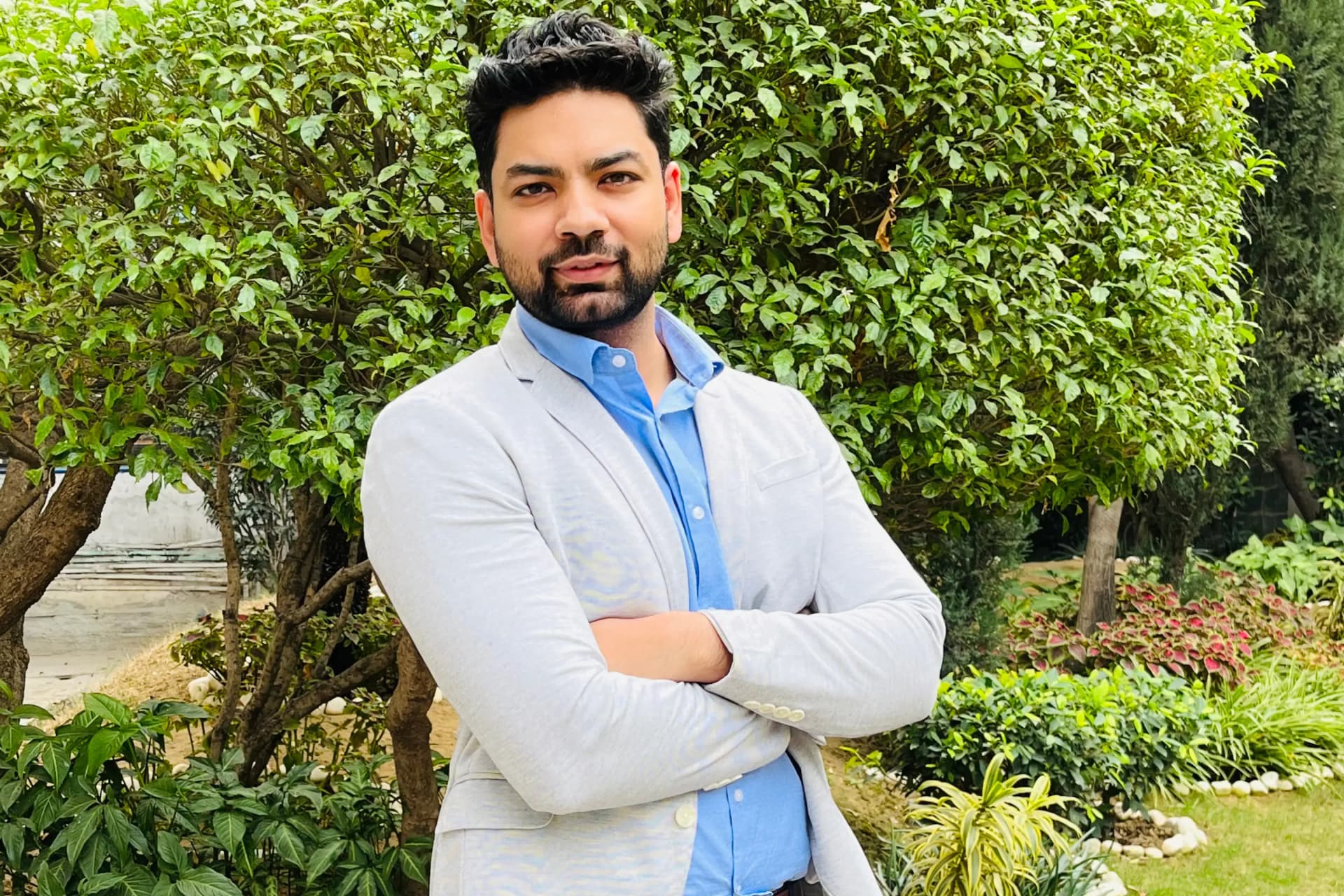
Shrey Bhardwaj is the Director & Founder of PerfectionGeeks Technologies, bringing extensive experience in software development and digital innovation. His expertise spans mobile app development, custom software solutions, UI/UX design, and emerging technologies such as Artificial Intelligence and Blockchain. Known for delivering scalable, secure, and high-performance digital products, Shrey helps startups and enterprises achieve sustainable growth. His strategic leadership and client-centric approach empower businesses to streamline operations, enhance user experience, and maximize long-term ROI through technology-driven solutions.
Meet the PerfectionGeeks team