Published 10 October 2025 | Updated 16 October 2026
Technology
How to Develop an Astrology App Like The Pattern: Step-by-Step Guide
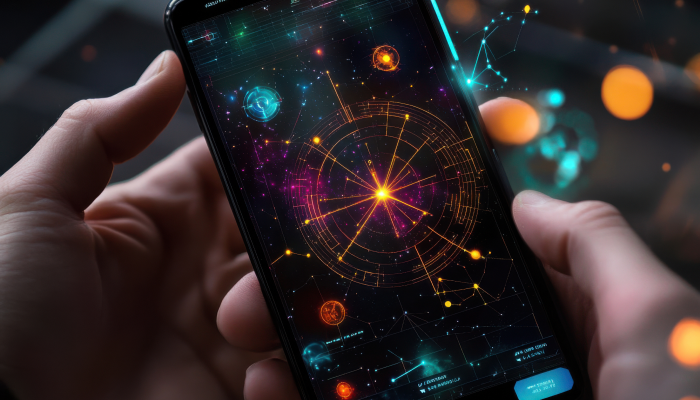
Astrology apps are changing how people explore personality, relationships, compatibility, and personal growth through digital experiences. Applications like The Pattern have helped popularize personalized astrology-related insights, relationship analysis, and content designed around individual users.
For startups, astrologers, and businesses entering the digital astrology market, building a similar application requires more than an attractive mobile interface. It involves astrology calculations, personalized content, user profiles, secure data management, subscription functionality, and potentially artificial intelligence (AI) to make complex information easier to understand.
If you want to develop an astrology app like The Pattern, this guide explains the essential features, user experience design, technology stack, development process, estimated costs, monetization options, and technical considerations involved.
- Building an astrology app like The Pattern requires thoughtful UX/UI design, personalized content, user profiles, birth-chart functionality, and a reliable backend.
- Essential features may include horoscope readings, natal charts, relationship compatibility, notifications, personalized insights, and premium subscriptions.
- AI can support conversational experiences, personalized recommendations, and natural-language explanations of structured astrology data.
- Applications inspired by AI astrology products such as TrustAstrology AI may require additional functionality, including AI astrologer chat, Vedic astrology features, Kundli matching, and personalized reports, depending on the intended product scope.
- The development cost depends on the number of platforms, astrology engine, integrations, AI functionality, security requirements, and backend complexity.
- An astrology MVP can start with a focused feature set and expand after validating user demand.
- PerfectionGeeks can help businesses plan and develop custom mobile applications, backend systems, AI integrations, and supporting software infrastructure.

It also explores how businesses can build AI-powered astrology applications with features such as conversational astrology assistants, personalized birth-chart explanations, horoscope recommendations, and Kundli matching.
At PerfectionGeeks Technologies, we help businesses plan and develop custom mobile applications around their product requirements, target audiences, and growth objectives. Whether you are launching an astrology MVP or planning an advanced AI-powered platform, the right development strategy starts with a clear understanding of your users and business model.
What Is The Pattern App?
The Pattern is a mobile application associated with personalized astrology-related insights, relationship patterns, and self-discovery. Its product approach provides a useful reference for businesses interested in creating applications that combine individual user information with tailored content and engaging digital experiences.
Rather than simply displaying the same daily horoscope to every user, an astrology application inspired by this product category can organize information around a person's birth details, selected interests, relationships, and preferences.
For businesses, the development opportunity lies in creating a personalized experience that makes astrology-related information accessible, relevant, and easy to navigate.
Depending on the intended product, an application can include:
- Personalized astrology-related insights
- Birth-chart information
- Relationship and compatibility features
- Daily or periodic content
- User profiles and saved information
- Personalized recommendations
- Notifications and reminders
- Premium reports and subscriptions
- Social or relationship-related features
Not every application needs all these features. The best approach is to identify the functionality that supports the target audience and business model before beginning development.
How Does an Astrology App Like The Pattern Work?
An astrology application generally combines user information, astrology-related calculations or content, backend services, and a mobile interface.
A typical workflow begins when a user creates an account and enters their birth date, birth time, and birthplace, where required. The application uses the relevant information to generate or retrieve astrology-related data and presents it through a personalized interface.
A simplified workflow looks like this:
User Registration → Birth Details → Astrology Engine or API → Personalized Content → User Dashboard → Reports and Recommendations
The underlying architecture may include several components:
- Mobile application: Provides the interface for registration, personalized insights, charts, and account management.
- Backend services: Handle authentication, business logic, user preferences, and communication between systems.
- Astrology engine or API: Supplies the calculations or structured data required for the selected astrology methodology.
- Database: Stores permitted user information, preferences, content, and application records.
- Personalization layer: Selects relevant content based on supported user attributes and preferences.
- AI layer, if required: Helps explain structured information in natural language or power conversational experiences.
- Admin dashboard: Allows authorized administrators to manage content, users, reports, and application settings.
The exact implementation depends on the product. A basic horoscope application may need a relatively straightforward architecture, whereas an AI astrology platform with real-time consultations, subscriptions, and multiple user roles requires more extensive engineering.
User Experience Design for an Astrology App Like The Pattern
A successful astrology application needs more than attractive horoscope screens. Its user experience should make information such as birth charts, planetary positions, compatibility insights, and personalized readings understandable without overwhelming users.
For an application inspired by The Pattern, the design should prioritize a simple onboarding process, relevant content, intuitive navigation, and clear access to premium functionality.
Essential UX Journeys
1. Onboarding and birth details
Welcome Screen → Sign Up → Date, Time and Place of Birth → Profile Setup → Personalized Home
The onboarding process should request only the information needed for the selected features. Explain why birth details are collected and provide clear privacy information.
2. Personalized home and detailed insights
Home → Today's Insight → Select a Category → Detailed Interpretation → Related Content
Organize content into readable sections, cards, or expandable explanations so users can explore information at their own pace.
3. Birth chart and planetary information
Birth Chart → Select Planet or House → View Relevant Information → Read Explanation → Explore Related Insights
Use visualizations and explanations to make technical astrology information easier to navigate.
4. Relationship compatibility
Compatibility → Select or Add a Profile → View Overview → Explore Detailed Insights
Make the process straightforward and explain what information is required from each participant.
5. Premium reports and subscriptions
Explore Feature → Review Benefits → Select Plan → Complete Payment → Access Premium Content
Show subscription terms, pricing, renewal conditions, and cancellation information clearly.
Suggested UX Wireframes
Before development, create low-fidelity wireframes for the main user journeys. These can help the product team identify missing screens and unnecessary steps before investing in detailed visual design.
Recommended wireframes include:
- Registration, onboarding, and birth-detail entry
- Personalized home dashboard
- Daily insights and detailed readings
- Birth-chart visualization
- Compatibility overview and detailed reports
- Subscription selection and payment
- User profile, preferences, and privacy settings
Practical recommendation: Create a clickable prototype before building the complete application. Test whether potential users can register, understand their personalized content, find key features, and access premium services without confusion.
7 Basic Steps to Build an Astrology App Like The Pattern
Step 1: Define Your Astrology App Concept
Start by identifying the purpose of your application and the problem it will solve.
Decide whether you want to build:
- A personalized astrology and self-discovery application
- A daily horoscope app
- A Vedic astrology or Kundli application
- A relationship compatibility platform
- An AI astrology chatbot
- An astrology consultation marketplace
- A subscription-based astrology content platform
Your choice will influence the product architecture, features, development budget, and monetization strategy.
For example, a personalized astrology MVP may focus on profiles, birth-chart functionality, and daily insights. An AI astrology marketplace may additionally require chatbot functionality, astrologer profiles, consultation booking, payments, and real-time communication.
Define the MVP first, then identify the advanced features that can be introduced after validating demand.
Step 2: Research Your Target Audience and Competitors
Understand who will use the application and why they would choose it over existing alternatives.
Potential audiences include astrology enthusiasts, users interested in relationships and self-discovery, people seeking Vedic astrology services, and customers looking for digital consultations.
Study relevant applications to understand:
- Their onboarding experience
- Core features
- Personalization methods
- Subscription models
- User feedback
- Content presentation
- Accessibility and navigation
- Opportunities for differentiation
If you are researching products such as The Pattern or AI astrology applications such as TrustAstrology AI, evaluate their publicly available features and user experience rather than assuming their underlying technologies or business models are identical.
Use this research to define a clear value proposition. Your application should have a reason to exist beyond copying a competitor's interface.
Step 3: Choose the Right Technology Stack
The technology stack should support your product requirements, development budget, and long-term maintenance plans.
Possible options include:
- iOS: Swift and SwiftUI
- Android: Kotlin
- Cross-platform mobile development: Flutter or React Native
- Web application and dashboards: React or Next.js
- Backend development: Node.js, Python, Java, or .NET
- Databases: PostgreSQL, MySQL, or MongoDB, depending on data requirements
- Cloud infrastructure: AWS, Microsoft Azure, or Google Cloud
- AI functionality: Suitable language models, machine-learning components, and recommendation systems
- Real-time communication: WebSockets or appropriate messaging and communication services
The astrology engine is another important decision. You can evaluate a suitable third-party astrology API or develop a custom calculation component based on your requirements.
Compare data coverage, calculation methodology, documentation, licensing, reliability, pricing, and integration complexity before selecting a provider.
A suitable astrology app development company can help evaluate these options and design an architecture that supports the intended product without unnecessary technical complexity.
Step 4: Design an Intuitive UI/UX
A good user interface makes the application easier to understand and encourages users to explore its features.
Design the experience around the most important user journeys rather than treating every feature as equally important.
Consider:
- Simple registration and onboarding
- Clear birth-detail forms
- Readable horoscope and personalized insight screens
- Understandable birth-chart visualizations
- Easy navigation between content categories
- Accessible typography and contrast
- Consistent visual design
- Transparent subscription and payment screens
- User-friendly privacy and account controls
For a personalized astrology app, the home screen should prioritize relevant information instead of presenting too many unrelated features at once.
For premium features, explain the value before asking users to subscribe.
Step 5: Develop the Core Features
Once the requirements and designs are approved, begin developing the mobile application, backend, database, and integrations.
A focused first release may include:
- User registration and authentication
- Birth-detail collection
- Basic horoscope or astrology content
- Birth-chart functionality, if required
- Personalized user dashboard
- Push notifications
- Admin content management
- Basic analytics
- Secure account management
Advanced features can be added according to the product roadmap. These may include AI-assisted readings, compatibility analysis, multilingual support, subscriptions, premium reports, and conversational interfaces.
Partnering with an experienced mobile app development team can help coordinate the frontend, backend, integration, and testing work required for a stable release.
Step 6: Test the Application and Validate Its Calculations
Testing is particularly important when an astrology app depends on calculations, personalized data, payments, or AI-generated responses.
Your quality assurance plan should include:
- Functional testing
- API integration testing
- Device and operating-system compatibility
- Performance testing
- Authentication and authorization testing
- Payment and subscription testing
- Privacy and security checks
- Accessibility testing
- Astrology calculation validation
- AI response quality testing, where applicable
For calculation-based features, validate outputs against the selected calculation engine's documented methodology and appropriate reference cases.
For AI features, test whether the system uses the correct structured data, avoids unsupported claims, handles ambiguous questions, and communicates limitations appropriately.
Do not treat fluent AI-generated text as evidence that an underlying calculation is correct.
Step 7: Launch, Measure, and Improve
After testing, prepare the application for release on the relevant platforms.
Launch activities may include:
- App Store and Google Play submission
- Store listing optimization
- Privacy disclosures
- Analytics configuration
- Crash and performance monitoring
- Customer support workflows
- Subscription and payment verification
- Marketing and launch communications
After launch, monitor the metrics that matter to your business, such as onboarding completion, feature usage, subscription conversion, retention, crashes, and support requests.
Use this information to prioritize improvements. A smaller, reliable application with clear value can be a better starting point than an oversized first release.
How to Build an AI Astrology App Like TrustAstrology AI
AI astrology applications combine astrology-related data, personalized content, and conversational experiences to make information easier to explore.
If your goal is to build an application in this category, first decide which astrology system and user problems the product will support. Depending on the requirements, the application may include Vedic astrology, Western astrology, birth-chart interpretation, Kundli matching, AI astrologer chat, or personalized reports.
The implementation should be based on the features you intend to offer rather than an assumption that every competing application uses the same technology.
Essential Components of an AI Astrology App
1. Astrology calculation engine
Use a suitable calculation engine or API for the selected astrology methodology. Determine which birth-chart information, planetary positions, compatibility calculations, or other outputs the application needs.
2. AI astrologer chatbot
A conversational interface can allow users to ask questions in natural language. The system can use relevant, structured astrology information and approved content to formulate responses.
3. Personalized birth-chart explanations
An AI layer can translate structured chart data into more accessible explanations. The application should distinguish calculated data from AI-generated interpretation.
4. Kundli matching and compatibility
For a Vedic astrology product, you may need specific calculation workflows, matching criteria, and report formats. Define these requirements before selecting an API or building a custom calculation component.
5. Personalized content recommendations
A recommendation system can help users discover relevant reports, content categories, or features based on permitted preferences and usage patterns.
6. Subscription and payment functionality
Depending on the business model, monetization may include premium reports, subscriptions, usage-based plans, or paid consultations.
7. Privacy and AI safeguards
Protect birth details, user profiles, conversation history, and payment-related information. Provide clear disclosures about how AI-generated interpretations are produced and avoid presenting astrological interpretations as scientifically guaranteed predictions.
How AI and Astrology Calculations Work Together
A useful architecture separates calculations from natural-language interpretation.
For example:
User Question → Application Backend → Astrology Engine or API → Structured Chart Data → AI Interpretation Layer → Response to User
The astrology engine supplies the relevant calculated information. The AI component then uses that information and suitable reference material to create a readable explanation.
This separation helps developers validate calculations independently and makes it easier to test the AI layer for relevance, consistency, and unsupported statements.
Important: AI should complement the selected astrology methodology rather than automatically replace its underlying calculation engine.
How Much Does an AI Astrology App Cost?
An AI-powered application may cost more than a basic horoscope app because of additional integrations, AI usage, testing, personalization, and infrastructure requirements.
The final budget depends on whether you need a basic conversational assistant or a more advanced platform with birth-chart interpretation, subscriptions, multilingual support, reports, and large-scale infrastructure.
Start with a defined MVP, validate user demand, and expand the AI functionality based on actual product requirements.
Essential Features of an Astrology App
The feature set should reflect the intended business model. A content-focused app does not need every feature required by an astrologer marketplace.
| Feature | Purpose |
|---|---|
| User registration | Creates and manages user accounts |
| Birth details | Captures the information required for supported calculations |
| Horoscope | Presents daily or periodic astrology-related content |
| Birth-chart generation | Displays relevant chart information |
| Personalized insights | Organizes content around supported user attributes |
| Compatibility analysis | Presents relationship-related astrology insights |
| Astrologer profiles | Helps users discover practitioners |
| Search and filters | Supports discovery of astrologers or services |
| Booking and availability | Manages consultation schedules |
| Chat, voice, and video | Supports consultation workflows when required |
| Payments | Enables paid services |
| Subscriptions | Provides recurring access to premium features |
| Push notifications | Delivers relevant updates and reminders |
| Reports | Provides downloadable or paid analysis |
| Admin dashboard | Manages users, content, payments, and platform operations |
| Analytics | Measures usage and business performance |
Advanced Features for a Competitive Astrology Platform
Personalized Astrology
Personalization can help users discover information that is relevant to their selected preferences, birth-chart data, or usage patterns.
The implementation should explain which data is used and provide appropriate privacy controls.
Compatibility Matching
A compatibility feature can compare relevant information according to the astrology methodology supported by the application.
For Vedic astrology products, this may involve dedicated Kundli matching workflows and corresponding report formats.
Live Astrologer Consultation
Real-time chat, voice, and video consultations can transform a content application into a service marketplace.
These features introduce additional requirements for scheduling, availability, notifications, communication infrastructure, payments, and consultation records.
Multilingual Astrology
Multilingual support may help businesses reach users across different regions.
Possible languages include English, Hindi, Bengali, Marathi, Tamil, Telugu, Gujarati, Kannada, Malayalam, and Punjabi.
Select languages based on your target audience, content availability, and business objectives rather than adding them solely to increase keyword coverage.
Digital Reports
Depending on the product, users may be able to purchase or download birth-chart reports, compatibility reports, personalized astrology content, or numerology reports.
Subscription Management
Subscriptions can provide access to premium horoscopes, detailed reports, advanced compatibility features, exclusive content, or other paid functionality.
The application should clearly display subscription benefits, renewal terms, and cancellation options.
How Much Does It Cost to Build an App Like The Pattern?
The cost of building an astrology app like The Pattern depends on the depth of personalization, astrology engine, UX/UI design, platform coverage, backend architecture, content management, subscriptions, integrations, and AI requirements.
The following ranges are indicative planning estimates for different levels of product complexity, not fixed quotations. Actual costs depend on the detailed project scope and development requirements.
| Development level | Estimated cost | What is included |
|---|---|---|
| Astrology MVP | $15,000–$25,000 | Core UX/UI, user registration, birth details, basic horoscope or content, basic astrology API integration, notifications, backend, essential QA, and deployment support |
| Personalized Astrology App | $25,000–$50,000 | Custom UI/UX, personalized home experience, birth-chart functionality, astrology API or calculation integration, profiles, content management, notifications, analytics, payments, and production deployment |
| Advanced Astrology Platform | $50,000–$90,000+ | Advanced chart visualization, compatibility features, subscriptions, personalized reports, multiple integrations, admin dashboard, analytics, enhanced security, scalable backend, and advanced QA |
| Enterprise or AI-Powered Platform | $90,000–$150,000+ | Advanced personalization, AI-assisted experiences, recommendation systems, complex astrology calculations, multilingual support, subscription infrastructure, scalable cloud architecture, advanced integrations, and enterprise-grade security |
These estimates should be used for early planning. A quote should be based on the features, platforms, integrations, and acceptance criteria agreed for the project.
What Can Change the Final Development Cost?
Platform selection: Developing for iOS, Android, web, or multiple platforms affects design, engineering, and testing effort.
Astrology engine: A third-party API may reduce initial implementation effort, while custom calculations may require additional engineering and validation.
AI integration: Conversational AI, personalized interpretations, retrieval systems, and recommendation functionality can add development and ongoing usage costs.
Feature complexity: Compatibility reports, detailed charts, subscriptions, astrologer consultations, and personalized dashboards require different levels of engineering.
Backend architecture: User management, analytics, reporting, real-time communication, and admin workflows affect the overall system design.
Security and privacy: Authentication, access control, data retention, encryption, monitoring, and privacy-related requirements must be included in the project plan.
Third-party services: Astrology APIs, cloud services, payments, messaging, analytics, and AI providers may introduce recurring fees.
Maintenance: Hosting, monitoring, security updates, API changes, bug fixes, and ongoing feature improvements should be considered separately from the initial build where applicable.
How to Estimate Your Project Budget
Before requesting a quote, define the following:
- Target platforms: iOS, Android, web, or a combination
- Astrology methodology and required calculations
- MVP and advanced features
- AI functionality and expected usage
- Payment and subscription model
- Admin dashboard requirements
- Integrations and third-party services
- Target markets and languages
- Expected user volume
- Post-launch support requirements
A clear scope makes it easier to compare proposals and understand why development estimates differ.
Technology Stack for Astrology App Development
The technology stack should be selected according to the product's architecture and performance requirements.
| Layer | Possible technologies | Purpose |
|---|---|---|
| iOS | Swift, SwiftUI | Native Apple application |
| Android | Kotlin | Native Android application |
| Cross-platform | Flutter, React Native | Shared iOS and Android development |
| Web frontend | React, Next.js | Web applications and dashboards |
| Backend | Node.js, Python, Java, .NET | APIs and business logic |
| Database | PostgreSQL, MySQL, MongoDB | Application and business data |
| Real-time functionality | WebSockets and suitable messaging services | Chat and live updates |
| Cloud | AWS, Azure, Google Cloud | Infrastructure and deployment |
| AI | Language models, ML frameworks, recommendation systems | Conversational and personalized experiences |
| Payments | Appropriate payment gateway APIs | Transactions and subscriptions |
| Analytics | Suitable product analytics platforms | Usage and business insights |
These are possible options, not a requirement to use every technology in one application.
PerfectionGeeks offers broader software engineering capabilities across mobile development, backend engineering, AI, and custom software. The final stack should be chosen after reviewing the product's requirements rather than selecting technologies solely for popularity.
Flutter vs. React Native vs. Native Development
Choosing the right development approach can influence delivery effort, maintenance, performance, and platform-specific functionality.
| Approach | Best suited for | Main consideration |
|---|---|---|
| Flutter | Cross-platform applications requiring a consistent interface | Some specialized platform functionality may need native integrations |
| React Native | Cross-platform products with React or JavaScript expertise | Native modules may be required for specific integrations |
| Swift and Kotlin | Applications requiring native platform control | Maintaining separate platform implementations may increase effort |
For an astrology application with profiles, charts, content, subscriptions, and standard mobile functionality, cross-platform development may be a practical option.
For highly specialized platform requirements, native development may be more suitable.
The decision should consider the team's expertise, expected user experience, third-party libraries, maintenance strategy, and long-term roadmap.
Astrology App Monetization Models
An astrology application can use several monetization models depending on the audience and services offered.
1. Subscription Plans
Users pay monthly or annually to access premium content, personalized reports, or additional functionality.
2. Paid Reports
The application offers individual reports, such as detailed birth-chart or compatibility analysis, for a one-time payment.
3. Consultation Commissions
An astrology marketplace may earn a commission from consultations conducted through the platform.
4. Premium Content
Some content remains free while advanced readings, reports, or educational material require payment.
5. Freemium Model
Users can access basic features at no cost and upgrade to a paid plan for additional benefits.
6. In-App Purchases
Users purchase individual digital services or content according to the application's monetization model.
The appropriate approach depends on user acquisition costs, perceived value, content production, service delivery, and platform fees. Test the monetization strategy with the MVP before investing heavily in advanced features.
Security and Privacy Considerations
Astrology applications may collect personal information such as names, birth dates, birth times, birthplaces, contact information, payment-related records, consultation history, and user-generated content.
These details should be handled responsibly.
Recommended considerations include:
- Secure authentication and account recovery
- Encryption in transit and appropriate protection at rest
- Role-based access controls
- Secure API design
- Appropriate access logging and monitoring
- Clear data-retention and deletion policies
- Account deletion and privacy controls
- Secure payment integrations
- Backup and recovery planning
- Review of third-party API permissions and data handling
- Clear disclosure of how AI features process user inputs
Businesses operating in India, the United States, the United Kingdom, or other markets should assess the data-protection and consumer-protection requirements applicable to their product and users.
Privacy and security should be included in architecture and development planning rather than added only before launch.
How to Choose an Astrology App Development Company
Choosing a development partner involves more than comparing project prices. The company should understand your business model, required integrations, user workflows, and long-term maintenance needs.
1. Evaluate Relevant Experience
Ask the development team how it approaches personalized applications, mobile platforms, subscription systems, content products, and other functionality relevant to your requirements.
Request relevant work samples where available. Do not assume a company has delivered an astrology product unless it can demonstrate that experience.
2. Review Technical Capabilities
Evaluate experience with mobile development, backend APIs, databases, cloud architecture, third-party integrations, testing, and AI where required.
3. Discuss Astrology Architecture
Ask how the proposed solution will handle astrology calculations, data structures, API dependencies, calculation validation, and future changes to the supported astrology methodology.
4. Understand Security Practices
Discuss authentication, access controls, data protection, payment integrations, privacy requirements, and ongoing security maintenance.
5. Check Scalability
Ask how the application can accommodate increased users, additional features, more reports, higher API usage, or real-time consultations.
6. Clarify Post-Launch Support
Agree on bug fixes, monitoring, maintenance, infrastructure responsibilities, third-party service costs, and future development arrangements.
7. Confirm Ownership and Documentation
Before starting the project, clarify ownership of source code, intellectual property, design files, documentation, cloud accounts, and third-party licenses.
A well-defined development agreement helps establish expectations around delivery, responsibilities, and future product ownership.
Why Choose PerfectionGeeks for Your Astrology App Development Project?
PerfectionGeeks Technologies provides software engineering services for businesses developing mobile applications, web platforms, AI-enabled products, and custom software solutions.
For an astrology application, the development plan can be tailored to the product's intended features, audience, technology requirements, and monetization strategy.
Relevant engineering areas may include:
- Mobile app development: Native or cross-platform application development for the required devices.
- UI/UX design: User journeys, onboarding, personalized dashboards, and subscription flows.
- Backend engineering: APIs, database design, authentication, and business logic.
- AI integration: Conversational interfaces, personalized content, and other suitable AI functionality.
- Third-party integrations: Astrology APIs, payment services, notifications, and analytics.
- Quality assurance: Functional, integration, performance, and security testing.
- Cloud and deployment: Production infrastructure, deployment planning, and operational monitoring.
The proposed solution should be based on the actual project scope. A basic astrology application and an advanced AI-powered marketplace require different architecture, engineering effort, and budgets.
The development process can be organized into clear stages, from requirements discovery and UX/UI design through development, testing, deployment, and post-launch improvements.
Who Can Benefit From an Astrology App?
Individual Astrologers
Astrologers can use a branded application to publish content, provide consultations, and manage client interactions.
Astrology Startups
Startups can launch an MVP, test user demand, and expand the product based on feedback and business performance.
Established Astrology Businesses
Existing businesses can digitize their services, introduce subscriptions, improve customer access, and expand their digital offerings.
Spiritual and Wellness Businesses
Businesses offering related services may explore applications that combine astrology with features such as numerology, tarot, meditation, or educational content.
Astrology Marketplaces
Marketplace operators can connect users with practitioners through discovery, booking, consultation, payment, and reporting workflows.
Digital Content Businesses
Content businesses can build an application around their existing audience and explore premium reports, subscriptions, and personalized experiences.
Common Astrology App Development Mistakes
Copying Competitors Without Defining a Value Proposition
Replicating features does not guarantee that users will choose your product. Identify the audience and the specific problem your application solves.
Adding AI Without a Clear Use Case
AI should address a defined user or business need. Adding a chatbot without reliable data, appropriate testing, or a useful workflow may increase cost without improving the product.
Neglecting Calculation Validation
Astrology calculations and AI-generated explanations should be evaluated separately. A well-written explanation does not prove that the underlying calculation is correct.
Ignoring the Astrologer Experience
For a consultation marketplace, practitioners need clear workflows for profiles, availability, bookings, consultations, and payments.
Underestimating Third-Party Dependencies
Astrology APIs, AI services, cloud infrastructure, and payment providers can introduce recurring costs and operational dependencies.
Delaying Monetization Decisions
Subscription plans, paid reports, commissions, and premium features can affect application architecture. Define the intended business model early.
Building Too Much Before Validating Demand
An oversized first release can increase risk and delay feedback. Begin with the core features required to test the product concept.
Astrology App Development Checklist
Before development begins, use this checklist to organize your requirements.
Product Strategy
- Define the target audience.
- Choose the astrology methodology.
- Identify the product's core value proposition.
- Select the target countries and platforms.
- Research relevant competing products.
Features
- User registration and profiles
- Birth-detail collection
- Horoscope and personalized content
- Birth-chart functionality
- Compatibility features, where required
- Astrologer profiles and booking, where required
- Chat, voice, or video, where required
- Payments and subscriptions
- Reports and notifications
- Admin dashboard and analytics
Technology
- Native or cross-platform development
- Backend and database
- Astrology API or custom calculation engine
- AI functionality, if required
- Payment and notification integrations
- Cloud infrastructure
- Monitoring and testing tools
Business Model
- Subscription plans
- Paid reports
- Consultation commissions
- Freemium features
- In-app purchases
Operations and Security
- User access controls
- Privacy disclosures
- Data retention and deletion
- Payment reconciliation
- Customer support
- Monitoring and backups
- Source-code ownership
- Post-launch maintenance
Completing this checklist before development helps reduce uncertainty and makes project estimates more meaningful.
Frequently Asked Questions
Quick answers related to this article from PerfectionGeeks.
1. What features are essential for developing an astrology app like The Pattern?
2. How much does it cost to develop an astrology app like The Pattern?
3. How long does it take to build an astrology app?
4. Can you build an AI astrology app with an astrologer chatbot?
5. Can an astrology app include Kundli matching and birth-chart analysis?
6. Can an astrology app support both iOS and Android?
7. How can an astrology app generate revenue?
8. What information is needed to estimate an astrology app development project?
9. How do I choose an astrology app development company?
Conclusion
Building an astrology app like The Pattern requires a combination of product strategy, intuitive design, reliable astrology-related calculations, secure backend engineering, and a thoughtful personalization experience. For a basic application, the priority may be birth-chart functionality, personalized content, and a simple user journey. For an advanced product, the requirements may extend to AI astrologer chat, compatibility reports, subscriptions, multilingual experiences, and real-time consultations. The most effective approach is to begin with a defined MVP, select the appropriate astrology engine and technology stack, validate the core user experience, and expand the feature set as the business grows. If you are exploring an AI astrology application similar in category to TrustAstrology AI, first determine whether your product needs conversational AI, Vedic astrology, Kundli matching, personalized reports, or a combination of these features. That decision will help establish the architecture, budget, and development roadmap. PerfectionGeeks Technologies can help you plan and develop a custom astrology application based on your business goals, feature requirements, target audience, and budget. Ready to discuss your astrology app idea? Contact our team to review your requirements, explore suitable technologies, and plan the next steps for your product.
Related Guides and Services

Shrey Bhardwaj is the Director & Founder of PerfectionGeeks Technologies, bringing extensive experience in software development and digital innovation. His expertise spans mobile app development, custom software solutions, UI/UX design, and emerging technologies such as Artificial Intelligence and Blockchain. Known for delivering scalable, secure, and high-performance digital products, Shrey helps startups and enterprises achieve sustainable growth. His strategic leadership and client-centric approach empower businesses to streamline operations, enhance user experience, and maximize long-term ROI through technology-driven solutions.
Meet the PerfectionGeeks teamRelated Blogs