
Published 8 May 2026 | Updated 23 May 2026
Technology
Explain Why Network Scalability Is Crucial for Growing Businesses — Complete Guide 2026
As businesses continue expanding digitally, network infrastructure has become the backbone of operational success. From cloud computing and remote work environments to AI-powered systems and IoT devices, modern enterprises rely heavily on scalable networks to maintain performance, security, and business continuity.
However, many organizations still operate on outdated network infrastructures that struggle to handle growing workloads, increasing user demands, and expanding digital ecosystems. This is why network scalability has become one of the most critical priorities for businesses in 2026.
A scalable network allows businesses to expand operations efficiently without sacrificing speed, reliability, security, or customer experience. Whether it is a startup scaling rapidly or an enterprise managing global operations, network scalability directly impacts productivity, operational efficiency, and long-term business growth.
This complete guide explains why network scalability is essential for growing businesses, key scalability challenges, industry trends, benefits, technologies, and strategies for building future-ready network infrastructures.
What is network scalability?Network scalability refers to the ability of a network infrastructure to handle increasing workloads, users, devices, applications, and data traffic without compromising performance or reliability. Why is network scalability important for businesses?Scalable networks help businesses:
What are the benefits of scalable network infrastructure?Major benefits include:
Which technologies support network scalability?Common technologies include:
|
- Network scalability enables businesses to handle increasing users, applications, and data traffic efficiently.
- Scalable infrastructure improves performance, security, and operational continuity.
- Cloud networking, SD-WAN, AI automation, and edge computing are driving modern enterprise networking.
- Legacy infrastructure creates scalability limitations and cybersecurity risks.
- Businesses adopting scalable networks gain flexibility and long-term cost efficiency.
- AI-driven network management is becoming a major trend in enterprise IT infrastructure.
- Hybrid work and IoT growth are increasing demand for scalable networking solutions.
- Investing in scalable infrastructure supports digital transformation and future business growth.
Why Network Scalability Matters in 2026
Digital transformation is accelerating across every industry. Businesses are deploying:
- Cloud applications
- AI systems
- Remote collaboration platforms
- IoT devices
- Big data analytics
- Real-time communication systems
As operations grow, network traffic and infrastructure demands increase significantly. Without scalable networking solutions, businesses face:
- Performance slowdowns
- Downtime
- Security vulnerabilities
- Increased operational costs
- Poor customer experiences
Scalable network infrastructure ensures businesses can adapt quickly to evolving technology demands while maintaining operational stability.
Industry Statistics on Network Scalability
- Global IP traffic is expected to exceed 400 exabytes per month by 2026.
- More than 75% of enterprise workloads are moving to cloud environments.
- Remote and hybrid work models continue driving higher network bandwidth demands.
- Businesses lose billions annually due to network downtime and infrastructure failures.
- AI-driven network automation adoption is growing rapidly across enterprises worldwide.
These trends highlight why scalable networking solutions are becoming essential for business growth and digital transformation.
Core Benefits of Network Scalability
1. Supports Business Growth
As companies expand operations, scalable networks allow them to add:
- New users
- Devices
- Offices
- Cloud services
- Applications
Without requiring complete infrastructure replacement.
2. Improves Network Performance
Scalable networks distribute workloads efficiently and prevent:
- Slow internet speeds
- Server congestion
- Application latency
- Bandwidth bottlenecks
This ensures smooth business operations and better customer experiences.
3. Enhances Cybersecurity
Modern scalable networks support advanced security frameworks such as:
- Zero-trust architecture
- AI-powered threat detection
- Multi-factor authentication
- Real-time monitoring
Scalable security systems are critical for protecting expanding digital ecosystems.
4. Enables Cloud Adoption
Cloud computing requires flexible and scalable network infrastructures.
Businesses using:
- SaaS applications
- Hybrid cloud
- Multi-cloud environments
- Cloud storage
Need networks capable of managing dynamic workloads and secure connectivity.
5. Reduces Operational Costs
Scalable network architecture reduces unnecessary hardware investments and minimizes maintenance expenses.
Businesses can:
- Optimize bandwidth usage
- Automate network management
- Reduce downtime costs
- Improve resource allocation
Common Challenges in Network Scalability
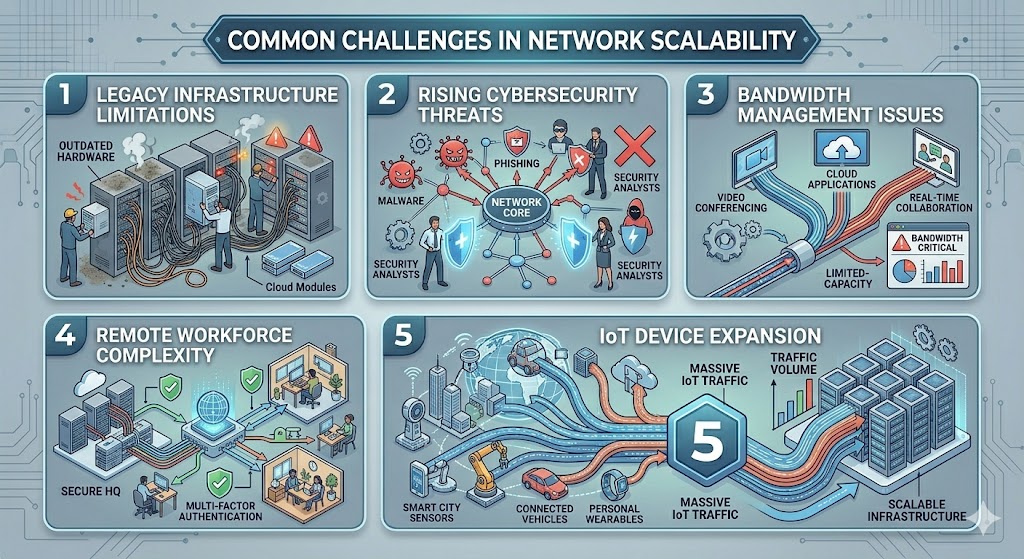
Legacy Infrastructure Limitations
Outdated hardware and networking systems often struggle to support modern workloads.
Rising Cybersecurity Threats
Growing networks create larger attack surfaces and security risks.
Bandwidth Management Issues
Businesses must handle increasing video conferencing, cloud applications, and real-time collaboration traffic.
Remote Workforce Complexity
Hybrid work environments require secure and scalable remote connectivity solutions.
IoT Device Expansion
Connected devices generate massive amounts of network traffic and require scalable infrastructure.
Key Technologies Driving Network Scalability
Cloud Networking
Cloud-based infrastructure allows businesses to scale network resources dynamically.
Benefits:
- Flexible infrastructure
- Lower hardware costs
- Improved remote accessibility
- Faster deployment
SD-WAN (Software-Defined Wide Area Network)
SD-WAN improves network flexibility, security, and application performance.
Advantages:
- Centralized network control
- Better bandwidth optimization
- Secure remote connectivity
AI-Powered Network Automation
Artificial intelligence helps automate:
- Traffic management
- Threat detection
- Network optimization
- Performance monitoring
AI-driven networking improves efficiency and reduces manual management workloads.
Edge Computing
Edge computing processes data closer to devices, reducing latency and improving performance.
Best For:
- IoT environments
- Real-time applications
- Smart manufacturing
- Remote operations
5G Connectivity
5G networks support:
- Faster data transfer
- Low latency
- Massive device connectivity
This technology is accelerating enterprise digital transformation worldwide.
Build Scalable Network Infrastructure with PerfectionGeeksFuture-proof your business with secure, high-performance, and scalable networking solutions tailored for modern enterprise growth. Why Choose PerfectionGeeks?
Explore innovative IT infrastructure solutions with PerfectionGeeks and accelerate your digital transformation journey. |
How Network Scalability Impacts Business Operations
Better Customer Experience
Reliable network performance improves:
- Website speed
- Application responsiveness
- Customer support systems
- E-commerce operations
Improved Employee Productivity
Scalable networks ensure employees can access systems, cloud platforms, and communication tools without interruptions.
Faster Digital Transformation
Businesses adopting AI, automation, and cloud services need scalable infrastructure to support innovation.
Stronger Disaster Recovery
Scalable cloud-based networks improve backup systems and business continuity planning.
Best Practices for Building Scalable Networks
Adopt Cloud-Native Infrastructure
Cloud-native networking improves flexibility and scalability.
Implement Network Automation
Automation reduces operational complexity and improves performance management.
Prioritize Cybersecurity
Businesses should integrate scalable security solutions into every network layer.
Monitor Network Performance Continuously
Real-time monitoring helps identify bottlenecks before they impact operations.
Upgrade Legacy Systems
Modernizing outdated infrastructure improves scalability and long-term reliability.
Future Trends in Scalable Networking 2026
AI-Driven Autonomous Networks
AI systems will increasingly manage and optimize enterprise networks automatically.
Multi-Cloud Networking
Businesses will adopt hybrid and multi-cloud strategies for flexibility and resilience.
Zero Trust Security Models
Zero-trust networking will become standard for enterprise cybersecurity.
IoT and Smart Infrastructure
Growing IoT ecosystems will drive demand for scalable edge networking solutions.
Green Networking Initiatives
Energy-efficient networking technologies will become a major enterprise priority.
|
Frequently Asked Questions
Quick answers related to this article from PerfectionGeeks.
1. What is network scalability in business?
2. Why is scalable network infrastructure important?
3. What technologies improve network scalability?
4. How does network scalability support remote work?
5. What are the risks of poor network scalability?
6. How can businesses build scalable networks?
Conclusion
Network scalability has become a critical success factor for modern businesses navigating digital transformation, cloud adoption, AI integration, and remote work environments. Organizations that invest in scalable networking solutions gain greater flexibility, stronger cybersecurity, improved operational efficiency, and better customer experiences.
As enterprise technologies continue evolving in 2026, scalable infrastructure will determine how effectively businesses adapt to changing market demands and emerging digital opportunities.
Businesses that modernize their networking strategies today are positioning themselves for sustainable growth, operational resilience, and long-term competitive advantage.

Shrey Bhardwaj is the Director & Founder of PerfectionGeeks Technologies, bringing extensive experience in software development and digital innovation. His expertise spans mobile app development, custom software solutions, UI/UX design, and emerging technologies such as Artificial Intelligence and Blockchain. Known for delivering scalable, secure, and high-performance digital products, Shrey helps startups and enterprises achieve sustainable growth. His strategic leadership and client-centric approach empower businesses to streamline operations, enhance user experience, and maximize long-term ROI through technology-driven solutions.
![MVP App Development Cost in 2026: Build Fast, Validate, Then Scale [Complete Cost Breakdown Guide]](https://d31xy5iwtct4dk.cloudfront.net/uploads/1777976980033-mvp.webp)