01
Generative AI Development
We design and deploy generative AI systems — from custom LLM applications to fine-tuned models trained on your proprietary data — engineered for accuracy, not just demo-quality output.


PerfectionGeeks is an AI development company helping enterprises design, build, and deploy production-grade AI systems — from LLM applications and AI agents to enterprise-wide automation. We turn AI strategy into working software, not slide decks.
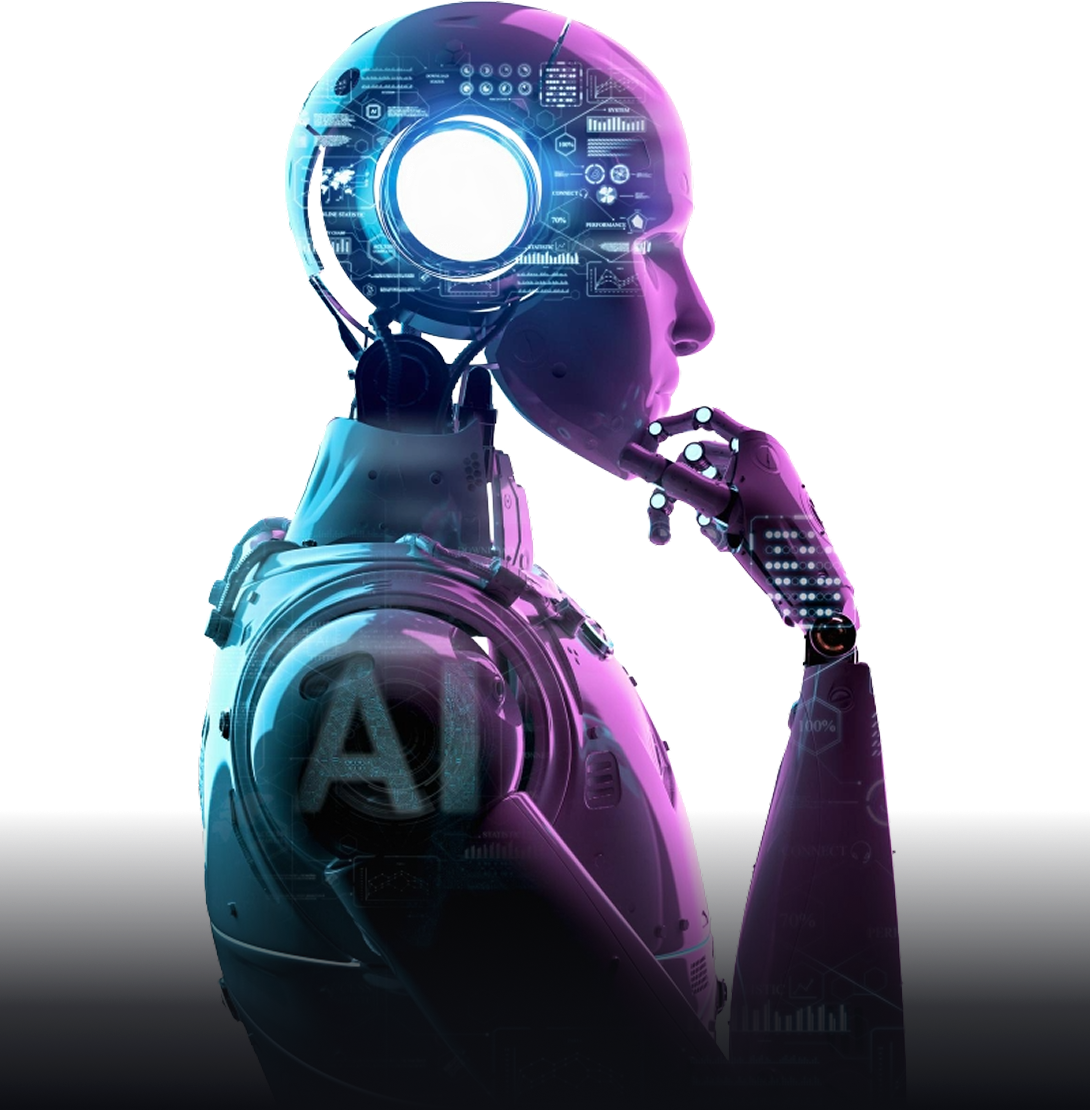
Most businesses don't fail at AI because the models don't work. They fail because they buy disconnected AI tools instead of building AI into how the business actually runs — its data, its workflows, its existing systems.
5+
Years Experience
The demand for this technology is certainly quite inspiring and has helped many in the industry with excellent solutions to dominate the competitive market. We have the right team and facilities to help you with complete artificial intelligence solutions that will give your business an edge over the others.
Take the First Step
Generative AI & LLM
each one should ideally become its own dedicated landing page over time for long-tail ranking; for now this page can house all of them with internal links to sub-pages where they already exist.
We design and deploy generative AI systems — from custom LLM applications to fine-tuned models trained on your proprietary data — engineered for accuracy, not just demo-quality output.
Custom applications built on GPT-4o, Claude, Llama, and Gemini, tailored to your workflows, compliance requirements, and internal data — covering model selection, prompt architecture, and production deployment.
Autonomous, multi-step AI agents that take real action inside your business systems — querying data, triggering workflows, completing tasks — built with modern agent frameworks and integrated with your existing tools.
Retrieval-Augmented Generation systems that ground your AI outputs in your actual company data — internal documents, knowledge bases, and databases — reducing hallucination and increasing answer accuracy.
Production-grade conversational AI for customer support, internal operations, and sales — built to handle real enterprise scale, security requirements, and multi-system integration, not just a scripted FAQ bot.
For businesses that need a roadmap before a build — we assess your data readiness, identify the highest-ROI AI use cases, and define a phased implementation plan before any code is written.
AI-driven automation for the repetitive, judgment-light work sitting inside your operations — document processing, approvals, data entry — plus seamless integration into your existing CRM, ERP, and internal tools.
AI systems that understand and act on image, video, and document data — powering use cases like document intelligence, visual quality inspection, and automated content analysis.
Guardrails, bias monitoring, and compliance frameworks (HIPAA, PCI-DSS, GDPR, and industry-specific standards) built into every AI system from day one — not retrofitted after deployment.

Build self-improving systems that learn from data to deliver smarter outcomes over time.

Deploy intelligent virtual agents that handle complex interactions 24/7 with human-like precision.

Enable machines to understand, interpret, and generate human language seamlessly.

Analyze and interpret visual data with state-of-the-art computer vision algorithms.

Forecast future trends and behaviors using advanced statistical and ML models.

Automate repetitive tasks intelligently, freeing your team for high-value work.
Build self-improving systems that learn from data to deliver smarter outcomes over time.
Deploy intelligent virtual agents that handle complex interactions 24/7 with human-like precision.
Enable machines to understand, interpret, and generate human language seamlessly.
Analyze and interpret visual data with state-of-the-art computer vision algorithms.
Forecast future trends and behaviors using advanced statistical and ML models.
Automate repetitive tasks intelligently, freeing your team for high-value work.
Engagement Models / Pricing
Select the delivery model that aligns with your goals, timeline, and level of AI adoption.
$5,000–$15,000
4–6 weeks
Best for companies exploring AI opportunities before committing to full-scale development
$30,000–$150,000+
Timeline varies by scope
Best for businesses launching AI-powered products and enterprise-grade solutions
From $55/hr
Flexible engagement
Best for teams building internal AI capability and maintaining ongoing innovation
From $10,000/month
Ongoing
Best for enterprises operating AI across multiple departments and business functions

200+ projects delivered across healthcare, fintech, retail, and logistics — with a track record of moving AI from prototype into production.

Every AI system is built with data governance, compliance, and access control considered from day one, not bolted on afterward.


We build AI to work inside your existing systems — CRM, ERP, internal tools — rather than asking you to rip and replace what already works.

Milestone-based delivery, dedicated project managers, and NDA-protected discovery on every engagement.
Our AI development process is designed to transform your business ideas into intelligent solutions. We follow a structured and data-driven approach to ensure accuracy, scalability, and long-term success across every stage of development.
Understand your data, workflows, and highest-value AI opportunities.

We deliver AI solutions across multiple industries, transforming operations and unlocking new levels of efficiency.
Building the Future with Generative AI
We build custom Generative AI solutions, including LLM applications, AI agents, and RAG systems, to help businesses automate workflows and drive innovation. Our scalable AI solutions are designed for real-world business impact.
LLM Application Development
Custom applications built on GPT-4o, Claude 3.5 Sonnet, Llama 3.1, and Gemini — tailored to your workflows, data, and compliance requirements. We handle model selection, prompt engineering, API integration, and production deployment.
RAG Pipeline Development
Retrieval-Augmented Generation systems that connect your LLM to internal knowledge bases, documents, and databases — delivering accurate, source-grounded responses instead of hallucinated answers.
AI Agents & Workflow Automation
Autonomous multi-step agents built with LangChain, LangGraph, and AutoGen that execute tasks, make decisions, and integrate with your existing tools — reducing manual intervention across operations.
LLM Fine-Tuning on Proprietary Data
Fine-tune open-source and proprietary models on your business data — improving accuracy, domain specificity, and response quality for your exact use case, whether legal, medical, financial, or operational.
Enterprise AI Chatbot & Copilot Development
Production-grade chatbots and copilots for customer support, internal operations, sales, and HR — built to handle real enterprise scale, security requirements, and multi-system integrations.
S2S is an AI-enabled EdTech application built by PerfectionGeeks to personalize student learning journeys at scale. The platform uses AI to analyze individual academic performance, daily study habits, and progress patterns — then generates tailored learning recommendations and routine optimizations for each student. Students needed personalized guidance that adapted to their individual pace and habits, not generic, one-size-fits-all study plans. Approach: PerfectionGeeks built an AI recommendation layer that continuously analyzes learning data and habit tracking to surface individualized academic insights. Result: A scalable platform that bridges daily learning behavior with long-term academic outcomes, helping students build more productive study habits.
Get started free
When it comes to Artificial Intelligence, it has the capability to completely transform your business results and that too without costing you a lot of time. Here at Perfection Geeks, we understand your business approach and will help you with all kinds of AI solutions that include: natural language processing, deep learning, and machine learning.
Consult Now!Artificial Intelligence is reshaping the way businesses operate by enabling systems to learn, adapt, and make data-driven decisions in real time. At PerfectionGeeks, we help organizations harness the full potential of AI to streamline workflows, improve efficiency, and unlock new growth opportunities. Our AI solutions go beyond basic automation. We build intelligent systems that analyze complex data, predict future trends, and deliver meaningful insights that empower businesses to stay ahead in a competitive market.
Develop intelligent models that learn from data to improve accuracy and automate decision-making.
Leverage data patterns to forecast trends, reduce risks, and make proactive business decisions.

Enhance customer engagement with personalized, real-time interactions using advanced AI technologies.
Our expertise includes Machine Learning, Natural Language Processing (NLP), Computer Vision, and advanced analytics—enabling us to deliver scalable, secure, and future-ready AI solutions tailored to your business needs.
Unlock transformative advantages that drive real business outcomes with our cutting-edge AI solutions.
Eliminate manual, time-consuming workflows with intelligent automation that runs 24/7 without fatigue.Eliminate manual, time-consuming workflows with intelligent automation that runs 24/7 without fatigue.
Leverage data-driven insights and predictive analytics to make smarter, faster business decisions.Leverage data-driven insights and predictive analytics to make smarter, faster business decisions.
Deliver personalized, real-time interactions through AI chatbots and recommendation engines.Deliver personalized, real-time interactions through AI chatbots and recommendation engines.
Cut overhead by replacing error-prone manual processes with precise, scalable AI solutions.Cut overhead by replacing error-prone manual processes with precise, scalable AI solutions.
Empower your teams to focus on high-value work while AI handles the rest at unprecedented speed.Empower your teams to focus on high-value work while AI handles the rest at unprecedented speed.
Easily scale your operations with AI-powered systems that adapt to increasing workloads, enabling your business to grow without compromising performance or efficiency.Easily scale your operations with AI-powered systems that adapt to increasing workloads, enabling your business to grow without compromising performance or efficiency.
Everything you need to know about working with PerfectionGeeks Technologies. Can't find an answer? Reach out to us.