Who Needs HIPAA Compliant Apps?
Covered Entities (hospitals, clinics, insurers, pharmacies) and their Business Associates (app developers, SaaS vendors, cloud providers) who handle PHI are legally required to comply with HIPAA.
PerfectionGeeks is a trusted HIPAA compliant app development company. We architect healthcare applications with end-to-end PHI encryption, airtight access controls, complete audit trails, and full HIPAA, HITECH, HL7 FHIR & GDPR compliance — so you can focus on care, not liability.
HIPAA-compliant app development is the process of building healthcare software solutions that strictly adhere to the Health Insurance Portability and Accountability Act (HIPAA) regulations. These applications are engineered to securely manage protected health information (PHI) while maintaining strict privacy, security, and audit controls.
HIPAA compliance requires:
At PerfectionGeeks, we develop HIPAA-compliant healthcare applications including telemedicine platforms, patient portals, remote monitoring systems, healthcare CRM solutions, and custom medical software. With over 12 years of healthcare software expertise, we build applications that combine regulatory compliance with user-friendly design, scalability, and performance—helping healthcare organizations protect patient data while delivering quality digital health experiences.
Build secure video consultation, appointment scheduling, and patient communication systems with end-to-end encryption and HIPAA audit trails.
Develop patient-facing applications for accessing medical records, viewing test results, managing prescriptions, and communicating with care teams securely.
Create IoT-integrated applications that capture vital signs, health metrics, and patient data with real-time alerts and secure cloud storage.
Build HIPAA-compliant systems for secure storage, encryption, backup, and retrieval of protected health information with role-based access controls.
Design custom CRM systems for clinics and healthcare providers to manage patient relationships, billing, scheduling, and compliance reporting.
Implement encryption, access controls, audit logging, and compliance frameworks to meet HIPAA, HL7, and FHIR standards from the ground up.
A structured, security-first approach to delivering healthcare applications that meet regulatory standards while maintaining seamless functionality and user experience.
HIPAA-compliant development across diverse healthcare specialties and organizational needs.
See how healthcare organizations transformed their digital infrastructure with secure, compliant applications built by PerfectionGeeks.
A multi-location clinic network deployed a secure telemedicine platform enabling remote consultations with encrypted patient data storage and audit logging. The solution increased patient access by 45% while maintaining full HIPAA compliance and reducing operational overhead.
A health-tech startup launched a patient engagement and appointment management system with role-based access controls and encrypted communications. The platform achieved SOC 2 Type II certification and processed over 50,000 patient interactions securely.
An enterprise healthcare provider implemented a remote patient monitoring application for chronic disease management with real-time data collection, secure alerts, and provider dashboards. The system improved patient outcomes while maintaining strict data privacy standards.
Long SEO Content Section
Pricing & Timelines
$45K - $75K
$75K - $150K
$150K+
We combine healthcare expertise, security-first architecture, and proven development practices to deliver compliant applications that protect patient data and drive business growth.
We build applications with encryption, secure authentication, audit logging, and data isolation from the ground up to protect PHI.
Our development practices align with HIPAA requirements including BAA agreements, access controls, and vulnerability management.
We understand telehealth workflows, EHR integration, patient data management, and the unique needs of modern healthcare organizations.
Your healthcare application grows with your business, supported by clean code, documentation, and ongoing security updates.
Building HIPAA-compliant healthcare applications requires more than checking boxes. PerfectionGeeks embeds compliance into every phase of development—from secure coding practices and data encryption to access controls and audit logging. Our team understands healthcare workflows, patient data sensitivity, and regulatory expectations, delivering applications that protect PHI while enabling clinical efficiency and business growth.
<h3>Protect patient information with advanced encryption, secure authentication, and role-based access controls. We implement security frameworks that safeguard healthcare applications against unauthorized access and data breaches.</h3>
<p>Enable secure storage, seamless exchange, and efficient management of healthcare data across systems. Our solutions support EHR integration, data backup, and real-time synchronization for improved accessibility and reliability.</p>
<p>Ensure regulatory compliance with built-in audit trails, activity monitoring, and documentation management. We help healthcare organizations maintain HIPAA standards while simplifying compliance reporting and governance.</p>
<h3>Maintain application performance and security through continuous monitoring, automated alerts, and cloud infrastructure management. Our proactive approach helps identify risks early and ensures maximum system uptime.</h3>
Let PerfectionGeeks help you develop secure, scalable healthcare solutions that meet regulatory requirements and deliver patient value.


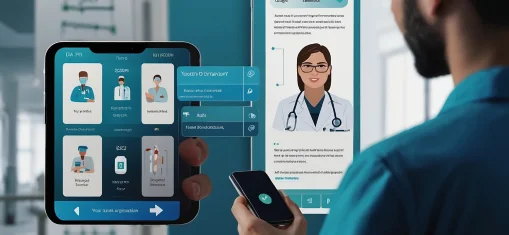
Modern UI design in healthcare applications balances usability with strict security requirements. Our HIPAA-compliant apps feature role-based dashboards, encrypted communication channels, audit trails, and intuitive workflows that simplify patient interactions while maintaining data integrity and regulatory adherence.
End-to-End Encryption
All patient data and communications are encrypted in transit and at rest to meet HIPAA transmission security standards.
Audit Logging
Comprehensive activity logs track every access and modification, enabling compliance verification and breach investigation.
Role-Based Access Control
Granular permission management ensures only authorized healthcare staff access specific patient information.
Secure Authentication
Multi-factor authentication and single sign-on protect user accounts while maintaining seamless clinical workflows.
Enterprise-grade tools and frameworks built for secure healthcare data management and regulatory compliance.