.png)
Published 22 July 2026 | Updated 13 August 2026
Technology
How to Build a Mobile Game Like Mobile Legends: Bang Bang
Mobile Legends: Bang Bang has surpassed 1 billion installs and continues to ship a new hero every few weeks. In June 2026, it added a new assassin, Hirara, and the Scarlet Embers season, without breaking stride. So when you say you want to make a mobile game like it, you are not describing one app. You are describing a live-service machine that never stops, and that shapes your budget, your team, and whether you finish.
- Building a Mobile Legends-style MOBA requires advanced real-time multiplayer technology, not just strong visuals and gameplay ideas.
- A successful MOBA depends on core gameplay, hero balance, progression systems, matchmaking, and a strong in-game economy.
- Unity is a popular choice for mobile MOBA development due to its performance, tools, and developer ecosystem.
- Real-time servers, authoritative networking, and matchmaking are the most complex and expensive parts of development.
- Developing a competitive MOBA can cost $200,000 to $1M+ and take 12–24 months or more.
- Launching the game is only the beginning; regular updates, balance patches, events, and community management drive long-term success.
- Soft launches, retention testing, ASO, and user acquisition strategies are essential before global release.
- AI can support game development through asset creation, analytics, and optimization but cannot replace expert game design and engineering.
- The best approach is to start with a smaller prototype, validate the gameplay, and scale gradually.
First, Understand What a Real-Time MOBA Demands
MLBB is a five-on-five multiplayer online battle arena. A MOBA, in plain terms, is two teams pushing three lanes toward each other's base while ten players fight in real time on one map. That is the whole problem. A puzzle game runs on one phone, with no one else involved. A MOBA has to keep ten devices agreed on the exact position of every hero and skill shot, many times a second. Real-time multiplayer is the hardest thing you can ask a mobile game to do, and the reason a MOBA is nobody's first game. Thrilling to play, brutal to build.
Deconstructing the Game: Core Loop, Gameplay, Progression, and Economy
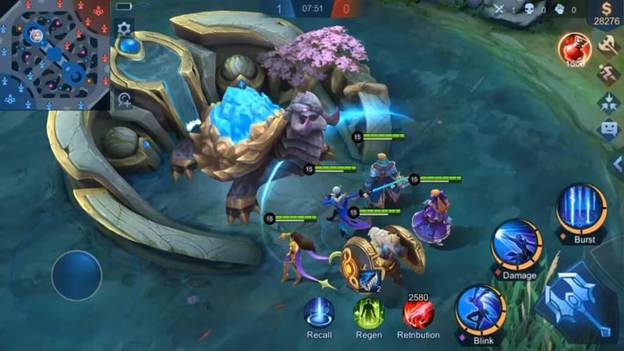
Strip MLBB down and the gameplay loop is tight: pick a hero, farm gold, win team fights, take turrets and the base, usually inside 15 minutes. The depth sits in everything around it: more than 130 heroes across six roles, a ranked ladder that climbs from Warrior to Mythical Immortal, and a two-currency economy of Battle Points you grind for and Diamonds you buy.
That economy is where your game earns and where your design gets judged. Progression and monetization have to feel earned, not extractive. Build it well and a resale market forms on its own; proof your ladder matters. Plenty of MLBB players skip the climb and pick up a ranked-ready Mobile Legends account from a service like BoostRoyal rather than grinding from Warrior. When people pay to shortcut your progression, you built progression worth shortcutting.
Designing that economy is its own discipline, and it is easy to underestimate. Someone has to structure the battle pass, tune the gacha draw events (many markets now require you to disclose the pull odds, and a few jurisdictions regulate loot boxes outright), and decide whether the game leans on a handful of big spenders or a broad base of small ones. Layer on a live-ops promo calendar of limited offers and seasonal events, and monetization stops being a price tag and becomes a full-time design job.
Choosing an Engine: Unity, Unreal, or the No-Code Shortcut
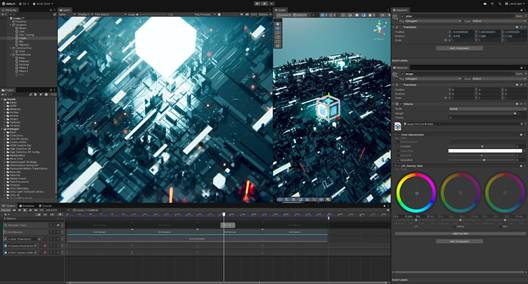
MLBB runs on Unity; the MLBB 2.0 update rebuilt it, jumping from an aging Unity 4 base to Unity 2017, and cut startup times by up to 60%. For most studios making a mobile MOBA, Unity is the default: a huge asset library, strong mobile performance, and C# that many developers already know. Unreal Engine is the other serious option, gorgeous at the high end since the Unreal Engine 4 days, though it demands more hardware and talent. Your 3D artists live in Maya or Blender regardless.
Want to make a mobile game without a full code team? No-code platforms like Buildbox exist, and Buildbox 4 even builds assets and levels from text prompts. The catch: those tools target hyper-casual and puzzle games. None of them ship a competitive 5v5 MOBA. For that, someone writes real code.
The Hard Part: Servers, Netcode, and Matchmaking

This is where budgets die. A MOBA needs authoritative servers: a client-server model where the server, not a player's phone, decides the outcome, because trusting the client invites cheaters. Most studios lean on netcode frameworks like Photon, which handle real-time messaging over UDP, room management, and matchmaking out of the box.
Matchmaking is its own specialist job. You need skill-rating logic that pairs similar players fast enough that nobody waits, plus analytics tracking win rates, queue times, and hero balance. Get netcode wrong, and every match feels like a lag-filled error. Get it right and players never notice, which is the point.
What It Costs to Make a Mobile Game Like This
No sugarcoating: a MOBA is one of the priciest genres on mobile. A serious build runs from roughly $200,000 to well past $1 million, before servers and marketing. Here is a rough map.
| Build stage | What it includes | Rough cost | Timeline |
|---|---|---|---|
| Playable prototype | Core 5v5 loop, one map, 3-4 heroes | $30k-$80k | 2-4 months |
| Full production | 15+ heroes, matchmaking, netcode, ranked, store | $200k-$1M+ | 12-24 months |
| Live operations | New heroes, events, balance patches, moderation | ~20% of build, yearly | Ongoing |
| Cloud servers | Real-time hosting on AWS or Google Cloud | $500-$20k+ / month | Ongoing |
The team behind those numbers is not one person. You need gameplay programmers, a backend or netcode specialist, a designer obsessing over hero balance, 3D and UI artists, and a producer keeping the roadmap honest. A solo indie dev can prototype the idea. Shipping and running it is a studio job, which is why many founders hire a game development partner or consultant instead of staffing everything in-house.
That balance designer is not a part-time hire. MLBB ships balance patches on a roughly two-week cadence, with larger resets landing each new season, so no hero stays overtuned for long. Keeping that up means a standing balance team reading a live data pipeline of win rates, pick and ban rates, and match length, then tuning numbers every patch. A live MOBA is never finished, and the balancing is the clearest proof of it.
Shipping to Google Play and the App Store
Once the game is stable, you submit your game to the stores. On Android, a Google Play developer account is a one-time $25 fee, and new personal accounts must run a 14-day closed test with 12 testers before going live. On iOS, Apple's App Store charges a yearly developer fee and reviews more strictly. Both platforms take a cut of every in-app purchase, which for a free-to-play MOBA is your whole revenue model, so read the current terms before you price a skin.
Soft Launch, Retention, and What Users Cost
Do not flip the switch worldwide on day one. Studios soft-launch a MOBA in a handful of smaller test markets first, releasing to real players in one or two countries to see how the game actually holds up. The number that decides everything is retention: what share of players come back the next day (D1), a week later (D7), and a month on (D30). For a live MOBA, you want D1 up around 40%, D7 in the low double digits, and D30 still in the single digits. If those curves sag in soft launch, no marketing spend later will fix them.
Then comes the part first-time founders underestimate: getting players costs real money. Cost per install, or CPI, is the price you pay through advertising to land one new user, and it climbs fast in a competitive genre. A serious user-acquisition budget often rivals the development bill on its own, so the spend to fill your matchmaking queue can match the spend to build the game in the first place.
App store optimization does the quieter work. A sharp title, clean screenshots, a strong icon, and the right keywords lift how often the stores surface your game and how many of those views become installs, which drags down the CPI you pay everywhere else. Soft launch proves the loop retains; ASO and UA spend turn that proven loop into a player base.
Where AI Fits Into Modern Gamedev
AI is a real part of gamedev now, just not the part that writes your game. Teams use it to generate concept art, rough out animation, tune matchmaking, and flag toxic chat. You can learn the fundamentals free on YouTube, where developers post full Unity courses, but no model hands you a finished MOBA. AI trims the grunt work; it will not replace the judgment that keeps ten phones in sync.
Start Small, Then Scale
Start smaller than Mobile Legends. Moonton did. Build a tight prototype of the core loop, prove the netcode holds up with real players on real networks, then scale the roster and the economy. The studios that own this genre are not the ones with the loudest launch. They are the ones still shipping heroes years later.
Frequently Asked Questions
Quick answers related to this article from PerfectionGeeks.
1. How much does it cost to make a game like Mobile Legends?
2. How long does it take to build a MOBA game?
Conclusion
Creating a game like Mobile Legends: Bang Bang is not simply about designing exciting heroes or copying a successful battle arena formula. A competitive 5v5 MOBA is a complex ecosystem that combines real-time networking, advanced game design, backend infrastructure, player psychology, monetization strategy, and continuous live operations.
The biggest challenge is not building the first version of the game — it is creating a platform that players want to return to for years. Smooth matchmaking, balanced heroes, fair progression, engaging events, and a strong community are what transform a mobile game into a long-term success story.
For startups and game studios, the smarter approach is to begin with a focused prototype, validate the core gameplay, test retention, and gradually expand features based on player feedback. Investing heavily in servers, analytics, live updates, and community management is just as important as the initial development.
A Mobile Legends–style MOBA requires significant time, expertise, and investment, but the opportunity is equally massive. With the right technology stack, experienced development team, and a player-first approach, it is possible to build a competitive multiplayer experience that attracts millions of users and grows into a sustainable gaming ecosystem. The goal is not just to launch a game — it is to build a world players choose to stay in.

Written By Devanshi
SEO Content Specialist at PerfectionGeeks Technologies
Devanshi specializes in SEO-focused content for AI, web, and mobile app development. She crafts user-centric, search-optimized content that enhances online visibility, strengthens brand authority, and supports sustainable organic growth through strategic content marketing and audience-focused communication.
.png)