
Published 15 July 2025 | Updated 23 September 2026
Technology
AI Replacing SaaS with AaaS Predictions 2026 — Complete Guide
Artificial Intelligence is rapidly reshaping the software industry. Traditional Software-as-a-Service (SaaS) platforms are evolving into a new AI-driven model known as AaaS — AI-as-a-Service. Businesses are no longer looking for static software tools alone; they now demand intelligent platforms capable of automation, prediction, personalization, and autonomous decision-making.
As organizations accelerate digital transformation, the conversation has shifted from “Will AI transform SaaS?” to “How quickly will AI replace traditional SaaS models?”
In 2025 and beyond, AI-powered platforms are expected to redefine how companies build, deploy, and consume software solutions across industries including healthcare, fintech, retail, logistics, education, and enterprise operations.
This guide explores how AI is transforming SaaS, the rise of AaaS platforms, industry predictions for 2025, emerging business opportunities, and the future of AI-driven software ecosystems.
Transform Your Digital Experience
What is AaaS (AI-as-a-Service)?
AaaS, or AI-as-a-Service, refers to cloud-based AI platforms that provide machine learning, automation, predictive analytics, generative AI, and intelligent business capabilities through scalable subscription models.
Is AI replacing SaaS?
AI is not completely replacing SaaS, but it is fundamentally transforming it. Traditional SaaS platforms are evolving into AI-powered intelligent systems that automate workflows, personalize experiences, and deliver predictive insights.
What is the future of SaaS in 2026?
The future of SaaS lies in AI-native platforms that integrate:
- Generative AI
- Automation
- Conversational interfaces
- Predictive analytics
- Autonomous workflows
- Personalized user experiences
Why are businesses adopting AI-powered SaaS solutions?
Businesses adopt AI-powered SaaS because it helps:
- Reduce operational costs
- Improve productivity
- Automate repetitive tasks
- Enhance customer experiences
- Increase decision-making speed
- Generate data-driven insights
- AI is transforming traditional SaaS platforms into intelligent AI-as-a-Service ecosystems.
- Generative AI, machine learning, and predictive analytics are driving SaaS innovation in 2025.
- AI-powered SaaS improves automation, personalization, and operational efficiency.
- Healthcare, fintech, retail, and customer support industries are rapidly adopting AI-native platforms.
- AI will enhance SaaS rather than completely replace it.
- Conversational AI, autonomous agents, and predictive workflows are shaping the future of software.
- Businesses investing in AI integration gain competitive advantages in scalability and productivity.
- Cloud-native infrastructure and strong cybersecurity are critical for AI-driven SaaS success.

Understanding the Shift from SaaS to AaaS
Traditional SaaS platforms primarily focus on delivering cloud-based software functionality. Users still need to manually operate workflows, analyze reports, and make business decisions.
AaaS platforms go a step further by embedding artificial intelligence directly into the software experience. Instead of simply providing tools, AI-driven platforms actively assist users through automation and intelligent recommendations.
Traditional SaaS vs AI-as-a-Service
| Traditional SaaS | AI-as-a-Service (AaaS) |
|---|---|
| Manual workflows | Intelligent automation |
| Static dashboards | Predictive analytics |
| Human-driven decisions | AI-assisted decisions |
| Rule-based systems | Self-learning systems |
| Generic experiences | Personalized experiences |
| Standard customer support | AI chatbots and virtual assistants |
This transition is transforming the entire SaaS ecosystem.
Why AI Is Disrupting the SaaS Industry
1. Rise of Generative AI
Generative AI technologies such as large language models are changing how software interacts with users. Businesses now expect software platforms to generate content, automate communication, summarize data, and provide intelligent recommendations.
2. Demand for Automation
Companies want to reduce repetitive manual tasks through AI-powered workflow automation.
Examples include:
- Automated customer support
- AI-driven marketing campaigns
- Smart financial reporting
- Predictive inventory management
3. Better Personalization
AI enables SaaS platforms to deliver highly personalized experiences based on user behavior and business data.
4. Faster Decision-Making
AI-powered analytics platforms help businesses make real-time decisions using predictive insights.
5. Competitive Pressure
Organizations adopting AI-driven software gain significant advantages in efficiency, scalability, and customer engagement.
Industry Statistics: AI and SaaS Transformation
- The global AI software market is expected to surpass $300 billion by 2030.
- Over 80% of enterprises are investing in AI-enabled business applications.
- AI-powered automation can reduce operational costs by up to 40%.
- More than 75% of SaaS companies are integrating generative AI features into their platforms.
- Gartner predicts AI-driven software ecosystems will dominate enterprise technology spending by 2026.
These statistics highlight why businesses are rapidly transitioning toward AI-native SaaS models.
Key Technologies Driving AaaS in 2026
Generative AI
Generative AI enables platforms to create:
- Text content
- Reports
- Code
- Images
- Customer responses
- Business insights
Machine Learning
Machine learning helps platforms improve continuously through data analysis and behavioral learning.
Natural Language Processing (NLP)
NLP enables conversational interfaces, AI chatbots, and intelligent virtual assistants.
Predictive Analytics
AI systems analyze historical data to forecast trends and business outcomes.
Autonomous Agents
AI agents are becoming capable of independently executing workflows and completing tasks with minimal human intervention.
Industries Most Impacted by AI-Powered SaaS
Healthcare
AI-driven healthcare platforms improve diagnostics, patient management, and operational efficiency.
FinTech
AI enhances fraud detection, risk analysis, algorithmic trading, and financial automation.
E-Commerce
Retail businesses use AI for:
- Personalized recommendations
- Inventory forecasting
- Customer behavior analysis
- Automated marketing
Education
EdTech platforms leverage AI for personalized learning experiences and automated assessments.
Customer Support
AI-powered chatbots and virtual assistants are replacing traditional support workflows.
Build AI-Powered SaaS Solutions with PerfectionGeeksTransform your traditional SaaS platform into an intelligent AI-driven ecosystem with scalable automation and predictive capabilities. Why Choose PerfectionGeeks?
Explore innovative AI development services with PerfectionGeeks and future-proof your software business. |
Will AI Completely Replace SaaS?
The short answer is no — AI will not eliminate SaaS entirely. Instead, SaaS is evolving into AI-enhanced software ecosystems.
Most modern SaaS applications will incorporate:
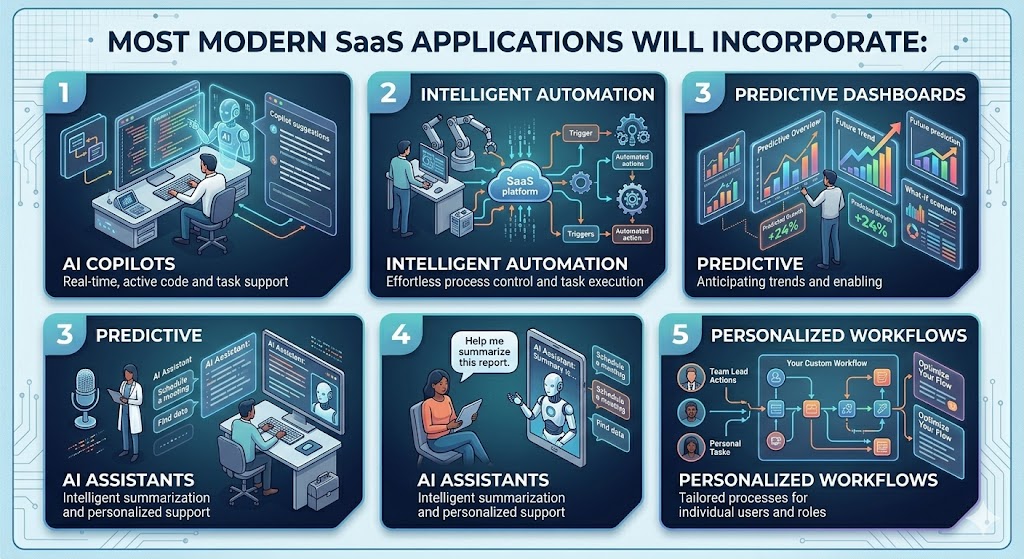
- AI copilots
- Intelligent automation
- Predictive dashboards
- AI assistants
- Personalized workflows
The future belongs to hybrid platforms where AI becomes a core functionality rather than an optional feature.
Benefits of AI-Powered SaaS Platforms
Increased Productivity
AI automates repetitive processes and improves operational efficiency.
Lower Operational Costs
Automation reduces manual labor and minimizes process inefficiencies.
Smarter Customer Experiences
AI helps deliver faster, more personalized customer interactions.
Improved Data Utilization
Businesses can extract actionable insights from large datasets more effectively.
Scalable Business Operations
AI systems can manage increasing workloads without proportional staffing growth.
Challenges in AI-Driven SaaS Transformation
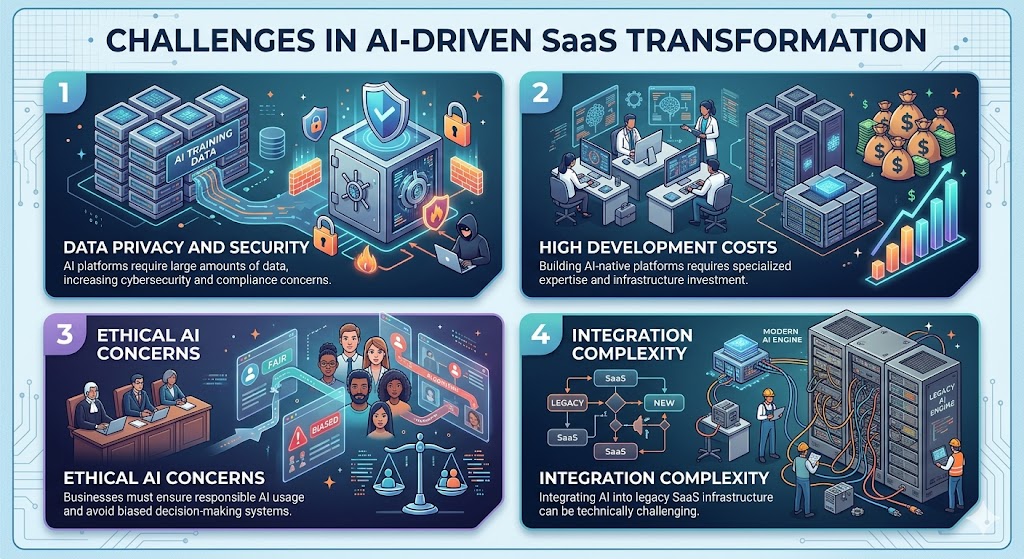
Data Privacy and Security
AI platforms require large amounts of data, increasing cybersecurity and compliance concerns.
High Development Costs
Building AI-native platforms requires specialized expertise and infrastructure investment.
Ethical AI Concerns
Businesses must ensure responsible AI usage and avoid biased decision-making systems.
Integration Complexity
Integrating AI into legacy SaaS infrastructure can be technically challenging.
Emerging Trends in AI and SaaS 2026
AI Copilots in Enterprise Software
AI assistants are becoming standard features in CRM, ERP, HR, and productivity platforms.
Autonomous Workflow Automation
AI agents can independently manage scheduling, reporting, and customer interactions.
Vertical AI SaaS Platforms
Industry-specific AI solutions are growing rapidly in healthcare, legal tech, finance, and logistics.
Conversational Interfaces
Voice-enabled and chat-based interfaces are replacing traditional dashboards.
Hyper-Personalization
AI analyzes user behavior to deliver highly tailored experiences in real time.
How Businesses Can Prepare for the AI-Driven SaaS Future
Invest in AI Integration
Businesses should gradually incorporate AI features into existing software ecosystems.
Upgrade Data Infrastructure
High-quality data management is essential for effective AI implementation.
Focus on Cloud Scalability
Cloud-native architectures support scalable AI workloads more efficiently.
Prioritize Cybersecurity
Organizations must strengthen data protection and compliance frameworks.
Partner with AI Development Experts
Experienced AI development companies help businesses accelerate digital transformation while reducing implementation risks.
|
Frequently Asked Questions
Quick answers related to this article from PerfectionGeeks.
1. What is AI-as-a-Service (AaaS)?
2. Is SaaS becoming obsolete because of AI?
3. What industries benefit most from AI-powered SaaS?
4. How does AI improve SaaS platforms?
5. What are the risks of AI-powered SaaS?
6. Why should businesses adopt AI-driven SaaS solutions?
Conclusion
The SaaS industry is entering a major transformation phase as artificial intelligence reshapes how software platforms operate and deliver value. While AI may not fully replace SaaS, it is redefining the entire software ecosystem through automation, predictive intelligence, and autonomous capabilities.
In 2026, successful software businesses will be those that embrace AI-native architectures, cloud scalability, intelligent automation, and personalized digital experiences. Organizations that fail to evolve risk losing competitiveness in an increasingly AI-driven market.
The future belongs to businesses that combine SaaS flexibility with AI intelligence to create scalable, adaptive, and customer-centric platforms.

Shrey Bhardwaj is the Director & Founder of PerfectionGeeks Technologies, bringing extensive experience in software development and digital innovation. His expertise spans mobile app development, custom software solutions, UI/UX design, and emerging technologies such as Artificial Intelligence and Blockchain. Known for delivering scalable, secure, and high-performance digital products, Shrey helps startups and enterprises achieve sustainable growth. His strategic leadership and client-centric approach empower businesses to streamline operations, enhance user experience, and maximize long-term ROI through technology-driven solutions.


