User Registration and Authentication
Allow users to create accounts and securely access the SaaS application through registration, login, password management, and authentication workflows. This forms the foundation of SaaS application development.
PerfectionGeeks provides custom SaaS development solutions for startups and enterprises, covering cloud-based application development, SaaS architecture, multi-tenant design, deployment, security, and ongoing support. We build SaaS platforms around the product requirements, user roles, infrastructure needs, and long-term maintenance considerations.
A SaaS development company specializes in designing and building cloud-based software applications delivered as subscription services. Unlike traditional software vendors, SaaS development firms focus on creating platforms that serve multiple users simultaneously while maintaining data security, scalability, and cost efficiency.
Key characteristics of SaaS development services include:
At PerfectionGeeks Technologies, we deliver end-to-end SaaS development solutions tailored to startups and enterprises. Our team of SaaS architects, full-stack developers, UI/UX designers, and DevOps engineers transforms your vision into a market-ready, secure, and scalable platform using modern technologies and agile development practices.
Whether you're launching a new SaaS startup, modernizing an existing application, or building an enterprise SaaS ecosystem, we ensure your software is future-ready, performant, and positioned for growth.
Our Custom SaaS Development services focus on building software around your specific business model, workflows, user requirements, and technical needs. From product discovery to deployment, we can support the development lifecycle across architecture, design, engineering, testing, and maintenance.As a Custom SaaS Development Company, PerfectionGeeks works with businesses that need purpose-built cloud software rather than generic off-the-shelf solutions.
We provide SaaS Application Development for browser-based and mobile-accessible products. Applications can include user management, dashboards, subscription features, notifications, reporting, collaboration tools, integrations, and role-based access.Our team plans the application architecture according to the expected users, functionality, data requirements, and future scaling needs.
SaaS Platform Development involves building the underlying product ecosystem, including application architecture, databases, APIs, cloud infrastructure, authentication, user management, and deployment workflows.We design platforms with maintainability and scalability in mind so that additional features and users can be supported as product requirements evolve.
Enterprise SaaS Development focuses on larger applications that may require advanced security controls, integrations, role-based access, complex workflows, cloud infrastructure, and ongoing technical support.Our team can work with enterprise product teams to plan architecture and development according to their technical and operational requirements.
Existing SaaS products may require modernization because of outdated technologies, performance issues, architectural limitations, or changing business requirements.Our modernization approach can include application assessment, architecture improvements, technology migration, database optimization, UI updates, API improvements, cloud migration, testing, and deployment support.
A SaaS product should be built around the workflow your customers use most.
Allow users to create accounts and securely access the SaaS application through registration, login, password management, and authentication workflows. This forms the foundation of SaaS application development.
Define what different users can view, manage, or access within the platform. Role-based permissions are useful for products serving customers, teams, administrators, managers, or other user groups.
Create personalized dashboards that give customers access to the information and actions most relevant to them. Dashboard functionality can include account information, activity, tasks, usage, reports, or other product-specific data.
An administrative dashboard gives platform operators a central place to manage users, application data, settings, subscriptions, permissions, and other operational activities.
For subscription-driven products, we can build functionality around different plans, access levels, renewals, and feature availability. This supports SaaS product development for products using recurring subscription models.
A web-based SaaS platform allows customers to access the product through a browser without installing traditional desktop software. This approach is commonly used for custom SaaS development and cloud-based business applications.
Where mobile access is important, a SaaS product can be extended through mobile applications. This allows users to access selected workflows, notifications, dashboards, and account functionality from mobile devices.
Products that require teamwork can include real-time collaboration features such as shared workspaces, activity updates, comments, or synchronized information. The exact functionality depends on the SaaS product's workflow.
Notifications can keep users informed about relevant events, account activity, tasks, updates, or system actions. They can be designed around the communication requirements of the application.
APIs and backend services connect the SaaS application's frontend with databases, external systems, and other application components. An API-based architecture can also support future integrations and product expansion.
SaaS applications depend on structured data management for users, accounts, transactions, content, activity, and other product-specific information. Database architecture should be planned around expected functionality, access patterns, and growth.
Analytics features can help customers and administrators understand application activity and business data. Depending on the product, reports may cover usage, performance, customer activity, transactions, or other relevant metrics.
Cloud deployment allows the SaaS application and its supporting services to run within a cloud infrastructure. This can support centralized application management, deployment, scaling, backups, and ongoing maintenance.
Monitoring helps development and operations teams track application health, infrastructure activity, errors, and performance. It can help identify technical issues that require investigation or maintenance.
SaaS products can be updated centrally, allowing improvements, bug fixes, security updates, and new functionality to be deployed without requiring customers to manually install a new version.
A practical SaaS development process starts with product requirements and gradually turns them into a working application.
Partner with PerfectionGeeks to build secure, scalable SaaS solutions that drive user adoption and revenue growth.
Our SaaS development team leverages modern cloud-native technologies, DevOps practices, and secure infrastructure to deliver robust, maintainable solutions. From frontend frameworks to backend architecture, database design to deployment pipelines, we select and implement the right technology stack aligned with your product roadmap and business goals.
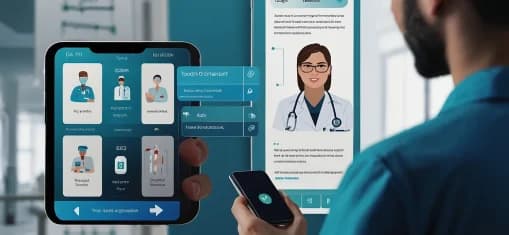
React, Vue.js, Next.js, TypeScript, and responsive UI frameworks for high-performance, user-centric interfaces. We build intuitive dashboards, real-time collaboration features, and mobile-responsive SaaS applications that deliver seamless user experiences across devices.
Node.js, Python, Java, Go, and microservices architecture for scalable, maintainable backend systems. We design RESTful and GraphQL APIs, implement business logic layers, and ensure secure data handling for multi-tenant SaaS platforms.
AWS, Google Cloud, and Azure deployment with containerization (Docker, Kubernetes), CI/CD pipelines, and auto-scaling infrastructure. We ensure high availability, disaster recovery, and cost-efficient cloud operations for your SaaS product.
PostgreSQL, MongoDB, Redis, Elasticsearch, and data warehousing solutions optimized for performance and reliability. We design secure, normalized schemas, implement caching strategies, and ensure data integrity across your SaaS ecosystem.
OAuth2, JWT authentication, encryption, audit logging, and compliance frameworks (GDPR, HIPAA, SOC2). We implement role-based access control, vulnerability scanning, and security best practices to protect user data and meet regulatory requirements.
Infrastructure as Code, automated testing, monitoring tools (Datadog, New Relic), logging, and alerting systems. We enable continuous deployment, performance optimization, and proactive issue detection for reliable SaaS operations.
SaaS development cost depends on product scope, architecture, feature complexity, integrations, infrastructure, security requirements, development timeline, and ongoing support.PerfectionGeeks currently publishes separate SaaS pricing guidance with project ranges for MVP, growth-platform, and enterprise SaaS development. Its pricing page lists an overall range of $25,000 to $500,000+, while also breaking projects into different complexity levels.For the main SaaS development page, the most useful way to evaluate cost is by understanding what increases engineering scope.
| Cost factor | Why it affects cost |
|---|---|
| Feature complexity | More workflows and business rules require more design, development, and testing |
| User roles | Multiple roles require additional permissions, interfaces, and authorization logic |
| Multi-tenancy | Tenant isolation and tenant-aware data architecture increase engineering complexity |
| Integrations | External APIs require integration, testing, error handling, and maintenance |
| UI/UX | Complex workflows and custom interfaces require additional design and frontend work |
| Infrastructure | Cloud, databases, scaling, monitoring, and deployment requirements affect technical scope |
| Security | Authentication, authorization, encryption, auditing, and security testing add engineering work |
| Mobile access | Native or cross-platform mobile applications create an additional application surface |
| Ongoing support | Maintenance, monitoring, bug fixing, and feature development continue after launch |
For a detailed project-specific budget, the scope should be defined before treating any number as a development estimate.
Plan your SaaS MVP cost separately:
SaaS MVP Development Cost
The scope of SaaS application development can vary significantly depending on whether you are building an MVP or an enterprise-grade platform. A SaaS MVP focuses on validating the core product workflow with the minimum functionality required for initial users, while enterprise SaaS development usually requires broader architecture, security, integrations, permissions, and operational capabilities.
| Area | SaaS MVP | Enterprise SaaS |
|---|---|---|
| Primary goal | Validate the core product idea and workflow | Support complex business operations and larger user bases |
| Core functionality | Essential features required for the main customer workflow | Multiple workflows, advanced features, automation, and operational tools |
| User authentication | Registration, login, and basic account management | Advanced authentication and access-control requirements |
| User management | Basic user roles and permissions | Complex roles, permissions, teams, departments, and access policies |
| Architecture | Focused architecture designed around the MVP scope | More complex architecture designed for broader functionality and growth |
| Multi-tenancy | May not be required depending on the product | Often required for multi-tenant SaaS development |
| Integrations | Essential integrations only | Multiple third-party systems, APIs, and enterprise integrations |
| Analytics | Basic reporting and product usage data | Advanced analytics, reporting, monitoring, and business intelligence requirements |
| Security | Essential application and data security | Broader security controls, audits, access policies, monitoring, and operational requirements |
| Infrastructure | Infrastructure sized for initial product requirements | More extensive cloud infrastructure, monitoring, scaling, and operational tooling |
| Mobile access | Included only when required by the core workflow | May include dedicated mobile applications alongside the web platform |
| Updates | Centralized application updates | Structured release, deployment, monitoring, and maintenance processes |
| Typical timeline | 3–6 months | 12+ months |
| Best suited for | Startups, new products, proof of concept, and early customer validation | Established businesses, complex products, large organizations, and enterprise workflows |
A SaaS MVP development project should focus on the smallest practical product that can validate the core workflow. Depending on the product, this may include authentication, the primary functionality, essential user management, a database, APIs, and the infrastructure needed to operate the application.
Reducing unnecessary functionality can help control the initial scope while keeping the core architecture suitable for future development. The goal is not to build every possible feature at the beginning, but to establish the functionality customers actually need.
An enterprise SaaS platform can require significantly broader functionality. Requirements may include complex permissions, multi-tenant architecture, third-party integrations, advanced analytics, cloud infrastructure, security controls, monitoring, and operational tooling.
The additional requirements can make enterprise SaaS development substantially more complex than an MVP. The final scope depends on the number of users, workflows, integrations, security requirements, deployment model, and other product-specific requirements.
PerfectionGeeks' current SaaS page states estimated project timelines of 3–6 months for an MVP and 12+ months for enterprise-grade solutions. These figures are estimates rather than guaranteed delivery periods, and the actual timeline depends on the scope and complexity of the custom SaaS development project.
For a focused MVP, reducing unnecessary features is generally a better cost-control strategy than compromising the quality of the core architecture.
The right approach depends on how differentiated the product needs to be.
| Approach | Best suited for | Main consideration |
|---|---|---|
| Buy / configure | Standard business workflows | Faster initial implementation but less product differentiation |
| Custom build | Unique workflows or proprietary product ideas | Higher initial engineering scope but greater control |
| Hybrid | Standard infrastructure plus differentiated product logic | Can balance speed with customization |
For a SaaS product that is itself the business's core offering, custom development may be appropriate where the product's workflows, architecture, or customer experience require capabilities that packaged software cannot provide.
Our experience as a SaaS application development company spans multiple business models and industries:
Build Your SaaS Product With a Clear Technical PlanA successful SaaS project starts with a defined product scope, appropriate architecture, realistic security requirements, and a development roadmap that matches the business objective.PerfectionGeeks provides custom SaaS development, cloud-based application development, SaaS architecture, deployment, and ongoing support for startups and enterprises.Discuss Your SaaS Product
Choosing the right SaaS application development company can directly influence the scalability, usability, and long-term performance of your product. At PerfectionGeeks, we take a product-focused approach to SaaS development, combining planning, UI/UX, architecture, development, testing, and deployment. Our goal is to build SaaS applications that align with your business requirements and provide a strong foundation for future growth.
We've delivered 150+ SaaS applications across industries including healthcare, fintech, logistics, and e-commerce, giving us pattern-recognition most agencies don't have.
From initial architecture decisions to post-launch scaling, our in-house team of SaaS architects, full-stack developers, UI/UX designers, and DevOps engineers covers the entire product lifecycle — no outsourcing gaps.
GDPR, HIPAA, and SOC 2 compliance aren't afterthoughts; they're built into our architecture decisions from day one, which matters if you're targeting enterprise customers or regulated industries.
Two-week sprints with working demos mean you always know exactly where your project stands — no black-box development.
We design multi-tenant infrastructure and cloud-native systems so that your SaaS platform can handle 10x growth without a costly rebuild.
24/7 support and maintenance packages mean we stay involved after launch, not just through go-live.
We've helped businesses across industries launch and scale their SaaS products. Here are a few of the platforms we've built:

PerfectionGeeks provided excellent service from start to finish. Their team was professional, easy to work with, and delivered exactly what we needed on time. We’re very pleased with the outcome and would gladly recommend them to others.
Thanaboon Mingkaew
CEO, SMART IOT
We partnered with PerfectionGeeks for a custom accounting automation software, and the experience was excellent. Their team delivered a high-quality solution that streamlined our operations and improved efficiency. Professional, skilled, and reliable — we’re already working with them on another project.
Saarthak Gupta
Founder, Ceos Accounting Services
As COO of TRP Construction Management, I’m proud of our growth from 300 to 16,000+ SKUs and 4,000+ vendors since 2022. Thanks to Shrey Bhardwaj and Perfection Geeks for delivering scalable, future-ready technology solutions that transformed our vision into a seamless pan-India platform. Highly recommended technology partner.
Mayank Pathak
COO, TRP Construction Management

PerfectionGeeks Technologies transformed our vision into reality with innovative technology solutions. Their professionalism, timely delivery, transparent communication, and commitment to quality made the entire collaboration smooth, reliable, and highly satisfying.
Armaan
Cofounder, Kzminer

I highly recommend PerfectionGeeks Technologies for mobile and web development services. Their expertise, dedication, creative ideas, and customer-focused approach helped our business achieve impressive digital growth successfully.
Chetna
Founder CEO , Klicked

Choosing PerfectionGeeks Technologies was the best decision for our company. Their skilled developers created a user-friendly platform, provided constant assistance, and ensured exceptional performance beyond our expectations every step.
Mark
CTO, IMSMART

Working with PerfectionGeeks Technologies was an excellent experience. Their team delivered our project on time with outstanding quality, smooth communication, innovative solutions, and professional support throughout the entire development process.
Naveen
Founder Director , Way2Kart

PerfectionGeeks Technologies delivered a smooth, professional experience with excellent communication and technical expertise. Their team understood project requirements clearly, provided timely updates, and ensured high-quality results that exceeded expectations.
Srinivasa Mothay
CTO, Sethu Fishries

PerfectionGeeks Technologies impressed with their innovative solutions, responsive support, and commitment to quality. The team handled every detail professionally, delivered on time, and created a seamless experience from start to finish.
Mervin
Cofounder & CTO, Clover Infinity