
Published 30 December 2025 | Updated 30 December 2025
Technology
How to Build a Taxi App Like TADA: Step-by-Step Complete Guide
The rise of on-demand transportation services has reshaped how people travel in cities worldwide. Among popular players in the ride-hailing market is the TADA app, known for its commission-free model for drivers and easy-to-use platform. If you’re wondering what is TADA app and how it works, or planning to build a similar service, this guide covers everything you need.This blog will walk you through how to build a taxi app like TADA, including key features, development steps, technology, cost, and why choosing the right taxi app development company is crucial for success.
Industry Market: Why Taxi App Development Matters
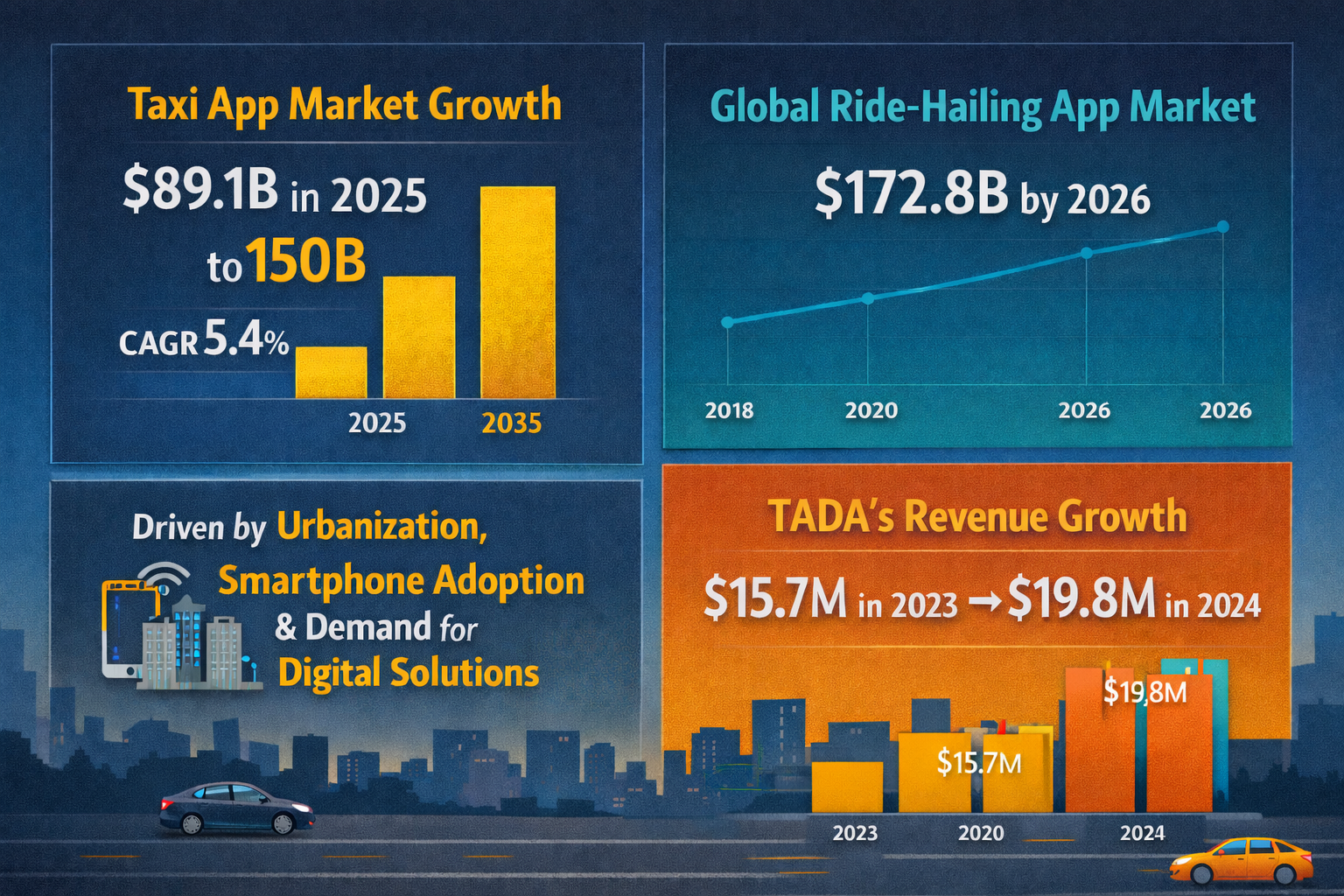
The global taxi and ride‑hailing market is experiencing rapid expansion. Experts estimate that the taxi app market size will grow from approximately USD 89.1 billion in 2025 to USD 150 billion by 2035, at a steady CAGR of around 5.4%. Urbanization, smartphone adoption, and demand for convenient digital solutions are key drivers behind this growth.
Looking at broader ride‑hailing statistics, the sector is massive — the global ride‑hailing app market is forecast to reach USD 172.8 billion in 2026, driven by increasing smartphone penetration and demand for smart transport options.
TADA itself has also shown impressive growth. In 2024, the platform generated $19.8 million in revenue, up from $15.7 million in 2023, reflecting rising user adoption and service expansion.
What Is TADA App?
The TADA app is a blockchain‑backed ride‑hailing platform that differentiates itself by offering commission‑free rides for drivers, enhancing earning potential and fairness. It includes distinct applications for users (TADA app download) and drivers (TADA driver app). TADA also offers extended services like the TADA delivery app, making it a versatile mobility solution.
Step‑by‑Step Guide to Building a Taxi App Like TADA
1. Conduct Market and Competitor Research
Before starting taxi app development, it’s essential to study the target demographic and competitors like TADA, Uber, and local services. Understand user expectations, pricing models, regulatory norms, and platform performance benchmarks.
2. Define Key Features
A successful taxi booking platform requires essential features for riders, drivers, and admins. Below is a simple overview:
| Rider App Features | Driver App Features | Admin Panel Features |
|---|---|---|
| User registration & login | Driver profile & approval | Driver & user management |
| Taxi booking & scheduling | Ride request acceptance | Ride tracking & analytics |
| Real‑time GPS and tracking | Earnings dashboard | Payment & promo code management |
| Fare estimates & multiple payments | Navigation support | Review & feedback controls |
| Ride history | Trip history | Support ticket management |
| Ratings & reviews | Ratings & reviews | App monitoring & reporting |
These are the basics your taxi app solution should include. PerfectionGeeks, a leading taxi app development company, specializes in integrating these features seamlessly.
3. Choose the Right Technology Stack
The choice of technology affects performance, scalability, and maintenance:
Frontend: React Native, Flutter (cross‑platform compatible)
Backend: Node.js, Python, or Java
Database: MongoDB, PostgreSQL
Maps & GPS: Google Maps API, Mapbox
Blockchain Integration: Optional for models like TADA
Payment Gateway: Stripe, PayPal, or local alternatives
Working with a professional taxi mobile app development partner ensures the right stack based on your project needs.
4. Focus on UI/UX Design
An intuitive interface is critical. Riders should be able to book a taxi booking app quickly, and drivers should find navigation and earnings easy to track. PerfectionGeeks’ design team follows best practices to ensure a seamless and appealing user experience.
5. Develop and Integrate Core Modules
Development typically involves:
Backend services to manage data and APIs
Frontend logic to build app screens and interactions
Integration with GPS, payments, push notifications, and security layers
Automated testing to eliminate bugs and ensure performance
A scalable taxi app requires meticulous coding and quality checks something a professional taxi app development company excels at.
6. Launch and Marketing
Once your taxi booking app development company completes the build, you’ll deploy it on app stores and start a marketing plan. Focus on SEO, targeted ads, partnerships with local businesses, and referral incentives to gain traction.
Cost Breakdown of Taxi App Development
| Service | Estimated Cost (USD) |
|---|---|
| Basic Taxi App Development | $15,000 – $30,000 |
| Advanced Features & Customization | $30,000 – $60,000 |
| Blockchain or AI Integration | $50,000 – $100,000+ |
| Maintenance & Support (Annual) | 15‑20% of total development cost |
These estimates can vary based on feature complexity, region, and developer expertise. Partnering with a reliable taxi app development services provider like PerfectionGeeks can ensure quality while managing costs effectively.
Frequently Asked Questions
Quick answers related to this article from PerfectionGeeks.
1. What is TADA app and how does it differ from others?
2. Do I need a taxi app solution with blockchain?
3. Can PerfectionGeeks help with marketing and post‑launch support?
Conclusion
Developing a taxi app like TADA requires thorough planning, the right features, and a skilled development partner. With the taxi app market growing steadily and user demand rising, launching a taxi app clone with a unique edge can position your business for success. Whether it’s rich features, smart design, or robust backend architecture, choosing experienced professionals like PerfectionGeeks for your taxi booking app development services ensures a high‑quality, scalable, and user‑friendly product.

Shrey Bhardwaj is the Director & Founder of PerfectionGeeks Technologies, bringing extensive experience in software development and digital innovation. His expertise spans mobile app development, custom software solutions, UI/UX design, and emerging technologies such as Artificial Intelligence and Blockchain. Known for delivering scalable, secure, and high-performance digital products, Shrey helps startups and enterprises achieve sustainable growth. His strategic leadership and client-centric approach empower businesses to streamline operations, enhance user experience, and maximize long-term ROI through technology-driven solutions.