Published 30 March 2026 | Updated 26 September 2026
Technology
How to Build an App Like Poshmark: Cost, Features & Development Plan
Building a resale marketplace app like Poshmark has become one of the most exciting opportunities in the eCommerce space. With the growing popularity of second-hand fashion, sustainable shopping, and peer-to-peer selling, entrepreneurs are increasingly asking: “What is Poshmark, and how can I build an app like it?” This blog will walk you through everything you need to know — from features and costs to the step-by-step development plan. We’ll also highlight why PerfectionGeeks is the right partner for your Poshmark app development journey.
Introduction to Building an App Like Poshmark
Poshmark is a resale marketplace app that allows users to buy and sell fashion items, accessories, and home goods. It combines social networking with eCommerce, making shopping interactive and fun.
If you’re planning to build an app like Poshmark, you’re essentially entering the eCommerce mobile app development space with a focus on community-driven resale. The demand for such apps is booming because:
- Consumers want affordable fashion.
- Sustainability and second-hand shopping are trending.
- Sellers want easy-to-use platforms to monetize unused items.
How Does an App Like Poshmark Work?
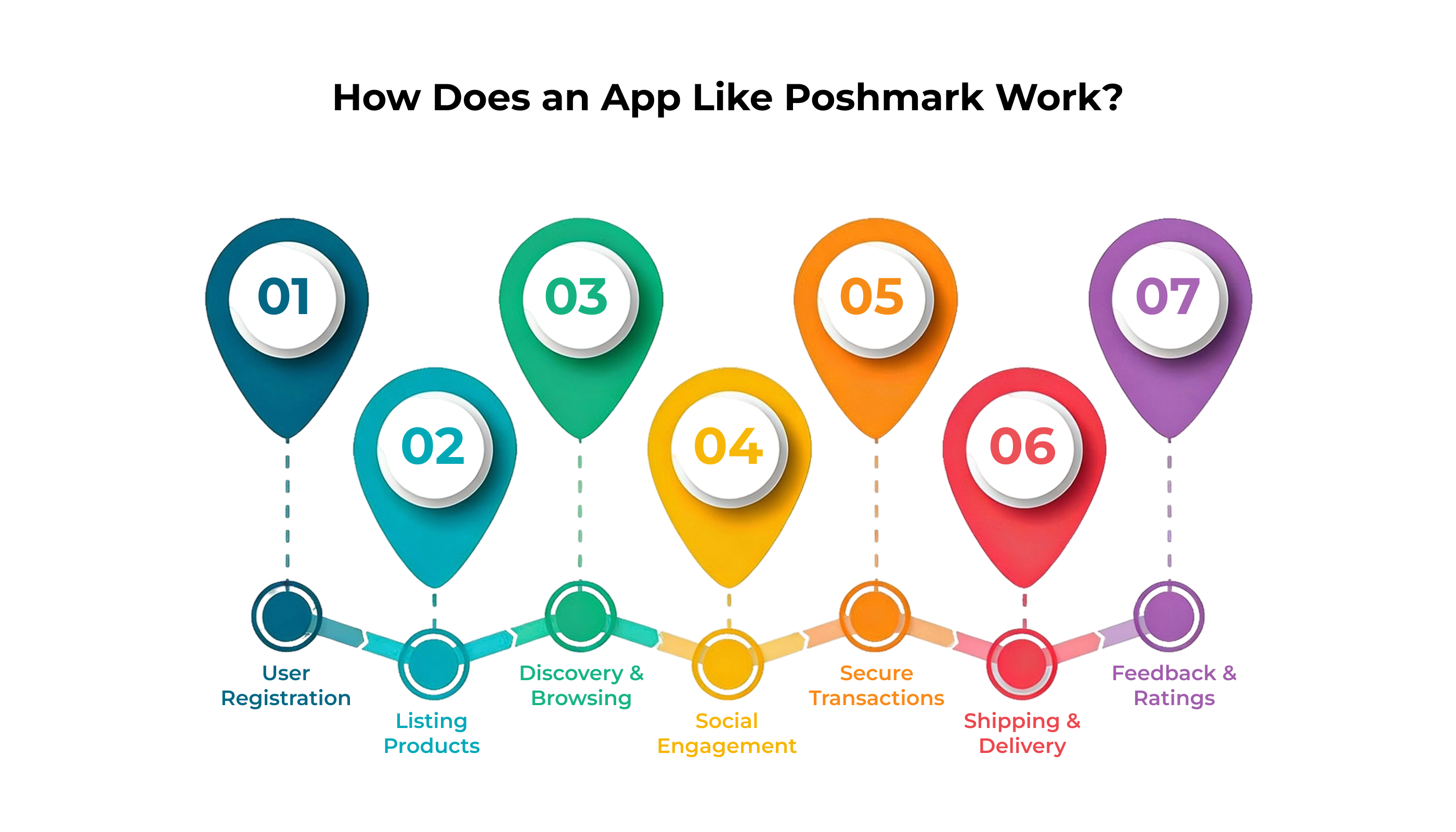
User Registration – Buyers and sellers sign up by creating accounts, which allows them to access the marketplace and start listing or shopping.
Listing Products – Sellers upload product photos, write descriptions, and set prices so their items are visible to potential buyers.
Discovery & Browsing – Buyers explore categories, brands, and trending items using search filters to quickly find what they want.
Social Engagement – Users interact by following sellers, liking or commenting on listings, and sharing products, making shopping more social.
Secure Transactions – Payments are handled safely within the app using integrated gateways, ensuring trust between buyers and sellers.
Shipping & Delivery – Once a purchase is made, sellers ship items through logistics partners, with tracking available inside the app.
Feedback & Ratings – Buyers leave reviews and ratings after receiving products, helping build credibility and trust in the marketplace.
This blend of social networking and eCommerce is what makes Poshmark stand out compared to traditional resale platforms.
Must-Have Features of a Marketplace App Like Poshmark
To succeed, your Poshmark app development must include these essential features:
- User Profiles (buyers & sellers) – Every user needs a profile to showcase their listings, track purchases, and build credibility in the marketplace.
- Product Listings – Sellers can upload product images, write descriptions, and set prices so buyers can easily browse and purchase items.
- Search & Filters – Buyers should be able to quickly find products using categories, brands, price ranges, and keyword filters.
- Social Features – Likes, comments, shares, and following sellers make the app more engaging and community-driven, just like social media.
- Secure Payment Gateway – Integrated payment systems ensure safe transactions between buyers and sellers.
- Shipping Integration – Logistics support allows sellers to ship items easily, with tracking available for buyers.
- Push Notifications – Alerts for new listings, offers, and updates keep users engaged and returning to the app.
- Ratings & Reviews – Feedback builds trust, helping buyers make informed decisions and sellers improve credibility.
- Admin Dashboard – A backend system for managing users, listings, payments, and resolving disputes ensures smooth operations.
Optional advanced features:
- AI-based Recommendations – Suggests products based on user preferences and browsing history.
- In-app Chat – Enables direct communication between buyers and sellers for faster deals.
- AR Try-On – Lets users virtually try fashion items before buying, enhancing the shopping experience.
Cost to Build an App Like Poshmark
The cost to develop marketplace app like Poshmark depends on complexity, features, and region of development. On average:
| App Type | Features Included | Estimated Cost Range |
| Basic Resale Marketplace App | User profiles, product listings, search & filters, secure payments, shipping | $30,000 – $50,000 |
| Mid-Level App with Social Features | Includes all basic features + social engagement (likes, comments, shares, following) | $50,000 – $80,000 |
| Advanced App with AI, AR & Analytics | All mid-level features + AI recommendations, AR try-on, advanced analytics, in-app chat | $80,000 – $150,000+ |
Key Factors That Affect App Development Cost
Several factors influence the eCommerce mobile app development cost:
Features & Functionality – The more features you add (like AI, AR, or social engagement), the higher the development cost. Basic apps are cheaper, while advanced ones require more investment.
Design Complexity – A custom UI/UX design that looks unique and user-friendly increases expenses compared to standard templates.
Tech Stack – Choosing native development (separate apps for iOS and Android) costs more than cross-platform frameworks like Flutter or React Native.
Team Location – Developers in the US or UK charge significantly more than teams in India or Southeast Asia, making location a major cost factor.
Third-Party Integrations – Adding payment gateways, shipping APIs, analytics tools, or chat features increases both development time and cost.
Maintenance & Updates – After launch, you’ll need regular updates, bug fixes, and new features, which add ongoing costs to the project.
Step-by-Step Development Process for a Marketplace App
Here’s a simple roadmap for Poshmark app development:
Market Research & Planning – Start by analyzing competitors such as Poshmark, Depop, and ThredUp to understand what works in the resale marketplace. Define your target audience and unique value proposition to differentiate your app in the market.
Wireframing & UI/UX Design – Create wireframes that outline the app’s structure and navigation flow. Focus on building a visually appealing and user-friendly design that makes browsing and shopping enjoyable, especially for fashion resale.
Backend Development – Develop secure databases and APIs to handle product listings, user accounts, and transactions. Ensure the backend is scalable to support thousands of users and future growth.
Frontend Development – Build mobile interfaces for iOS and Android that are responsive and intuitive. Integrate social features like likes, comments, and following to make the app interactive.
Payment & Shipping Integration – Add secure payment gateways to process transactions safely. Partner with logistics providers to streamline shipping and provide tracking options for buyers.
Testing & Quality Assurance – Conduct thorough testing to identify bugs, performance issues, and security vulnerabilities. Ensure the app runs smoothly across devices and platforms before launch.
Launch & Marketing – Deploy the app on the App Store and Google Play. Use social media campaigns, influencer marketing, and targeted ads to attract buyers and sellers to your platform.
Post-Launch Support – Provide regular updates, add new features, and fix bugs to keep the app competitive. Continuous support ensures user satisfaction and long-term success.
Monetization Strategies for Apps Like Poshmark
To make your app like Poshmark profitable, consider these strategies:
Commission Fees – The most common model is charging sellers a percentage of each sale. This ensures steady revenue for the platform while keeping entry free for sellers, encouraging more listings.
Listing Fees – Sellers can pay a small fee to feature their products in premium spots. This boosts visibility for sellers and creates an additional income stream for the app.
Subscription Plans – Offer sellers advanced features such as analytics, bulk uploads, or priority listings through monthly or yearly subscription packages. This helps serious sellers scale their business.
Advertising – Allow brands or sellers to promote their products through sponsored listings or banner ads. This not only generates revenue but also increases engagement on the platform.
Affiliate Marketing – Partner with fashion or lifestyle brands and earn commissions by promoting their products within the app. This diversifies income while offering users more shopping options.
This mix of strategies ensures your resale marketplace app remains profitable while providing value to both buyers and sellers.
Why Choose PerfectionGeeks for Marketplace App Development
PerfectionGeeks stands out as a trusted partner for building marketplace apps like Poshmark because of its proven expertise in eCommerce app development services. The team delivers end-to-end solutions — from research and design to launch and post-support ensuring your app is scalable, secure, and user-friendly. With a focus on affordability, innovation, and seamless user experience, PerfectionGeeks helps businesses reduce the ecommerce app development cost while maximizing value. Their commitment to customization and quality makes them the ideal choice for entrepreneurs looking to create a successful resale marketplace app.
Frequently Asked Questions
Quick answers related to this article from PerfectionGeeks.
1. What is Poshmark and why is it popular?
2. How much does it cost to build an app like Poshmark?
3. How long does it take to develop a marketplace app like Poshmark?
4. Why should I choose PerfectionGeeks for app development?
Conclusion
Building an app like Poshmark requires careful planning, the right tech stack, and a clear monetization strategy. The cost to develop marketplace app varies depending on features, but with the right partner like PerfectionGeeks, you can create a successful resale platform that attracts buyers and sellers alike. By combining social engagement with eCommerce, your app can replicate the success of Poshmark while carving out its own niche in the growing resale economy.

Shrey Bhardwaj is the Director & Founder of PerfectionGeeks Technologies, bringing extensive experience in software development and digital innovation. His expertise spans mobile app development, custom software solutions, UI/UX design, and emerging technologies such as Artificial Intelligence and Blockchain. Known for delivering scalable, secure, and high-performance digital products, Shrey helps startups and enterprises achieve sustainable growth. His strategic leadership and client-centric approach empower businesses to streamline operations, enhance user experience, and maximize long-term ROI through technology-driven solutions.