Disconnected Production & Inventory Data
Custom ERP Software for Manufacturing MES IntegrationBOM Management & OEE Tracking
Custom manufacturing ERP software is an ERP system built for your products, processes and plants, covering sales orders, bills of materials (BOM), material requirements planning (MRP), production scheduling, shop floor tracking, quality, inventory, purchasing and costing in one place. Manufacturers choose custom ERP when off-the-shelf systems force workarounds, licence fees grow with every user, or their competitive edge lies in a unique process such as engineer-to-order, batch traceability or complex costing. A custom manufacturing ERP for one plant typically costs $40,000–$100,000 and goes live in 4–6 months; multi-plant systems with MES, IoT and advanced planning cost $100,000–$300,000+. PerfectionGeeks builds it in phases, starting with the modules that remove your biggest bottleneck, and you own the code with no per-user licence fees.
Are You Facing These Manufacturing Challenges?
Manufacturing companies often face several operational challenges that affect efficiency and productivity. As operations grow, managing production, inventory, procurement, and supply chains becomes more complex.
Poor Raw Material Planning
Manual Reporting Processes
No Visibility Across Plants
Difficulty Managing Complex BOMs
Inefficient Production Planning and Scheduling
These challenges impact productivity, increase operational costs, and limit scalability in the manufacturing industry.
Book Free Consultation
What Inefficient Manufacturing Systems Are Really Costing You
Many manufacturers underestimate the hidden cost of inefficient systems. Without a centralized manufacturing ERP system, small operational issues quickly turn into major challenges.

Production Delays Across the Line
When production planning is not connected to real-time inventory data, even a small shortage of raw materials can stop an entire production line. These disruptions delay manufacturing schedules and impact delivery timelines.

Material Waste and Overstocking
Poor material planning often leads to ordering more raw materials than required or failing to order them on time. Overstocking increases storage costs, while wasted materials reduce profit margins.

Decisions Based on Outdated Data
Many manufacturers rely on manual reports that take hours or days to prepare. By the time decision-makers receive the data, it is often outdated, slowing response time and issue resolution.

Inconsistent Quality Control
Without a centralized system, inspection processes vary across teams. This increases the risk of defects going unnoticed and reaching customers, impacting brand reputation.

Rising Operational Costs
Inefficient workflows and disconnected systems create unnecessary expenses. Teams spend extra time fixing errors and managing manual tasks, increasing overall operational costs.

Difficulty Scaling Manufacturing Operations
As businesses grow, managing multiple units and suppliers becomes complex. Manual processes and outdated systems make scaling slow and difficult.
Manufacturers who implement a purpose-built ERP software for manufacturing industry operations report up to 30% improvement in production efficiency and significant reductions in material waste within the first year.
Are you looking to streamline your manufacturing processes and improve production efficiency ?
Our ERP experts help manufacturing companies build custom ERP software designed around their production workflows, inventory systems, and operational goals. From production planning and shop-floor management to supply chain tracking and real-time reporting, we develop ERP solutions that simplify operations and increase productivity. Schedule a consultation with our ERP specialists to discover how a custom manufacturing ERP system can support your business growth.
Let's Connect
Custom ERP vs Off-the-Shelf vs Low-Code
Compare custom manufacturing ERP, off-the-shelf ERP, and low-code platforms to find the right solution for your manufacturing workflows, budget, and business goals.
| Feature | Off-the-Shelf ERP | Custom Manufacturing ERP |
|---|---|---|
| Fit to Your Process | You adapt to the software or pay for customization | Built around your manufacturing workflows |
| Upfront Cost | Licenses plus implementation partner fees | Medium to high, depending on requirements |
| Ongoing Cost | Recurring licenses and upgrade costs | Hosting, maintenance, and support |
| Time to First Go-Live | 6–18 months for full implementations | 4–6 months for core modules |
| Shop Floor and IoT | Often needs add-on MES | Designed for your machines and operator screens |
| Ownership | Vendor-controlled roadmap | Code ownership depends on the development agreement |
| Best For | Standard processes and established ERP requirements | Unique processes and specialized manufacturing workflows |
A hybrid approach often works best: keep your accounting system or core ERP and build custom modules for production planning, shop-floor operations, machine integrations, and specialized manufacturing workflows.
Case Study: Optimizing Production with
A medium-sized electronics manufacturing company partnered with PerfectionGeeks to modernize its production and inventory management processes. The company was managing production planning, raw materials, and supplier coordination through spreadsheets and disconnected systems, which created inefficiencies as the business expand.
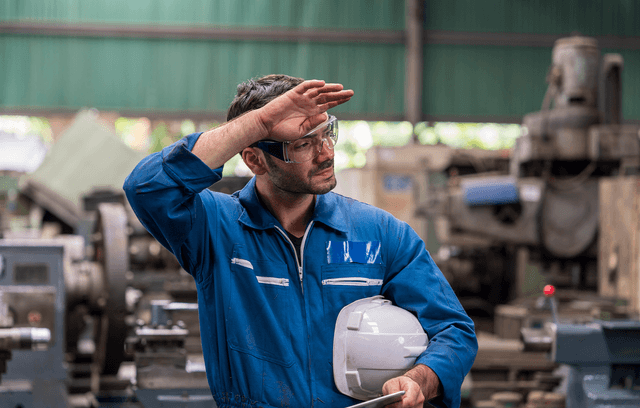
The Challenge
The manufacturer faced several operational problems
- Difficulty managing complex Bills of Materials (BOM)
- Raw material shortages affecting production schedules
- Manual inventory tracking causing stock inaccuracies
- Limited visibility across multiple production units
- Delayed reporting and poor decision-making
These issues were increasing production delays and operational costs.
OUR SOLUTION
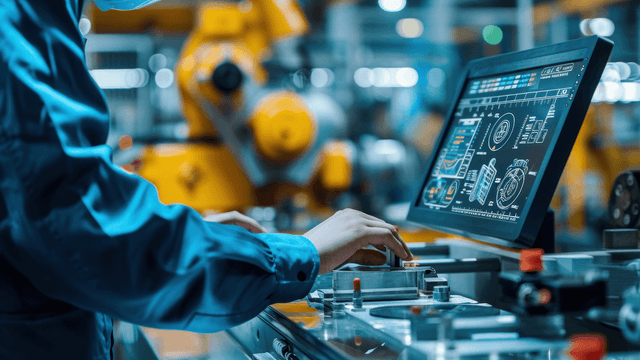
PerfectionGeeks developed a custom ERP system for manufacturing
that connected production planning, BOM management, procurement, inventory tracking, and real-time reporting into one centralized platform. The system also automated procurement workflows and provided dashboards for plant managers to monitor production performance.
THE RESULTS
Manufacturing ERP software
- 32% improvement in production planning efficiency
- 25% reduction in raw material shortages
- Faster reporting and better production visibility
- Improved coordination between procurement and production teams
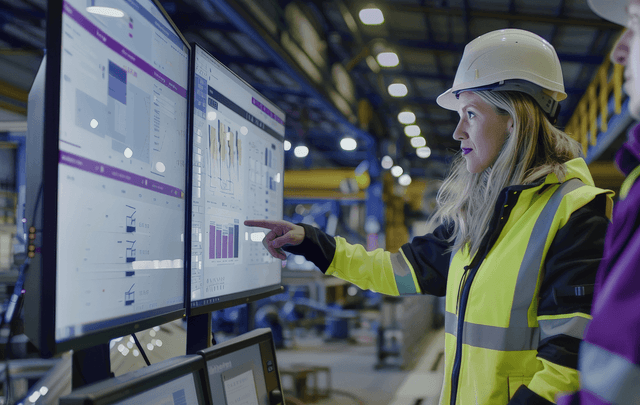
With the new manufacturing ERP software, the company gained complete operational visibility and improved production efficiency across its facilities.
Results Our Manufacturing Clients Actually See
We don't just implement ERP systems - we deliver measurable operational transformation across the entire manufacturing lifecycle.
28-40%
Reduction in production delays through improved planning, scheduling, and shop floor visibility
30-50%
Lower inventory holding costs with real-time stock tracking and optimized material planning (MRP)
2x Faster
Work order execution from production planning to shop floor completion
25-35%
Improvement in cost control accuracy through automated costing and variance analysis
99.5%
Inventory accuracy achieved with integrated warehouse and procurement management
ROI Report
See real transformation in action from raw material to finished goods delivery
Custom ERP vs SAP vs Odoo — Which Fits Your Manufacturing Business?
Choosing the right ERP system is critical for manufacturing businesses that want to scale efficiently, control costs, and streamline operations. Below is a practical comparison of Custom ERP, SAP S/4HANA, and Odoo to help you decide which solution best fits your business needs.
| Factor | Custom ERP | SAP S/4HANA | Odoo |
|---|---|---|---|
| Cost | $30k – $120k | $500k+ | $20k – $80k |
| Customization | Unlimited | Limited | Moderate |
| Implementation Time | 4 – 9 months | 18 – 36 months | 3 – 9 months |
| Scalability | High (built for your processes) | Very high (enterprise-grade) | Medium to high |
| Integration Flexibility | Full API-based flexibility | Complex, requires consultants | Good, but module-dependent |
| Ongoing Vendor Dependency | None | High | Medium |
| Best Fit For | Mid-market & growing manufacturers needing tailored workflows | Large enterprises with global operations | SMEs looking for quick deployment |
Manufacturing ERP
Modules We Build
PerfectionGeeks develops manufacturing ERP solutions that integrate production planning, inventory, procurement, quality control, maintenance, costing, and logistics to streamline manufacturing operations and improve production visibility.
01Sales Orders
Sales Orders and Quotations
Manage quotations, price lists, customer-specific pricing, order confirmations, and delivery commitments based on available stock and production capacity.
02Engineering
Bill of Materials and Engineering
Manage multi-level bills of materials, production routings, revisions, alternate components, and engineering change control with CAD or PLM data imports.
03Production Planning
Material Requirements Planning (MRP)
Plan material requirements, production capacity, and finite schedules while generating purchase and work order suggestions based on production demand.
04Shop Floor
Shop Floor Control (MES)
Track work orders, job cards, operator activity, barcode and RFID scanning, machine time, and scrap through real-time shop-floor data capture.
05Inventory
Inventory and Warehouse Management
Manage raw materials, work in progress, and finished goods across locations with batch and serial tracking, FIFO or FEFO rules, and cycle counting.
06Procurement
Purchasing and Supplier Management
Streamline purchase requisitions, approval workflows, supplier quotations, goods receipts, vendor ratings, and subcontracting or job-work processes.
07Quality
Quality Management
Configure incoming, in-process, and final product inspections while tracking non-conformances, corrective and preventive actions (CAPA), and certificates of analysis.
08Maintenance
Preventive and Breakdown Maintenance
Schedule preventive maintenance, manage breakdown requests and spare parts, and maintain machine service histories to reduce unplanned downtime.
09Costing
Manufacturing Costing and Finance
Track standard and actual costs, job costing, overhead allocation, GST, and e-invoicing, with integration into your existing accounting system when required.
10Dispatch
Dispatch and Logistics
Coordinate packing, shipping labels, e-way bills, dispatch planning, shipment tracking, and proof of delivery to improve order fulfillment.
11Analytics
Reports and Production Dashboards
Monitor overall equipment effectiveness (OEE), on-time delivery, inventory turnover, production cost variances, and profitability by product or customer.
12Integrations
ERP Integrations and Data Exchange
Connect manufacturing ERP systems with CAD and PLM tools, accounting software, CRM platforms, supplier systems, and IoT-enabled machines to synchronize business and production data across workflows.
Custom ERP Software for Manufacturing Built Specifically for Your Operations
At PerfectionGeeks Technologies, we don't adapt generic ERP software for manufacturing environments. We build your custom ERP software for manufacturing from the ground up — around your production workflows, your team structure, and your operational goals.

Our industrial manufacturing ERP solutions are designed to connect every part of your business into one intelligent platform — eliminating silos, automating manual processes, and giving you the real-time visibility your operations need to perform at its best.
Core Modules We Build:
Efficiently plan production using Material Requirements Planning (MRP II) to align demand, resources, and capacity. Improve scheduling accuracy, reduce bottlenecks, and ensure on-time production delivery.
Manage structured, multi-level BOMs for all products with full version control. Ensure material accuracy, reduce production errors, and streamline coordination between engineering and manufacturing teams.
Digitally manage shop floor operations with real-time work order tracking. Monitor job progress, machine utilization, and workforce activity for complete production visibility and control.
Integrate Manufacturing Execution Systems (MES) for live production tracking. Gain real-time visibility into machine status, production output, and process performance directly from the shop floor.
Measure Overall Equipment Effectiveness (OEE) across availability, performance, and quality. Identify downtime causes and inefficiencies to improve productivity and maximize equipment utilization.
Ensure consistent product quality through automated inspection workflows, defect tracking, and compliance management. Maintain strict quality standards across every stage of production.
Track real-time production costs and compare planned vs actual expenses. Analyze material, labor, and overhead variances to improve cost control and profitability.
Schedule and manage preventive and corrective maintenance using a Computerized Maintenance Management System (CMMS). Reduce machine breakdowns, improve uptime, and extend asset lifespan.
Automate procurement processes, supplier coordination, and inventory tracking. Maintain optimal stock levels to avoid shortages or overstocking while ensuring uninterrupted production flow.
Industries We Serve
PerfectionGeeks delivers industrial ERP solutions to a wide range of manufacturing sectors including:

⚙️

🔬

🏭

🍶
01
Automotive Manufacturing
PerfectionGeeks specialises in developing ERP solutions tailored specifically for the automotive industry, ensuring your unique operational needs are fully understood and addressed.
02
Pharmaceuticals & Chemicals
We prioritise safeguarding your sensitive data through robust security measures, ensuring your information remains protected and reliable at all times.
03
Electronics & Electrical Components
Our ERP systems are built to grow with your business. Whether you're a small firm or a large logistics provider, we deliver flexible software that adapts to your evolving requirements.
04
Heavy Machinery & Equipment
Beyond software, we commit to your success with a tailored approach — helping you optimise operations and achieve sustained growth across your production lines.
05
Food & Beverage Processing
Stay connected anytime, anywhere. Our ERP solutions provide smooth access across both mobile and web platforms, empowering your team with real-time data and control on the go.
06
Textile & Apparel
Beyond software, we commit to your success with ongoing support and a partnership approach — helping you optimise operations and achieve sustained growth.
07
Consumer Goods Manufacturing
Beyond software, we commit to your success with ongoing support and a partnership approach — helping you optimise operations and achieve sustained growth.
Our 8-Step Manufacturing ERP Development Process
Our manufacturing ERP development process starts with business-process analysis and continues through architecture, workflow design, development, testing, deployment, training, and post-launch improvement.
STAGE 01
Step 1 — Requirements Analysis
We document current workflows, users, departments, production processes, materials, inventory rules, approval flows, reporting requirements, existing systems, integrations, and security requirements before development begins.

Custom Manufacturing ERP Pricing
Investment based on production complexity, integrations, automation requirements, and the scale of your manufacturing operations
RECOMMENDED
CORE MANUFACTURING ERP
$40,000 – $100,000
- Sales orders and quotations
- Bill of Materials (BOM) and MRP
- Production planning and inventory
- Purchasing and supplier management
- Quality control and manufacturing costing
- Production dashboards and reporting
- Accounting system integration
- Single-plant ERP implementation
- Estimated timeline: 4–6 months
- Estimated cost: ₹33–85 lakh
ADVANCED & ENTERPRISE ERP
$100,000 – $300,000+
- Manufacturing Execution System (MES)
- Finite production scheduling
- IoT machine connectivity and OEE monitoring
- Preventive maintenance and traceability
- AI-powered demand forecasting
- Multi-plant and multi-company support
- Advanced planning and financial management
- Extensive third-party integrations
- Estimated timeline: 6–18 months
- Estimated cost: ₹85 lakh–₹2.5 crore+
Technology Stack We Use
01 / 01
01 / 01
01 / 01

The Future of Manufacturing Is Data-Driven — Are You Ready?
The manufacturers winning in today's market aren't running on spreadsheets and manual processes. They're powered by intelligent industrial ERP solutions that give them real-time visibility, predictive capabilities, and the automation needed to outperform competitors consistently.
Forecast demand, prevent shortages, optimize production planning proactively.
Connect machines for real-time data and predictive maintenance alerts.
Monitor all plants with centralized real-time operational visibility.
Automate inventory, prevent stockouts, optimize procurement decisions efficiently.
AI & Predictive Analytics
Forecast demand, prevent shortages, optimize production planning proactively.
Connect machines for real-time data and predictive maintenance alerts.
Real-Time Multi-Plant Visibility
Monitor all plants with centralized real-time operational visibility.
Smart Inventory & Procurement Automation
Automate inventory, prevent stockouts, optimize procurement decisions efficiently.
If your competitors are already running on best ERP software for manufacturing and you're still managing operations manually — the efficiency and profitability gap between you and them is growing every single day.
Frequently Asked Questions
Everything you need to know about working with PerfectionGeeks Technologies. Can't find an answer? Reach out to us.
Custom ERP software for manufacturing is an ERP platform designed around a manufacturer's specific production, inventory, procurement, quality, costing, maintenance, and reporting workflows.
PerfectionGeeks currently publishes manufacturing ERP packages from $12,000–$25,000 for its starter offering, $25,000–$65,000 for growth, and $65,000–$200,000+ for enterprise implementations.
PerfectionGeeks currently publishes timelines of 8–12 weeks for starter ERP, 14–22 weeks for growth ERP, and 24–40 weeks for enterprise ERP implementations. Actual timelines depend on project scope.
Core modules can include production planning, BOM management, inventory, procurement, quality management, shop-floor control, costing, maintenance, reporting, and integrations.
Yes. A manufacturing ERP can integrate with MES through APIs or an integration layer to exchange production, machine, quality, and operational data.
Yes. ERP platforms can receive operational information from IoT systems through suitable gateways, APIs, message brokers, or MES integration architectures.
It can replace selected ERP functions in some organizations, but the decision requires a detailed comparison of business requirements, integrations, data migration, operating costs, and long-term support.
ERP migration can include master data, inventory, suppliers, customers, BOMs, historical transactions, production records, and other datasets depending on the source system and migration requirements.
Yes. Multi-plant functionality can be designed to provide centralized visibility while maintaining plant-specific workflows, inventories, production schedules, permissions, and reporting.
Yes. AI and analytics can be added where the organization has suitable data and a clearly defined business use case, such as demand forecasting, anomaly detection, predictive maintenance, or production analysis.