Published 19 March 2026 | Updated 20 March 2026
Technology
What Is SRM Software and How It Helps Businesses Streamline Procurement and Supplier Collaboration
Procurement and supplier collaboration are at the heart of modern business operations. As supply chains grow more complex, companies need smarter tools to manage relationships, optimize procurement processes, and ensure supplier performance. This is where SRM software (Supplier Relationship Management software) comes into play. In this blog, we’ll explore what is SRM software, its key features, benefits, industry applications, and future trends. We’ll also compare SRM systems with traditional vendor management methods, provide a case study
What Is SRM Software? An Introduction to Supplier Relationship Management
Supplier Relationship Management software (SRM software) is a digital solution designed to help businesses manage interactions with suppliers, vendors, and partners. It goes beyond basic procurement software by focusing on building long-term, strategic relationships with suppliers.
An SRM system integrates supplier data, procurement workflows, and performance metrics into one platform, enabling businesses to streamline procurement, enhance collaboration, and optimize supply chain efficiency.
Key terms to know:
- Supplier management software – focuses on supplier records and compliance.
- Vendor management software – manages vendor contracts and performance.
- Procurement management software – automates purchasing workflows.
- Supplier relationship management system – combines all these into a holistic approach.
Key Features of SRM Software Every Business Should Know
| Feature | Description | Business Impact |
| Supplier Database | Centralized repository of supplier information | Easy access to supplier profiles and contracts |
| Procurement Process Optimization | Automated workflows for purchasing | Faster approvals, reduced errors |
| Supplier Performance Management | Track KPIs like delivery time, quality, and cost | Better supplier accountability |
| Collaboration Tools | Shared dashboards, communication channels | Improved transparency and trust |
| Risk Management | Identify supply chain risks | Minimize disruptions |
| Integration with ERP & SCM | Connects with supply chain management software | Seamless data flow |
| Analytics & Reporting | Real-time insights into procurement | Data-driven decision-making |
How SRM Software Improves Procurement Processes
Traditional procurement often involves manual paperwork, emails, and fragmented systems. SRM software transforms this by offering:
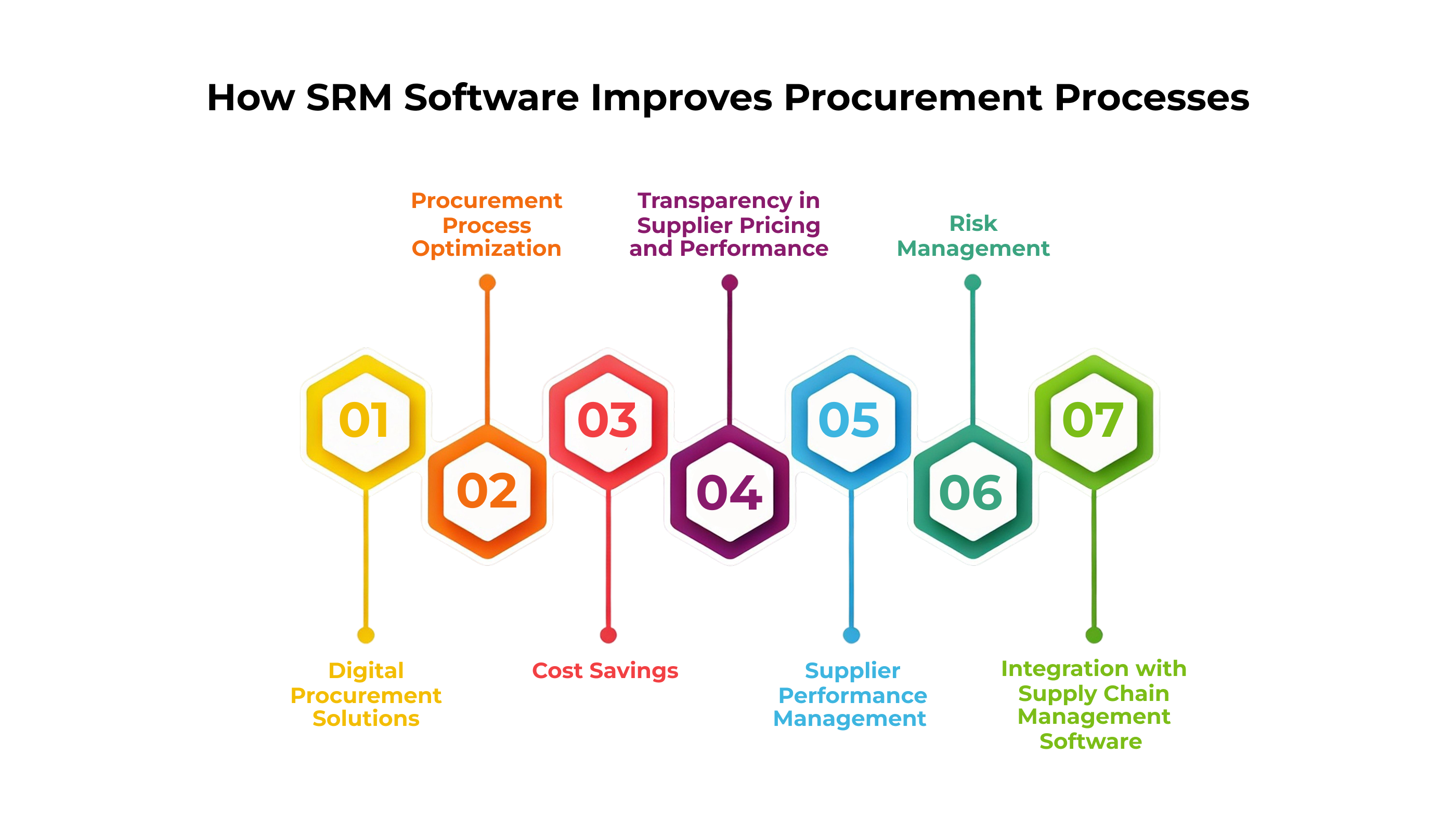
Digital Procurement Solutions
SRM systems automate purchase orders, approvals, and invoicing. This reduces manual errors, speeds up transactions, and ensures compliance with company policies, making procurement smoother and more reliable.
Procurement Process Optimization
By standardizing workflows, SRM software eliminates bottlenecks and ensures every step follows best practices. This leads to faster approvals, reduced delays, and a more efficient procurement cycle overall.
Cost Savings
SRM software helps businesses identify the most reliable and cost-effective suppliers. With better data insights, companies can negotiate stronger contracts, consolidate vendors, and reduce unnecessary spending.
Transparency in Supplier Pricing and Performance
All supplier data, including pricing, compliance records, and performance metrics, is stored in one system. This transparency ensures accountability and helps businesses make informed decisions when selecting or retaining suppliers.
Supplier Performance Management
SRM systems track KPIs such as delivery times, product quality, and responsiveness. This allows businesses to evaluate suppliers objectively and reward high performers while addressing issues with underperforming ones.
Risk Management
By monitoring supplier compliance and identifying potential risks early, SRM software helps businesses avoid disruptions. It ensures suppliers meet regulatory standards and reduces exposure to supply chain vulnerabilities.
Integration with Supply Chain Management Software
SRM systems often integrate with ERP and supply chain management tools. This creates a seamless flow of information across procurement, inventory, and logistics, improving overall supply chain efficiency.
Role of SRM Software in Enhancing Supplier Collaboration
Supplier collaboration is not just about transactions—it’s about building strong, long-term partnerships. SRM software plays a vital role by enabling:
Real-time Communication Between Buyers and Suppliers
SRM systems provide instant communication channels, dashboards, and alerts. This reduces delays, avoids miscommunication, and ensures both parties stay aligned on orders, deliveries, and expectations.
Shared Access to Forecasts, Demand Planning, and Inventory Levels
Suppliers can view demand forecasts and inventory data directly through the SRM system. This transparency helps them plan production better, avoid shortages, and deliver on time, strengthening supply chain reliability.
Joint Problem-Solving During Supply Chain Disruptions
When disruptions occur—like raw material shortages or shipping delays—SRM software allows businesses and suppliers to collaborate quickly. By sharing data and insights, they can find solutions together and minimize impact.
Stronger Trust and Long-Term Supplier Relationships
Transparency, accountability, and consistent communication foster trust. Over time, suppliers become strategic partners rather than just vendors, leading to better collaboration and mutual growth.
Benefits of Using SRM Software for Businesses
Efficiency Gains – Automates Procurement Workflows
SRM software reduces manual tasks by automating purchase orders, approvals, and invoicing. This speeds up procurement cycles, minimizes human error, and frees employees to focus on strategic work rather than repetitive paperwork.
Cost Reduction – Identifies Savings Opportunities
By analyzing supplier data and spending patterns, SRM systems highlight areas where businesses can save money. Companies can consolidate suppliers, negotiate better contracts, and avoid hidden costs, leading to significant financial efficiency.
Risk Mitigation – Tracks Supplier Compliance and Reliability
SRM software continuously monitors supplier compliance with regulations and contractual obligations. This helps businesses identify risks early, avoid supply chain disruptions, and ensure suppliers meet ethical and legal standards.
Supplier Performance Management – Ensures Quality Standards
With built-in KPI tracking, SRM systems measure supplier performance in terms of delivery speed, product quality, and responsiveness. This ensures suppliers remain accountable and encourages continuous improvement.
Strategic Value – Builds Long-Term Partnerships
Unlike traditional procurement methods, SRM software emphasizes collaboration and trust. By fostering stronger relationships, businesses gain strategic advantages such as innovation, reliability, and mutual growth with their suppliers.
SRM Software vs Traditional Vendor Management Methods
| Aspect | Traditional Vendor Management | SRM Software |
| Focus | Transactional | Strategic & collaborative |
| Data Handling | Manual records | Centralized digital system |
| Performance Tracking | Limited | Real-time KPIs |
| Collaboration | Minimal | Integrated communication tools |
| Scalability | Difficult | Highly scalable |
Key Industries That Benefit from SRM Solutions
- Manufacturing – Supplier management system ensures raw material availability.
- Retail & E-commerce – Procurement software streamlines vendor onboarding.
- Healthcare – Vendor management software ensures compliance with regulations.
- Technology – Supplier relationship management system supports global sourcing.
- Logistics & Supply Chain – Supply chain management software integrates procurement with distribution.
How to Choose the Right SRM Software for Your Business
When selecting the best SRM software for businesses, it’s important to look beyond just features and focus on how well the system fits your long-term goals.
Integration with ERP and Supply Chain Management Software
The SRM system should connect seamlessly with existing ERP and supply chain management software. This ensures smooth data flow across procurement, inventory, and logistics, reducing duplication and errors.
Scalability to Grow with Your Business
Choose an SRM solution that can handle increasing suppliers, larger procurement volumes, and complex workflows as your business expands. Scalability ensures the software remains useful in the long run.
Customization for Industry-Specific Needs
Every industry has unique procurement challenges. A customizable SRM system allows businesses to tailor workflows, compliance checks, and reporting features to match their specific requirements.
User-Friendly Interface for Easy Adoption
A simple, intuitive interface ensures employees and suppliers can use the system without extensive training. This speeds up adoption and maximizes the value of the software.
Analytics Capabilities for Procurement Process Optimization
Strong reporting and analytics tools help businesses track supplier performance, spending trends, and procurement efficiency. These insights enable smarter, data-driven decisions.
Security and Compliance Features
Since procurement involves sensitive data, the SRM system should have strong security protocols and compliance features to protect information and meet regulatory standards.
Vendor Support and Training
Reliable customer support and training resources are crucial. They ensure smooth implementation and help teams get the most out of the system.
Future Trends in SRM Software and Digital Procurement
The future of procurement is digital, data-driven, and collaborative. Here’s how SRM software is evolving:
AI-Powered Supplier Insights for Predictive Analytics Artificial intelligence will analyze supplier data to predict risks, identify opportunities, and recommend the best sourcing strategies. This makes procurement proactive rather than reactive.
Blockchain-Based Procurement Software for Secure Transactions Blockchain technology will bring transparency and security to procurement. It ensures tamper-proof contracts, faster payments, and trusted supplier records.
Cloud-Based SRM Systems for Scalability and Flexibility Cloud solutions allow businesses to scale quickly, access data from anywhere, and collaborate globally. They also reduce IT infrastructure costs.
Sustainability Tracking to Monitor Supplier Environmental Impact Future SRM systems will include tools to measure suppliers’ sustainability practices. This helps businesses align with ESG (Environmental, Social, Governance) goals and meet consumer expectations.
Digital Procurement Solutions with IoT Integration IoT devices will provide real-time visibility into supply chains, such as tracking shipments or monitoring inventory levels. Integrated with SRM software, this ensures smarter and faster decision-making.
Automation and Smart Contracts Procurement will increasingly use automated smart contracts that trigger payments or approvals when conditions are met, reducing delays and manual intervention.
Collaborative Platforms for Innovation Future SRM systems will act as innovation hubs, allowing suppliers and businesses to co-create new products, packaging solutions, or cost-saving strategies.
Case Study: How SRM Software Transformed a Retail Business
A mid-sized retail company was facing frequent supplier delays and inconsistent product quality, which affected their inventory and customer satisfaction. After implementing an SRM system, they saw immediate improvements across their procurement operations.
- 30% faster procurement cycles thanks to automated purchase orders and approvals.
- 20% cost savings by identifying duplicate vendors and negotiating better contracts.
- Better supplier collaboration through shared dashboards and real-time communication.
- Improved performance tracking using KPIs for delivery time, quality, and reliability.
This upgrade not only streamlined their procurement process but also strengthened supplier relationships, helping the company achieve stable growth and better supply chain control.
How PerfectionGeeks Helps Businesses Achieve Similar Results
PerfectionGeeks supports companies in adopting SRM solutions that fit their exact needs. They help by:
- Building custom SRM systems tailored to your industry and workflows.
- Ensuring smooth integration with ERP, inventory, and supply chain tools.
- Setting up automation, dashboards, and KPI tracking for better visibility.
- Providing ongoing support to keep your procurement system efficient and updated.
With PerfectionGeeks, businesses can modernize procurement, improve supplier collaboration, and achieve measurable results just like the retail company in this case study.
Frequently Asked Questions
Quick answers related to this article from PerfectionGeeks.
1. What is SRM software?
2. How does SRM software improve procurement?
3. How does SRM software help with supplier performance?
4. How does PerfectionGeeks help with SRM software development?
5. Why should I choose PerfectionGeeks for SRM development?
Conclusion
In today’s competitive business environment, managing suppliers strategically is just as important as managing customers. Supplier Relationship Management software empowers businesses to streamline procurement, enhance collaboration, and optimize supplier performance. Whether you’re a small business or a global enterprise, adopting the best SRM software for businesses can transform your procurement management software strategy and strengthen your supply chain. For organizations seeking reliable digital procurement solutions, PerfectionGeeks stands out as a trusted partner in implementing advanced SRM systems that drive efficiency, collaboration, and growth.

Shrey Bhardwaj is the Director & Founder of PerfectionGeeks Technologies, bringing extensive experience in software development and digital innovation. His expertise spans mobile app development, custom software solutions, UI/UX design, and emerging technologies such as Artificial Intelligence and Blockchain. Known for delivering scalable, secure, and high-performance digital products, Shrey helps startups and enterprises achieve sustainable growth. His strategic leadership and client-centric approach empower businesses to streamline operations, enhance user experience, and maximize long-term ROI through technology-driven solutions.
.webp)