Published 30 December 2025 | Updated 30 December 2025
Technology
How RPA is Transforming Manufacturing: Challenges, Use Cases & ROI Insights
Robotic Process Automation (RPA) is revolutionizing the manufacturing sector by automating repetitive, rule-based tasks, enhancing productivity, and reducing operational costs. As industries strive to optimize efficiency, the role of robotic process automation in manufacturing has become pivotal in streamlining workflows and accelerating digital transformation initiatives. This blog explores how robotic process automation in the manufacturing industry is reshaping production lines, the challenges manufacturers face when implementing RPA, prominent use cases, and the measurable return on investment (ROI) that businesses can expect
What is Robotic Process Automation in Manufacturing?
Robotic process automation manufacturing involves deploying software robots or “bots” to mimic human actions in processing transactions, managing data, and communicating across systems. Unlike physical robots that handle material goods, RPA bots automate digital tasks, such as data entry, report generation, order processing, and inventory management.
The adoption of RPA in manufacturing industry allows companies to improve operational efficiency, reduce manual errors, and ensure compliance all while freeing human workers for higher-value tasks.
Key Benefits of RPA in Manufacturing Industry
Manufacturers who adopt RPA reap numerous advantages:
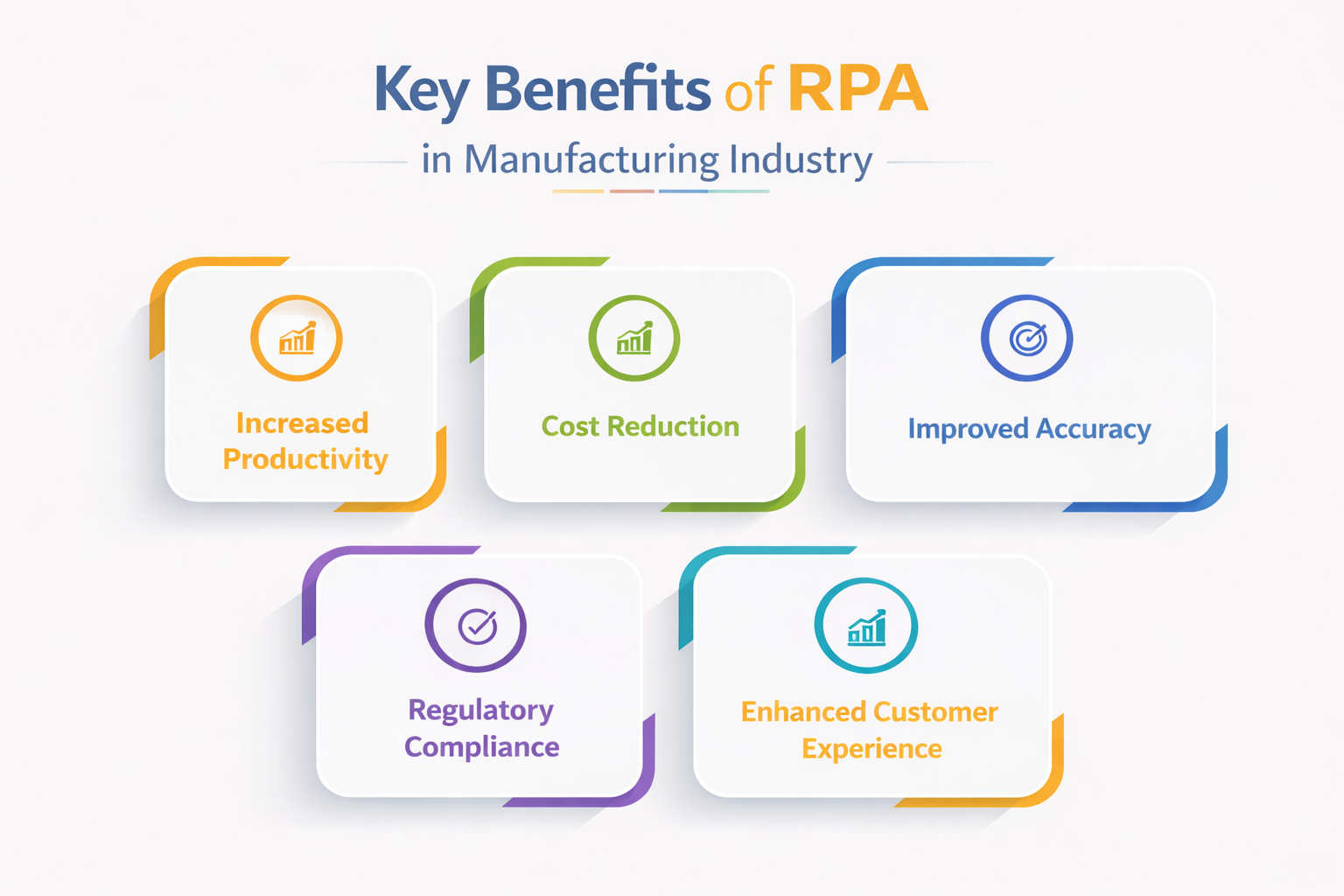
Increased Productivity: Bots operate 24/7 without breaks, increasing throughput and reducing cycle times.
Cost Reduction: Automation lowers labor costs and minimizes costly errors.
Improved Accuracy: RPA eliminates human error in repetitive tasks such as data entry and quality checks.
Regulatory Compliance: Automated workflows ensure consistent adherence to industry standards.
Enhanced Customer Experience: Faster processing leads to improved order fulfillment and customer satisfaction.
Challenges in Implementing RPA in Manufacturing
While the benefits are compelling, manufacturers must navigate several challenges when implementing robotic process automation in manufacturing market:
Integration Complexity: Manufacturing systems are often legacy-based and siloed, making integration with RPA bots complex.
Change Management: Workforce resistance and lack of training can slow down adoption.
Process Standardization: RPA thrives on standardized processes, but manufacturing workflows are sometimes inconsistent.
Security Risks: Automating sensitive data and processes introduces cybersecurity concerns.
High Initial Investment: Despite long-term savings, upfront costs for RPA software and deployment may be significant.
Understanding and addressing these challenges is critical for a successful automation strategy.
Prominent Use Cases of RPA in Manufacturing
Here are some of the most impactful applications of robotic process automation manufacturing in the industry:
| Use Case | Description | Benefits |
|---|---|---|
| Inventory Management | Automating stock level monitoring, reordering, and supplier communication. | Prevents stockouts, reduces manual effort, and improves supply chain reliability. |
| Order Processing | Automating the capture, validation, and processing of customer orders across systems. | Speeds up order fulfillment and reduces errors. |
| Quality Control Reporting | Generating automated quality reports by extracting and analyzing production data. | Enhances quality compliance and reduces manual reporting workload. |
| Invoice and Payment Processing | Automating invoice matching, approvals, and payments. | Reduces payment delays and manual accounting errors. |
| Regulatory Compliance | Automating documentation and audit trails for regulatory reporting. | Ensures consistent compliance and reduces risk of penalties. |
| Production Scheduling | Integrating data from multiple sources to optimize production schedules. | Improves resource utilization and reduces downtime. |
| Maintenance Management | Automatically scheduling and tracking equipment maintenance activities. | Reduces machine downtime and extends equipment lifespan. |
ROI Insights: Measuring the Impact of RPA in Manufacturing
Manufacturers investing in RPA want clear metrics on return on investment. Below is a simplified table outlining typical ROI drivers and estimated benefits:
| ROI Driver | Impact | Typical Result |
|---|---|---|
| Labor Cost Savings | Reduction in manual labor for repetitive tasks | Up to 40% reduction in operational costs |
| Productivity Gains | Increased throughput due to 24/7 bot operations | 30-50% improvement in process cycle times |
| Error Reduction | Minimized errors in data entry and compliance reporting | 70-90% decrease in manual errors |
| Faster Order Processing | Reduced order-to-delivery timelines | 20-30% acceleration in fulfillment |
| Compliance Efficiency | Automated audit trails and reporting | Significant reduction in compliance-related penalties |
| Scalability and Flexibility | Ability to quickly scale operations with fluctuating demand | Increased agility and responsiveness to market changes |
By leveraging RPA software for manufacturing, companies can gain these measurable benefits, leading to improved profitability and competitive advantage.
How PerfectionGeeks Supports RPA Implementation in Manufacturing
Choosing the right partner for RPA implementation is crucial. PerfectionGeeks offers specialized expertise in deploying robotic process automation in manufacturing industry to ensure seamless integration and rapid value realization.
Our approach includes:
- Assessing manufacturing workflows for automation readiness.
- Designing customized RPA solutions tailored to specific industry needs.
- Implementing and integrating RPA bots with legacy and modern manufacturing systems.
- Providing ongoing support, maintenance, and bot optimization.
- Ensuring compliance and security best practices.
With PerfectionGeeks, manufacturers can confidently embrace RPA to drive operational excellence and future-proof their businesses.
Frequently Asked Questions
Quick answers related to this article from PerfectionGeeks.
1. What types of manufacturing processes are best suited for RPA?
2. Can RPA replace physical robots on the production floor?
3. How long does it take to implement RPA in a manufacturing company?
Conclusion
The rise of robotic process automation in manufacturing is transforming how companies operate, enabling faster, more accurate, and cost-efficient production workflows. Despite challenges like integration and change management, the benefits of RPA—from improved productivity to enhanced compliance make it a strategic imperative in the modern manufacturing landscape. Manufacturers seeking to maximize the value of RPA should partner with experienced providers like PerfectionGeeks, who specialize in delivering tailored RPA software for manufacturing industries. By doing so, they can unlock significant ROI and build a resilient, agile operation ready for the future.

Shrey Bhardwaj is the Director & Founder of PerfectionGeeks Technologies, bringing extensive experience in software development and digital innovation. His expertise spans mobile app development, custom software solutions, UI/UX design, and emerging technologies such as Artificial Intelligence and Blockchain. Known for delivering scalable, secure, and high-performance digital products, Shrey helps startups and enterprises achieve sustainable growth. His strategic leadership and client-centric approach empower businesses to streamline operations, enhance user experience, and maximize long-term ROI through technology-driven solutions.