Published 3 March 2026 | Updated 3 March 2026
Technology
How Custom ERP Software Reduces Operational Costs in Logistics
The logistics industry is one of the most complex sectors, involving transportation, warehousing, inventory, supply chain, and customer service. Managing these operations efficiently is critical to reducing costs and improving profitability. This is where custom ERP software development becomes a game-changer. By building tailored ERP solutions, logistics companies can streamline processes, eliminate inefficiencies, and gain real-time visibility across their operations.
Why Logistics Needs Custom ERP Software
The logistics industry operates in a highly dynamic and cost-sensitive environment where delays, inefficiencies, and miscommunication can quickly impact profitability. Standard software solutions often fail to address the complex workflows of transportation, warehousing, fleet management, and supply chain coordination. Custom ERP software is designed specifically to match these operational needs, ensuring seamless integration between departments and real-time visibility across processes. By automating tasks, optimizing resources, and improving decision-making, a tailored ERP system helps logistics companies reduce operational costs, increase efficiency, and stay competitive in a rapidly evolving market.
How Custom ERP Software Reduces Operational Costs
1. Process Automation
Custom ERP software automates repetitive tasks like order processing, invoicing, shipment tracking, and reporting. This reduces manual workload and minimizes human errors. Automation lowers labor costs and improves overall operational speed, allowing teams to focus on strategic activities instead of routine paperwork.
2. Inventory Optimization
A customized ERP system provides real-time inventory tracking across warehouses. It prevents overstocking and understocking, which helps reduce storage costs and product wastage. Better inventory planning directly improves cash flow and avoids unnecessary capital blockage.
3. Fleet and Route Optimization
ERP software for logistics companies monitors fuel usage, vehicle performance, and delivery routes. With smart route planning, businesses can reduce fuel consumption and maintenance expenses. This leads to significant cost savings in daily transportation operations.
4. Centralized Data Management
Custom ERP software integrates all departments into a single system. This eliminates data duplication and reduces communication gaps between teams. A centralized system improves coordination and avoids costly operational mistakes.
5. Reduced Human Errors
Manual data entry often leads to billing mistakes, shipment delays, and compliance issues. ERP systems automate documentation and calculations, minimizing costly errors. Fewer mistakes mean fewer penalties, refunds, and customer complaints.
6. Better Financial Control
ERP systems provide real-time financial insights into operational expenses. Businesses can track spending patterns and identify cost-heavy areas. Accurate budgeting and forecasting help in controlling unnecessary expenditures.
7. Improved Supply Chain Visibility
A supply chain ERP system offers complete visibility into procurement, warehousing, and delivery. Managers can identify bottlenecks quickly and resolve issues before they escalate. Improved visibility reduces delays and prevents revenue loss.
8. Efficient Resource Allocation
Custom ERP software helps allocate workforce, vehicles, and warehouse space efficiently. Proper resource utilization avoids overstaffing and underutilization. This ensures optimal performance without increasing operational costs.
Why Custom ERP is Better Than Off-the-Shelf Solutions
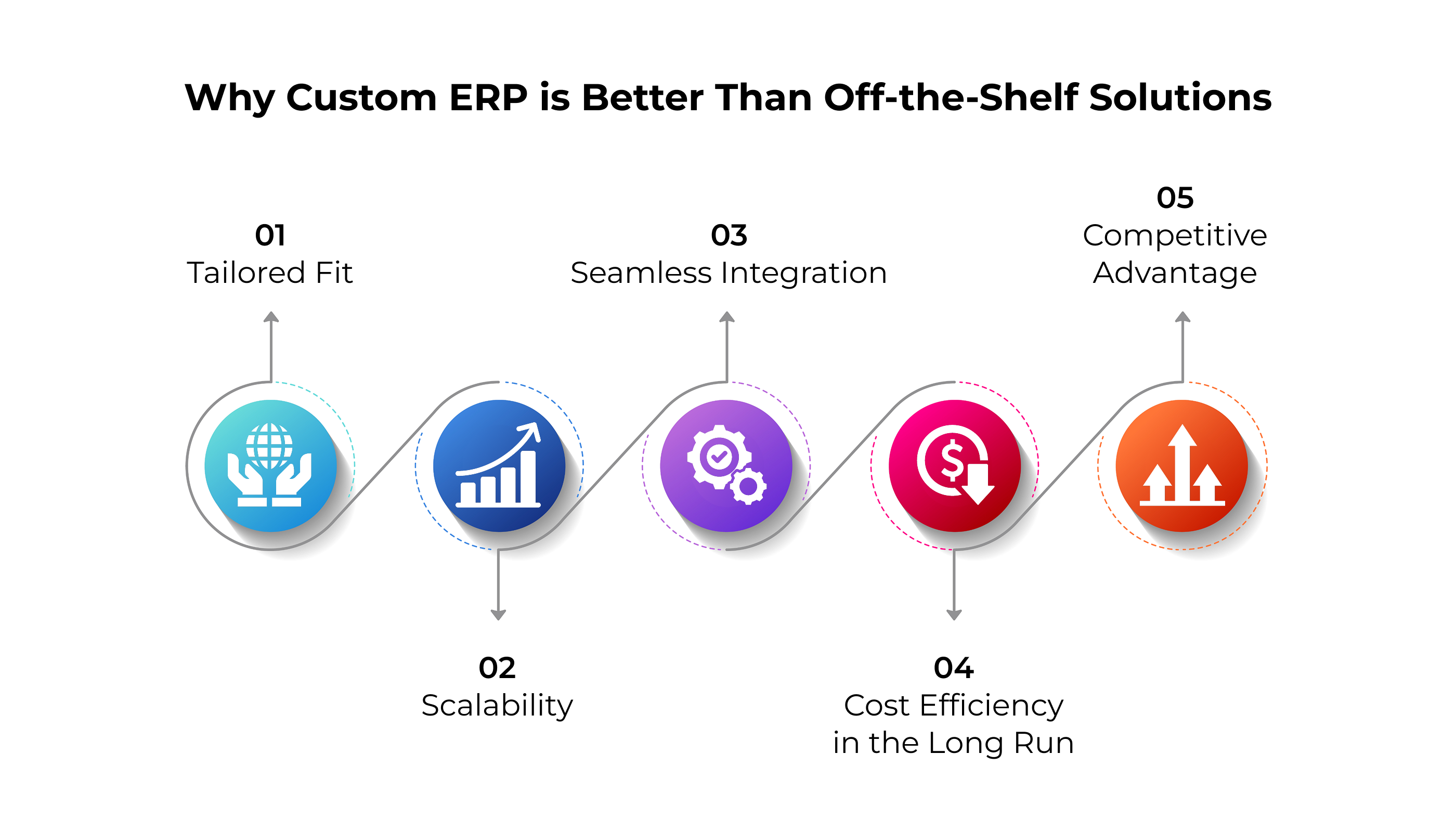
Tailored Fit
Off-the-shelf ERP systems are built for general use and often fail to meet the unique needs of logistics companies. In contrast, custom ERP software development ensures the solution is designed specifically for your workflows, industry regulations, and operational challenges. This tailored fit leads to higher efficiency and better alignment with business goals.
Scalability
Generic ERP systems can be rigid, limiting growth as your logistics company expands. A custom ERP software developer builds solutions that scale with your business, allowing you to add new modules, features, or integrations as needed. This flexibility ensures long-term value and avoids costly system replacements.
Seamless Integration
Off-the-shelf ERP may struggle to integrate with legacy systems or specialized third-party tools. Custom ERP solutions are designed to work seamlessly with your existing infrastructure, reducing disruptions and improving overall efficiency. This makes ERP software for logistics company operations smoother and more reliable.
Cost Efficiency in the Long Run
While custom ERP requires a higher initial investment, it reduces operational costs over time by eliminating inefficiencies, automating processes, and minimizing manual errors. Off-the-shelf systems may seem cheaper upfront but often lead to hidden costs from workarounds, upgrades, or lack of fit.
Competitive Advantage
Custom ERP provides unique features that differentiate your logistics company from competitors. By leveraging logistics management software tailored to your needs, you gain faster processes, better customer service, and stronger compliance. This advantage positions your business as a leader in the industry.
Cost Reduction Areas with Custom ERP Software
| Cost Area | How ERP Helps Reduce Costs |
| Transportation | Optimizes routes, reduces fuel costs, and improves fleet utilization. |
| Warehousing | Tracks inventory, reduces overstocking, and improves space management. |
| Administration | Automates billing, documentation, and reporting, cutting down manual labor costs. |
| Supply Chain | Enhances coordination, reduces delays, and improves vendor management. |
| Customer Service | Provides real-time updates, reducing complaints and improving satisfaction. |
Challenges in Implementing Custom ERP Software
High Initial Investment
Developing custom ERP software requires significant upfront costs for design, development, and deployment. While the long-term savings are substantial, many logistics companies may find the initial financial commitment challenging. This makes careful budgeting and ROI analysis essential before implementation.
Integration Issues
Legacy systems often struggle to align with modern ERP solutions. Integrating a logistics ERP software with outdated infrastructure can cause delays, compatibility problems, and added expenses. Businesses must plan for phased integration and ensure proper technical support to minimize disruptions.
Training Needs
Employees must adapt to new workflows and technologies introduced by ERP systems. Training programs are necessary to ensure staff can use the logistics management system software effectively. Without proper training, productivity may drop temporarily, and resistance to change can slow adoption.
Customization Complexity
Tailoring ERP to meet the unique needs of logistics companies can be time-consuming and complex. A custom ERP software developer must carefully design modules for transportation, warehousing, and supply chain management. This requires close collaboration between developers and business stakeholders to avoid delays.
Data Security
Protecting sensitive logistics data is critical when implementing ERP systems. Cybersecurity risks increase as companies centralize operations in a supply chain ERP system. Strong encryption, compliance with regulations, and regular audits are necessary to safeguard customer and operational information.
Case Study: Logistics Company Success with ERP
A mid-sized logistics company in the UK faced rising costs due to manual processes and poor visibility. They partnered with a custom ERP software developer to build a tailored logistics management system software.
Results after implementation:
- Reduced transportation costs by 20% through optimized routing.
- Cut warehouse expenses by 15% with better inventory control.
- Automated billing reduced administrative costs by 30%.
- Customer satisfaction improved with real-time shipment tracking.
This case highlights how custom ERP software development services deliver measurable cost savings.
Why Choose PerfectionGeeks for Custom ERP Software Development
PerfectionGeeks specializes in building tailored ERP solutions for logistics companies. As experts in custom ERP software development services, we design systems that integrate seamlessly with your operations.
- Proven expertise in ERP software for logistics industry.
- Skilled custom ERP software developers with deep industry knowledge.
- Focus on scalability, compliance, and automation.
- End-to-end support from design to post-launch optimization.
By choosing PerfectionGeeks, you get a partner who understands both technology and logistics challenges.
Future of Logistics ERP and Digital Transformation
The future of logistics lies in digital transformation powered by ERP systems. Emerging technologies like AI, IoT, and blockchain will further enhance supply chain management logistics software.
AI-Powered Analytics
Artificial Intelligence will play a central role in logistics ERP systems by analyzing large volumes of data to predict demand, optimize delivery routes, and reduce fuel costs. These insights help logistics companies plan ahead, minimize delays, and cut unnecessary expenses. AI-driven forecasting ensures smoother supply chain operations and better customer satisfaction.
IoT Integration
The Internet of Things (IoT) will connect vehicles, warehouses, and goods through smart sensors. This integration allows real-time tracking of shipments, monitoring of fleet performance, and proactive maintenance alerts. By reducing breakdowns and improving visibility, IoT helps logistics firms lower operational costs and enhance reliability.
Blockchain Technology
Blockchain will bring transparency and security to logistics transactions. It ensures tamper-proof records for contracts, payments, and shipment tracking, reducing fraud and disputes. With blockchain integrated into supply chain management logistics software, companies can build trust with partners and customers while cutting administrative overhead.
Cloud-Based ERP
Cloud-based ERP systems will make logistics solutions more scalable and accessible. Companies can expand operations without heavy infrastructure costs, while employees can access data from anywhere. This flexibility reduces IT expenses and supports faster decision-making, making cloud ERP a cornerstone of digital transformation.
Businesses that adopt the best logistics management software will gain a strong edge over competitors. By combining AI, IoT, blockchain, and cloud ERP, they can reduce costs, improve efficiency, and deliver superior customer experiences. Early adopters of digital transformation will be positioned as leaders in the logistics industry.
Frequently Asked Questions
Quick answers related to this article from PerfectionGeeks.
1. What is ERP software for logistics industry?
2. Why choose custom ERP software over generic solutions?
3. How does PerfectionGeeks support logistics businesses with ERP solutions?
4. What role does ERP play in the future of logistics?
Conclusion
Custom ERP software development is transforming the logistics industry by reducing operational costs and improving efficiency. From transportation and warehousing to supply chain management, ERP systems deliver measurable savings and competitive advantages. Partnering with the right custom ERP software developer like PerfectionGeeks ensures your business gets tailored solutions that meet industry needs. With the rise of digital transformation, investing in logistics ERP software and supply chain ERP systems is no longer optional it’s essential for success in 2026 and beyond.

Shrey Bhardwaj is the Director & Founder of PerfectionGeeks Technologies, bringing extensive experience in software development and digital innovation. His expertise spans mobile app development, custom software solutions, UI/UX design, and emerging technologies such as Artificial Intelligence and Blockchain. Known for delivering scalable, secure, and high-performance digital products, Shrey helps startups and enterprises achieve sustainable growth. His strategic leadership and client-centric approach empower businesses to streamline operations, enhance user experience, and maximize long-term ROI through technology-driven solutions.