Published 6 January 2026 | Updated 6 January 2026
Technology
How Drones Are Transforming Australian Farming: Real Use Cases and Technology
Australian farming operates on a large scale and often in tough conditions. From managing vast crop fields to monitoring livestock across remote land, farmers need solutions that save time and reduce manual effort. This is where drones in agriculture are making a strong impact. These smart flying tools help farmers see, measure, and manage their farms in ways that were not possible before.
Understanding Drones and Farming in Australia
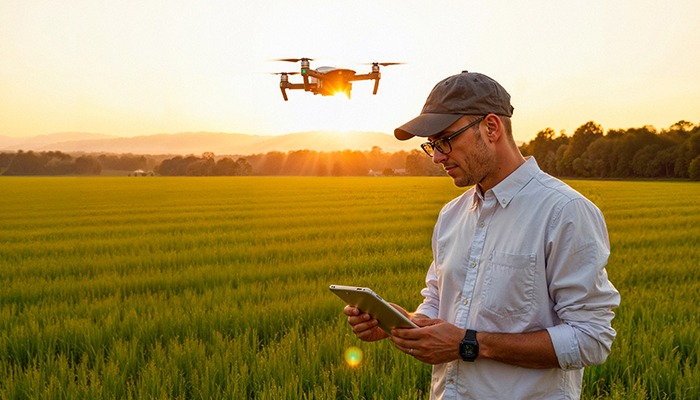
Drones and farming work together by giving farmers a clear aerial view of their land. Instead of walking long distances or relying only on machinery data, farming drones capture images, videos, and sensor data in real time. Australian farmers use drones for farming to inspect crops, track livestock, plan irrigation, and manage resources efficiently. This approach helps reduce labor dependency while improving accuracy and speed.
How Are Drones Used in Agriculture?
Many people ask, how are drones used in agriculture on farms? The answer lies in practical and daily farm operations.
Crop Health Monitoring
Drones capture high-resolution images that show plant health. These images highlight stressed crops, disease outbreaks, or nutrient deficiencies early. This allows farmers to treat only the affected areas instead of the whole field.
Precision Spraying
Spray drones apply fertilizers, pesticides, and herbicides with precision. This method reduces chemical waste, lowers costs, and supports sustainable farming practices.
Irrigation Management
Drones help detect water-stressed areas. Farmers can adjust irrigation systems accurately, ensuring crops receive the right amount of water without wastage.
Livestock Monitoring
Large Australian farms benefit greatly from farming drones for livestock tracking. Drones help locate animals, check fences, and monitor herd movement without disturbing livestock.
Field Mapping and Planning
Using drone technology in agriculture, farmers create detailed maps that help with planting, harvesting, and soil improvement strategies.
Types of Drones in Agriculture
Understanding the types of drones in agriculture helps farmers choose the right tool for their needs.
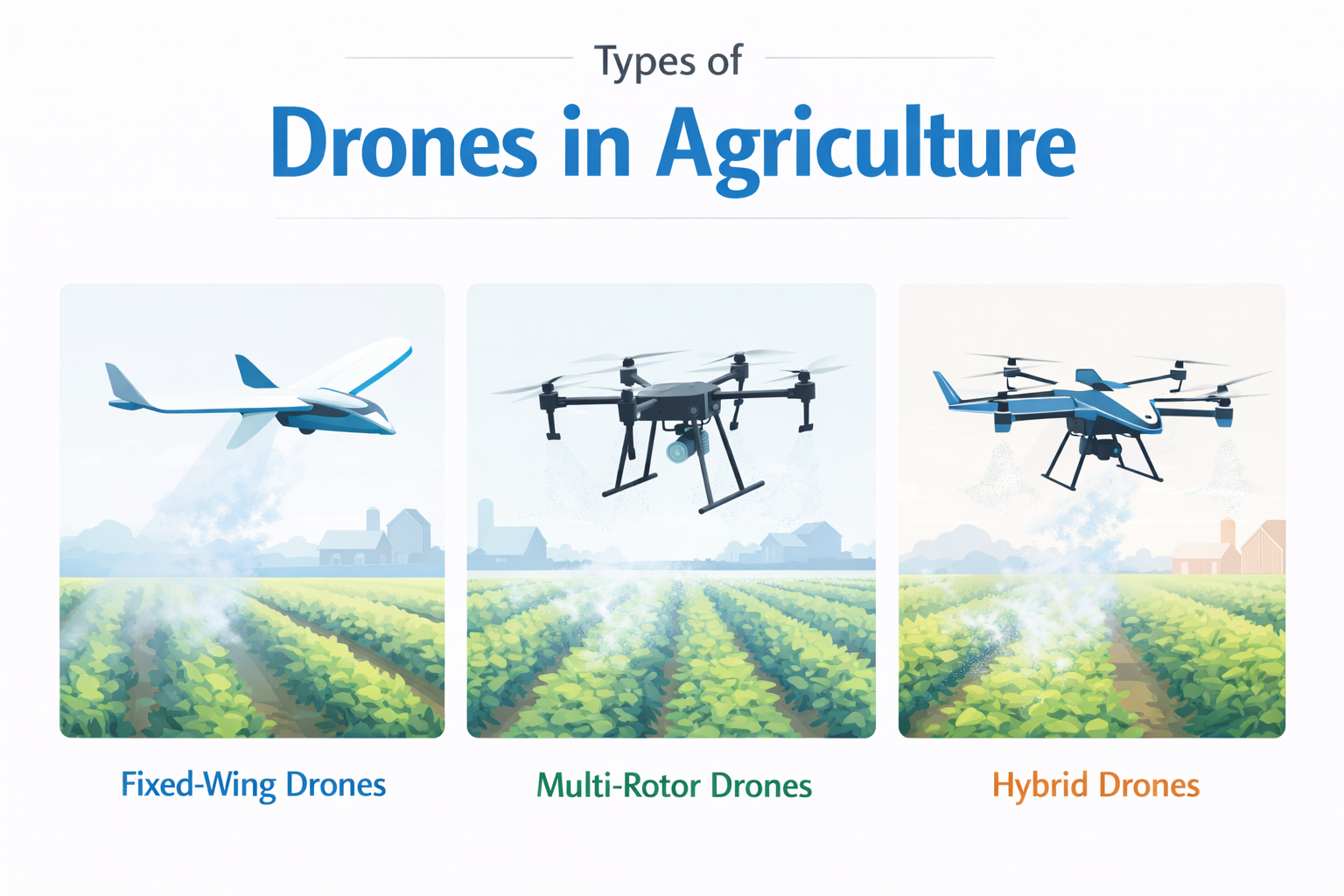
Fixed-Wing Drones: These drones cover large areas and are ideal for crop mapping and land surveys. They are commonly used on large Australian farms.
Multi-Rotor Drones: These are the most popular types of drones used in agriculture. They are suitable for spraying, close inspection, and monitoring specific areas.
Hybrid Drones: Hybrid drones combine long flight time with vertical take-off, offering flexibility for mixed farming needs.
Each type supports different tasks in drones and farming, making agriculture more efficient.
Benefits of Drones in Agriculture
The benefits of drones in agriculture go far beyond simple monitoring. Below are the key benefits explained clearly:
1. Reduced Labor Dependency
Drones perform tasks like monitoring, spraying, and inspection that once required multiple workers. This is especially helpful for Australian farms facing labor shortages.
2. Better Crop Yield
By identifying crop stress early, farmers can act quickly. This leads to healthier crops and improved harvest output.
3. Cost Savings
Precision spraying and targeted actions reduce fertilizer, pesticide, and fuel usage. Over time, this lowers overall farming costs.
4. Faster Decision-Making
Drones provide real-time data, allowing farmers to make informed decisions quickly instead of waiting for manual reports.
5. Improved Farm Safety
Drones reduce the need for farmers to enter risky areas, such as uneven land or remote locations, improving safety.
6. Sustainable Farming
Less chemical use and better water management support environmentally responsible farming practices.
Best Drone Technology in Agriculture
The best drone technology in agriculture combines advanced hardware with smart software. Modern drones use GPS, AI-powered sensors, and data analytics to convert images into useful insights. To fully benefit from drone data, farmers often need digital systems that organize and analyze information. Companies like PerfectionGeeks help agricultural businesses integrate drone data with custom software solutions, making farm management simpler and more effective.
Real Impact of Farming Drones in Australia
Across Australia, drones for farming are used in vineyards, grain farms, and livestock operations. Farmers report better land visibility, reduced workload, and improved productivity. As drone technology in agriculture continues to grow, it supports both large-scale commercial farms and smaller agricultural operations.
Frequently Asked Questions
Quick answers related to this article from PerfectionGeeks.
1. How are drones used in agriculture?
2. What are the main benefits of drones in agriculture?
3. What types of drones are used in agriculture?
Conclusion
Drones are changing how Australian farms operate by making agriculture smarter, faster, and more efficient. From crop monitoring to livestock management, farming with drones helps farmers overcome labor challenges and improve yields. With the right technology support from experts like PerfectionGeeks, drones are becoming an essential tool for modern Australian farming.

Shrey Bhardwaj is the Director & Founder of PerfectionGeeks Technologies, bringing extensive experience in software development and digital innovation. His expertise spans mobile app development, custom software solutions, UI/UX design, and emerging technologies such as Artificial Intelligence and Blockchain. Known for delivering scalable, secure, and high-performance digital products, Shrey helps startups and enterprises achieve sustainable growth. His strategic leadership and client-centric approach empower businesses to streamline operations, enhance user experience, and maximize long-term ROI through technology-driven solutions.