Published 18 February 2026 | Updated 18 February 2026
Technology
How to Build a Custom Behavioral Health Software: Costs, Features & Compliance Guide
Behavioral healthcare providers are rapidly adopting digital solutions to improve patient care, streamline operations, and ensure data security. Custom behavioral health software helps clinics, hospitals, and startups manage appointments, therapy notes, billing, telehealth, and compliance in one secure system. Instead of relying on generic tools, organizations now prefer tailored mental health software built around their specific workflows. In this guide, we’ll explore the costs, essential features, compliance requirements, and development process for building a scalable and secure solution.
Introduction to Custom Behavioral Health Software
Custom behavioral health software is designed specifically for mental health clinics, therapists, hospitals, rehabilitation centers, and counseling practices. Unlike generic tools, it is built around your workflows, compliance needs, and patient journey.
A well-built system may include:
- Appointment scheduling
- Patient records management
- Teletherapy modules
- Billing and insurance management
- Secure communication
Whether it is a behavioral health practice management software or a complete mental health management software, customization ensures better efficiency, data security, and scalability.
Market Overview and Growing Demand for Behavioral Health Solutions
The global mental health crisis has increased the demand for digital solutions. Rising stress levels, remote care adoption, and insurance digitization are driving growth in:
- Teletherapy platforms
- EHR-based mental health software
- Mobile therapy apps
- AI-powered behavioral health analytics
Healthcare providers are now investing heavily in health tech software that improves patient engagement and automates administrative tasks.
Many clinics are moving away from generic tools and looking for:
- Scalable mental health software
- Integrated behavioral health app platforms
- Secure and compliant solutions
This shift creates a strong opportunity for organizations planning custom healthcare software development.
Types of Custom Behavioral Health Software Solutions
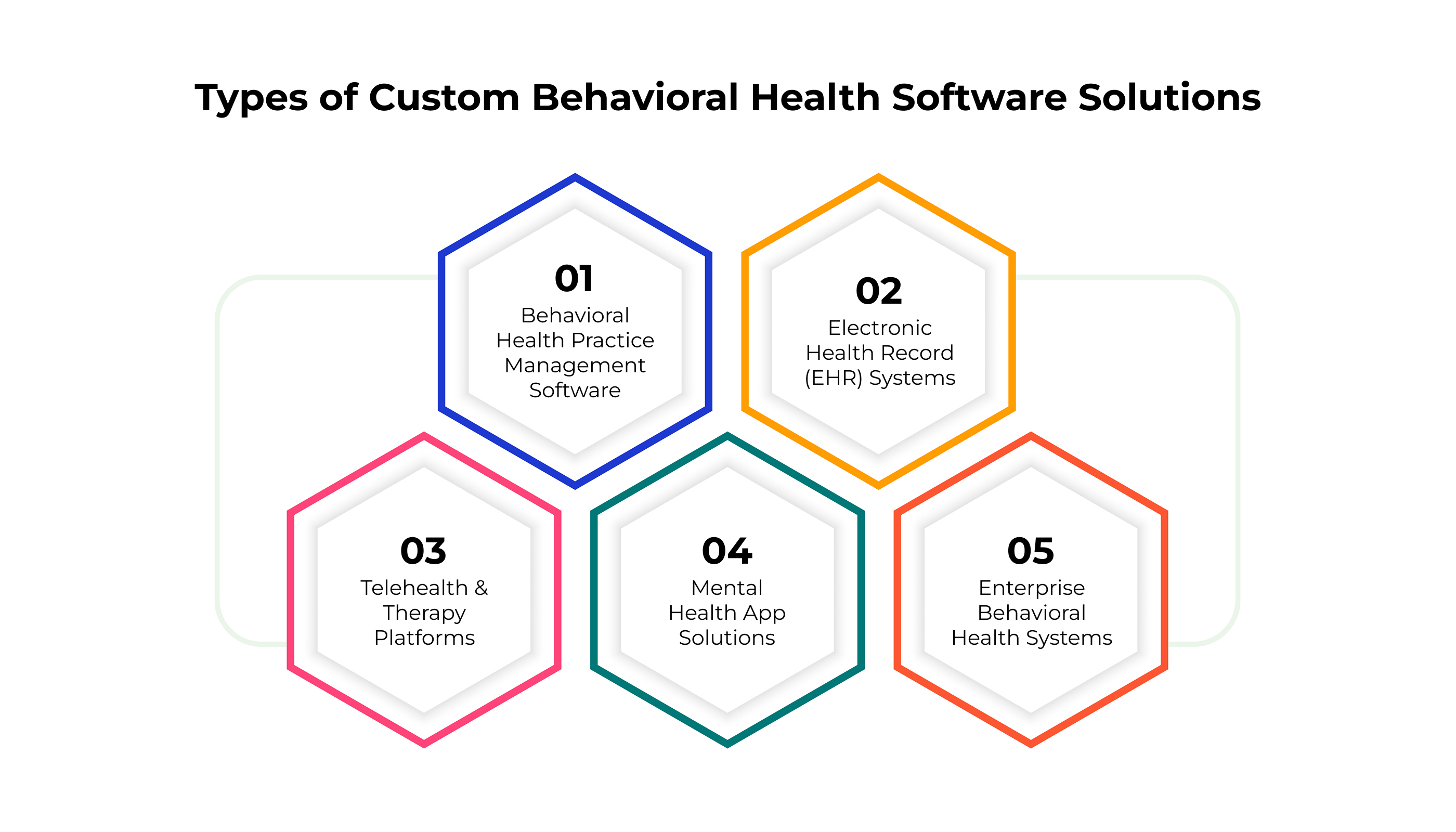
Not every provider needs the same type of system. Here are the main categories:
1. Behavioral Health Practice Management Software
This type of behavioral health practice management software focuses on handling day-to-day administrative tasks like scheduling appointments, billing, insurance claims, and staff coordination. It reduces paperwork and improves operational efficiency for clinics and therapy centers.
2. Electronic Health Record (EHR) Systems
EHR systems are designed to securely store patient medical records, therapy notes, treatment plans, and clinical documentation. They improve care coordination and ensure compliance with healthcare data regulations.
3. Telehealth & Therapy Platforms
These platforms enable secure video consultations, remote therapy sessions, and digital prescriptions. They are ideal for providers offering online counseling or expanding services beyond physical locations.
4. Mental Health App Solutions
Mobile-based platforms that allow patients to track mood, manage medications, access self-help resources, and communicate with therapists. This category falls under mental health app development and healthcare app development, focusing on improving patient engagement and accessibility.
5. Enterprise Behavioral Health Systems
Large-scale, fully integrated systems designed for hospitals or multi-location healthcare networks. They combine analytics, reporting dashboards, AI insights, and centralized management for better decision-making.
Choosing the right type of behavioral health software depends on your target users, available budget, compliance needs, and long-term business strategy.
Essential Features of Custom Behavioral Health Software
To compete with the best behavioral health software, your solution must include powerful yet easy-to-use features.
1. Patient Management System
A strong patient management system stores complete patient profiles, including medical history, diagnoses, therapy notes, and treatment plans. It allows therapists and staff to access records securely in one place. This improves accuracy, reduces paperwork, and ensures better continuity of care.
2. Appointment Scheduling & Calendar Management
This feature helps clinics manage therapist schedules, patient bookings, and session timings efficiently. Automated reminders via SMS or email reduce missed appointments. It also allows patients to book or reschedule sessions easily through a portal or app.
3. Electronic Health Records (EHR) Integration
An integrated EHR system allows therapists to record session notes, prescriptions, and progress reports digitally. It ensures data is organized and easily retrievable during follow-ups. Custom templates for therapy notes can save time and improve documentation quality.
4. Telehealth & Secure Video Consultation
Telehealth functionality enables virtual therapy sessions through encrypted video calls. It allows patients to attend sessions remotely, improving accessibility. Secure messaging and file sharing also enhance communication between patients and providers.
5. Billing & Insurance Management
This feature automates invoicing, payment tracking, and insurance claim processing. It reduces administrative errors and speeds up reimbursement cycles. Integrated billing ensures transparency for both clinics and patients.
6. Compliance & Data Security
Behavioral health systems must follow strict data protection laws like HIPAA or GDPR. Features such as end-to-end encryption, role-based access, and audit logs protect sensitive patient information. Strong security builds trust and prevents legal issues.
7. Reporting & Analytics Dashboard
Advanced reporting tools provide insights into patient progress, therapist performance, and revenue trends. Administrators can track operational efficiency through real-time dashboards. This data-driven approach helps improve both clinical and business outcomes.
8. Patient Portal
A patient portal allows individuals to access their treatment plans, session history, invoices, and appointment details. It empowers patients to stay engaged in their therapy journey. Secure messaging also allows direct communication with providers.
9. Mobile Accessibility
A companion behavioral health app improves convenience for both patients and clinicians. Patients can track mood, complete therapy exercises, or join virtual sessions through their smartphones. Mobile access increases engagement and overall satisfaction.
10. Customizable Workflows
Every clinic operates differently, so customizable workflows are essential. This feature allows administrators to adjust forms, therapy templates, and approval processes based on their needs. Flexibility ensures the software adapts to the organization, not the other way around.
Cost to Build Custom Behavioral Health Software
The cost depends on complexity, features, compliance requirements, and integrations.
Below is a simplified cost estimate table:
| Development Type | Estimated Cost Range | Ideal For |
| Basic Behavioral Health Software | $30,000 – $50,000 | Small clinics |
| Mid-Level Practice Management Software | $50,000 – $90,000 | Growing healthcare centers |
| Advanced Enterprise Solution | $90,000 – $200,000+ | Multi-location hospitals |
| Mobile Mental Health App | $25,000 – $70,000 | Startups & therapy platforms |
What Influences Cost?
- Number of features
- Compliance requirements (HIPAA, GDPR)
- Custom UI/UX design
- Integration with third-party systems
- Cloud hosting
- Security layers
Custom medical software development always requires strong security and compliance, which impacts pricing.
Step-by-Step Development Process
Building custom behavioral health software requires structured planning, technical expertise, and strict compliance control. Each stage plays an important role in creating a secure and scalable system.
Step 1: Requirement Analysis
This is the foundation of the entire project. In this stage, you clearly define your target users such as therapists, clinic staff, administrators, or patients. You also identify business goals, compliance needs (like HIPAA), and create a complete feature list.
Proper requirement analysis prevents confusion later and ensures the software is built according to real operational needs rather than assumptions.
Step 2: UI/UX Design
In this step, designers create clean and easy-to-use dashboards for therapists and simple navigation for patients. Since healthcare software is used daily, the interface must be clear, organized, and stress-free.
Wireframes and prototypes are created first to visualize how the system will look and function before development begins.
Step 3: Development Phase
This is where actual coding begins. Backend development focuses on database structure, server logic, and security architecture, while frontend development builds the user interface users interact with.
API integrations are added to connect with billing systems, EHR platforms, telehealth tools, or third-party services. Experienced healthcare software development teams ensure the system is scalable and secure from the start.
Step 4: Compliance & Security Testing
Since behavioral health software handles sensitive patient data, compliance is critical. Developers ensure HIPAA or other regulatory standards are properly implemented.
Encrypted databases, secure login authentication, role-based access control, and audit trails are tested carefully to prevent data breaches and legal risks.
Step 5: Testing & Quality Assurance
Before launch, the system goes through multiple levels of testing. Functional testing ensures every feature works correctly, from appointment booking to billing.
Performance testing checks how the system handles large amounts of data, while security testing identifies vulnerabilities and strengthens protection mechanisms.
Step 6: Deployment
Once testing is complete, the software is launched on secure cloud infrastructure. Cloud hosting ensures flexibility, remote access, and data backup systems for safety.
A controlled deployment strategy is used to minimize downtime and ensure smooth transition from old systems.
Step 7: Maintenance & Upgrades
Development does not stop after launch. Regular updates are necessary to fix bugs, improve performance, and add new features.
Ongoing maintenance ensures the software stays compliant with changing healthcare regulations and remains scalable as your organization grows.
Compliance Requirements in Behavioral Health Software
Healthcare software must follow strict regulations.
1. HIPAA (USA)
The Health Insurance Portability and Accountability Act (HIPAA) sets strict rules for protecting Protected Health Information (PHI) in the United States. It requires secure storage, controlled access, audit trails, and encrypted data transmission. Any behavioral health software operating in the U.S. must comply with HIPAA to avoid heavy penalties and legal action.
2. GDPR (Europe)
The General Data Protection Regulation (GDPR) focuses on data privacy and gives individuals control over their personal information. It requires clear consent for data collection, the right to access or delete personal data, and strict data security measures. Behavioral health platforms serving European users must follow GDPR to ensure transparency and accountability.
3. Data Encryption
Encryption protects sensitive information from unauthorized access. Data must be encrypted both “in transit” (while being transferred over the internet) and “at rest” (when stored in databases or cloud servers). Strong encryption ensures that even if data is intercepted, it cannot be read or misused.
4. Role-Based Access Control
Not every staff member should have access to all patient data. Role-based access ensures that therapists, administrators, and billing staff only see information relevant to their responsibilities. This reduces internal data risks and strengthens overall system security.
Challenges and Best Practices in Behavioral Health Software Development
Major Challenges
1. Complex Compliance Rules: Behavioral health systems must follow strict regulations such as HIPAA, GDPR, or other regional healthcare laws. These rules control how patient data is stored, shared, and protected. Understanding and implementing these regulations correctly can be complicated and time-consuming during medical software development.
2. High Data Security Requirements: Mental health records are highly sensitive and attractive targets for cyberattacks. Even a small security gap can lead to serious legal and financial consequences. Ensuring encrypted storage, secure authentication, and role-based access adds technical complexity to development.
3. Integration with Existing Systems: Many clinics already use legacy systems for billing, EHR, or appointment management. Integrating new behavioral health software with these older platforms can be technically challenging. APIs must be carefully built to ensure smooth data exchange without disrupting current operations.
4. User Adoption Resistance: Healthcare professionals are often used to traditional workflows or paper-based systems. Switching to new software may feel overwhelming or time-consuming to them. If the interface is complicated, adoption rates may drop significantly.
5. Scalability Issues: As patient data grows, the system must handle larger databases and increased traffic. Poorly planned architecture can lead to slow performance or system crashes. Scalability becomes critical when expanding to multiple clinics or regions.
Best Practices
1. Build Compliance-First Architecture: Instead of adding compliance features later, design the system with regulatory standards in mind from day one. This includes secure data storage, access control, and audit logs. A compliance-first approach reduces legal risks and costly redesigns.
2. Use Secure Cloud Hosting: Cloud infrastructure offers strong security layers, automatic backups, and easy scalability. Choosing a reliable cloud provider ensures better uptime and disaster recovery options. It also allows remote access for therapists and administrators.
3. Keep UI Simple and User-Friendly: Healthcare software should reduce stress, not increase it. Clean dashboards, clear navigation, and simple workflows improve user experience. A well-designed interface encourages faster adoption among therapists and staff.
4. Offer Training for Staff: Even the best software needs proper training for successful implementation. Providing onboarding sessions and user guides helps staff feel confident using the system. Continuous support reduces resistance and improves productivity.
5. Plan Long-Term Scalability: The system should be built with future growth in mind. Flexible architecture allows adding new features, handling more users, and expanding services. Proper planning reduces technical limitations in the long run.
Case Study: Custom Behavioral Health Platform for Multi-Clinic Network
A mid-sized mental health provider wanted a centralized platform across 5 clinics.
Problems:
- Manual billing
- Paper-based patient records
- No teletherapy system
- Poor reporting visibility
Solution:
A custom behavioral health practice management software with:
- Cloud-based EHR
- Teletherapy integration
- Automated billing
- Central dashboard
Results:
- 35% reduction in admin workload
- 25% increase in appointment attendance
- Faster insurance claim processing
This shows how custom mental health software improves operational efficiency.
Why PerfectionGeeks for Custom Behavioral Health Software Development
Building behavioral health software requires more than coding skills it demands deep healthcare knowledge, strict compliance understanding, and a strong focus on data security. PerfectionGeeks combines technical expertise with healthcare domain experience to deliver secure, scalable, and user-friendly solutions tailored to clinics, hospitals, and digital health startups.
- Healthcare-Focused Expertise
Our team has strong experience in healthcare software development and understands the complexities of mental health workflows, compliance standards, and patient data management. - Compliance-First Development Approach
We design systems with HIPAA and other regulatory requirements in mind from day one, ensuring secure architecture, encrypted databases, and protected patient information. - Custom & Scalable Solutions
Every behavioral health software we build is fully customized to match your operational needs, with scalable infrastructure that supports long-term growth.
End-to-End Support & Maintenance
From planning and UI/UX design to deployment and ongoing updates, PerfectionGeeks provides complete development and post-launch support to ensure long-term success.
Frequently Asked Questions
Quick answers related to this article from PerfectionGeeks.
1. What is custom behavioral health software?
2. How is behavioral health software different from general healthcare software?
3. How much does it cost to build mental health management software?
4. Does PerfectionGeeks offer post-launch support?
5. Why choose PerfectionGeeks for behavioral health software development?
Conclusion
Custom behavioral health software is no longer a luxury it’s a necessity for modern mental healthcare providers. From improving patient engagement to ensuring compliance and streamlining operations, the right solution can transform your practice. By investing in secure, scalable, and user-friendly mental health software, organizations can deliver better outcomes while staying future-ready. Partnering with experts like PerfectionGeeks ensures your platform is built with precision, compliance, and long-term growth in mind.

Shrey Bhardwaj is the Director & Founder of PerfectionGeeks Technologies, bringing extensive experience in software development and digital innovation. His expertise spans mobile app development, custom software solutions, UI/UX design, and emerging technologies such as Artificial Intelligence and Blockchain. Known for delivering scalable, secure, and high-performance digital products, Shrey helps startups and enterprises achieve sustainable growth. His strategic leadership and client-centric approach empower businesses to streamline operations, enhance user experience, and maximize long-term ROI through technology-driven solutions.