
Published 3 February 2026 | Updated 3 February 2026
Technology
How to Build Farm Management Software in Australia: Features, Cost, and Process
Farm management software is transforming how Australian farmers manage their operations by providing precise tracking of crops, livestock, resources, and finances. This technology helps eliminate guesswork, improve efficiency, and maximize yields while minimizing waste. If you’re curious about what is farm management software and want to know how to develop reliable farm management software tailored for Australia, this blog covers the essential features, the step-by-step development process, and cost factors. We’ll also discuss how farm automation software is driving innovation and growth in the agricultural sector across the country.
Overview of Farm Management Software and Its Importance in Agriculture
Farm management software is a digital solution designed to simplify and streamline farming activities. It helps farmers organize their operations, track resources, manage crops and livestock, and analyze data to make informed decisions.
Why does this matter? Farming is no longer just about hard work and experience. The unpredictable weather, fluctuating market prices, and environmental regulations make farm management more complex than ever. With the right farm software, Australian farmers can:
- Monitor field activities remotely
- Automate routine tasks
- Forecast yields and expenses
- Manage inventory efficiently
- Ensure compliance with government regulations
This software helps boost productivity, reduce waste, and ultimately increase profits — a critical need in the competitive world of agriculture.
Key Features of the Best Farm Management Software in Australia
When we talk about the best farm management software Australia offers, we are looking at solutions that combine user-friendly design with powerful capabilities. Here are the must-have features:
Crop and Livestock Management: Monitor every stage of crop growth and livestock health in real time. Automated alerts help farmers quickly address issues like pest outbreaks or animal sickness, reducing potential losses.
Field Mapping and GPS Integration: Detailed field maps and GPS tools allow precise control over planting, spraying, and harvesting. They also improve farm navigation and track machinery, boosting operational accuracy.
Weather Forecasting and Alerts: Built-in weather updates enable farmers to plan activities around changing conditions. Timely alerts help protect crops from storms, drought, or frost damage.
Inventory and Equipment Management: Track supplies such as seeds, fertilizers, and chemicals, along with maintenance schedules for machinery. This prevents shortages and costly equipment breakdowns.
Financial Management: Manage all farm-related expenses, sales, and profits in one place. Integration with accounting software simplifies financial tracking and reporting.
Mobile Access: Farmers can access the software from smartphones or tablets, allowing updates and monitoring on the go, no matter where they are on the farm.
Reporting and Analytics: Generate data-driven reports to identify trends and forecast outcomes. This insight helps farmers make smarter, informed decisions.
Compliance and Traceability: Ensure all farming practices comply with government regulations. Trace products throughout the supply chain, improving transparency and trust.
User-friendly Interface: Designed for ease of use, even for those with limited tech experience, making farm management simple and efficient for everyone.
Step-by-Step Process to Develop Custom Farm Management Software
Building farm management software that truly fits the unique needs of Australian farms requires a clear, stepwise approach:
Step 1: Requirement Gathering
Start by understanding who will use the software — farmers, agronomists, and farm managers. Learn about their daily challenges and what features they need most. This involves talking to stakeholders and researching the market to gather all essential requirements.
Step 2: Planning and Designing
Next, create wireframes and prototypes that map out how the software will look and work. Focus on making the user experience simple and intuitive. Also, decide on the right technology stack to build a strong, scalable solution.
Step 3: Development
Begin building the key features such as crop management, livestock tracking, and financial tools. Using an agile development process helps collect feedback early and improve the software continuously.
Step 4: Integration
Connect the software with important third-party services like GPS systems, weather APIs, payment gateways, and accounting platforms to enhance functionality.
Step 5: Testing
Conduct comprehensive tests to check that all features work well, the software is easy to use, performs efficiently, and is secure.
Step 6: Deployment
Launch the finished software either on the cloud or on local servers, depending on what the client prefers.
Step 7: Training and Support
Finally, provide user training and ongoing support to ensure smooth operation and update the software as needed.
Cost Breakdown for Developing Farm Management Software in Australia
Cost is a major consideration when investing in farm automation software. Various factors influence the price, including:
- Scope and Complexity: More features mean higher costs.
- Technology Stack: Advanced technologies or integrations might increase expenses.
- Customization Level: Tailored solutions cost more than off-the-shelf products.
- Development Team Location: Australia-based developers may charge more than offshore teams.
- Maintenance and Support: Ongoing costs after launch.
Approximate Cost Range:
For a mid-sized custom farm management software, costs can range from AUD 50,000 to AUD 200,000 depending on the above factors.
Breaking it down:
- Requirement Analysis & Planning: 10%
- Design: 15%
- Development: 40%
- Testing: 15%
- Deployment & Support: 20%
Partnering with an experienced farm management software development company can help optimize costs by delivering efficient and scalable solutions.
Benefits of Using Farm Automation Software on Australian Farms
Automation is a game-changer. Here’s why:
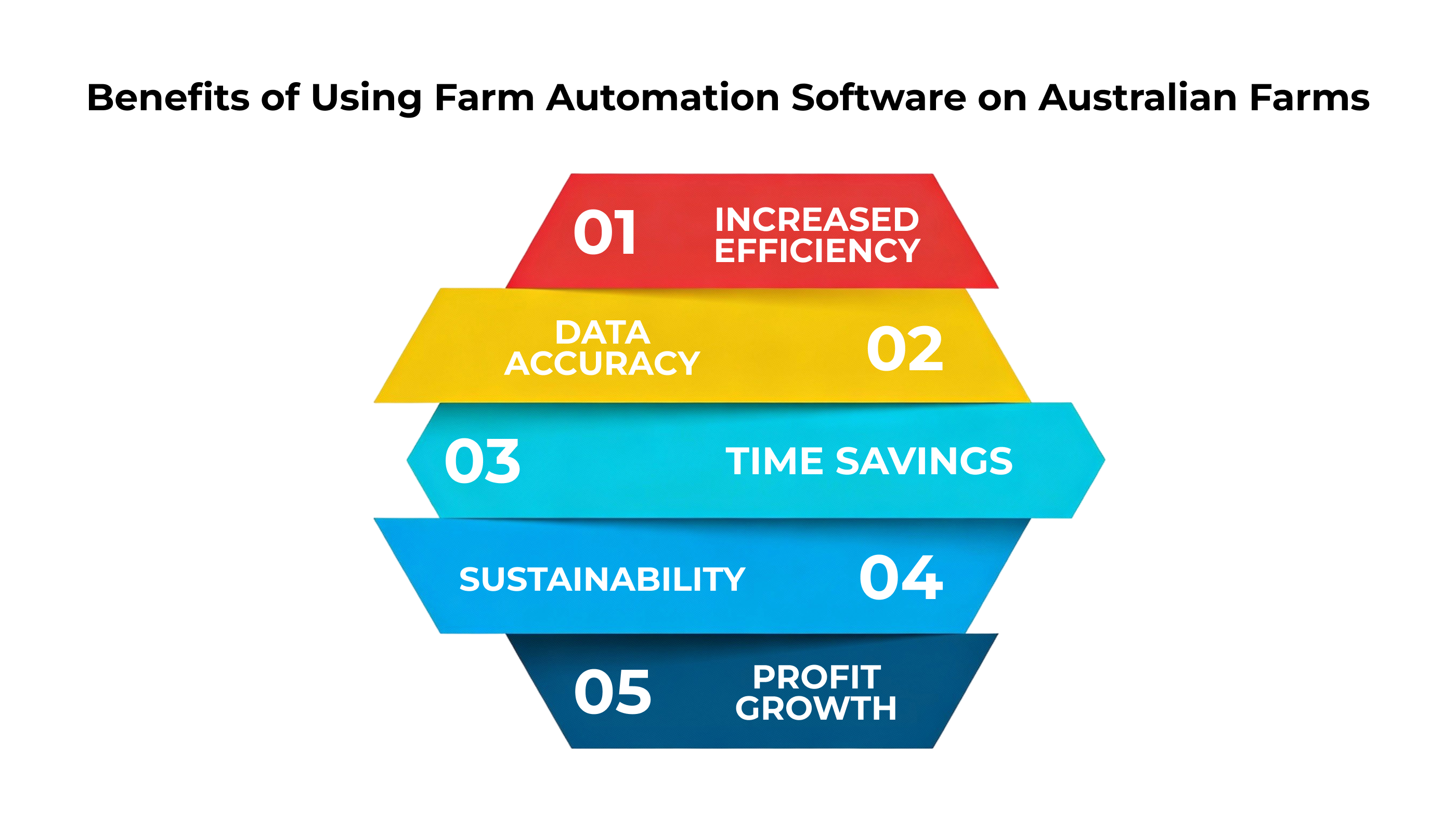
Increased Efficiency: Farm automation software streamlines repetitive tasks such as irrigation scheduling and fertilization alerts. Automating these routine processes saves time and ensures tasks are done consistently, freeing farmers to focus on more critical activities.
Data Accuracy: By reducing reliance on manual data entry, automation minimizes human errors. Accurate data collection leads to better insights and smarter decision-making, helping farmers optimize their operations effectively.
Time Savings: With automation handling routine record-keeping and monitoring, farmers spend less time on administrative tasks. This extra time can be invested in strategic planning and improving farm productivity.
Sustainability: Farm automation software helps optimize the use of water, fertilizers, and other resources. This reduces waste and environmental impact, supporting sustainable farming practices that benefit both the farm and the ecosystem.
Profit Growth: Better management of resources and improved operational accuracy lead to higher crop yields and lower costs. Automation also supports smarter sales forecasting, helping farmers increase profitability over time.
Challenges in Developing Agricultural Software and How to Overcome Them
Developing agricultural software is not without its hurdles. Some key challenges are:
Diverse Farm Types and Sizes
Australian farms vary widely—from small family-owned organic farms to large-scale industrial operations. This diversity means a one-size-fits-all software won’t work.
Solution: Develop modular software that can be easily customized to meet the unique needs of different farm sizes and types, ensuring flexibility and scalability.
Connectivity Issues in Rural Areas
Many rural farms face poor or unreliable internet connections, which makes relying solely on cloud-based solutions problematic.
Solution: Incorporate offline functionality so the software can work without constant internet access and sync data automatically once connectivity is restored.
Integration with Legacy Systems
Many farms still use older machinery or software, which can be difficult to connect with new systems.
Solution: Use APIs and middleware tools to create smooth integration between new farm management software and existing equipment or platforms, preserving current investments.
User Adoption
Farmers may be hesitant to adopt new technology, especially if it seems complex or if they don’t fully trust it.
Solution: Design a simple, intuitive user interface, offer hands-on training, and clearly communicate the tangible benefits to encourage acceptance and effective use.
Regulatory Compliance
Agriculture is subject to strict government regulations that are frequently updated, and software must keep up with these changes.
Solution: Maintain continuous monitoring of regulatory changes and build compliance features into the software to help farmers meet legal requirements effortlessly.
Farm Management System Technology Stack for Australian Enterprises
| Technology Stack | Tools / Technologies | Purpose |
| Backend | JavaScript (Node.js), Python, Ruby on Rails | Server-side development |
| PostgreSQL, MongoDB | Databases for storing farm data | |
| AWS, Azure, Google Cloud | Cloud hosting and infrastructure | |
| Frontend | React, Angular, Vue.js | Building interactive user interfaces |
| React Native, Flutter | Cross-platform mobile app development | |
| APIs & Integrations | Weather Data APIs (e.g., OpenWeatherMap) | Real-time weather updates |
| GPS & GIS Mapping Tools | Location tracking and mapping | |
| Payment Gateways | Processing payments | |
| Accounting Software (Xero, MYOB) | Financial management integration | |
| Other Tools | AI & Machine Learning | Predictive analytics for farming decisions |
| IoT Integration (soil moisture, temperature sensors) | Collecting real-time sensor data | |
| Data Visualization (D3.js, Chart.js) | Visual reports and dashboards |
Case Studies of Successful Farm Management Software Implementation in Australia
Case Study 1: Precision Farming in Victoria
A mid-sized wheat farm in Victoria integrated farm management software that offered GPS-based field mapping and automated irrigation control. Within one season, the farm reported a 15% increase in yield and 20% water savings.
Case Study 2: Livestock Tracking in Queensland
A cattle farm adopted software with RFID tagging and health monitoring. This helped reduce livestock losses by 10% and improved compliance with health regulations.
How PerfectionGeeks Technologies Supports Farm Management Software Development
At PerfectionGeeks Technologies, we understand that every farm is unique. Our expertise in farm management software development allows us to build tailored solutions that solve real-world problems faced by Australian farmers.
- Custom Solutions: We develop software that fits your farm’s size, type, and goals.
- Agile Methodology: Continuous feedback ensures the software evolves with your needs.
- Cutting-Edge Tech: We leverage IoT, AI, and cloud computing for smart farm automation.
- User-Centric Design: Our intuitive interfaces make adoption easy, even for non-tech-savvy users.
- End-to-End Support: From consultation to deployment and maintenance, we are with you every step.
Whether you want a simple app to track inventory or a full-fledged farm automation system, PerfectionGeeks is your trusted partner.
Frequently Asked Questions
Quick answers related to this article from PerfectionGeeks.
1. What is farm management software?
2. Why should Australian farms invest in farm automation software?
3. How much does it cost to develop farm management software in Australia?
4. How long does it take to develop custom farm management software?
Conclusion
Building the best farm management software Australia farmers can rely on is a journey filled with both challenges and immense rewards. By understanding the unique needs of Australian agriculture, integrating the right features, and choosing experienced partners like PerfectionGeeks Technologies, farms can transform operations, boost productivity, and secure a sustainable future.
Farm automation software is no longer a luxury but a necessity empowering farmers to work smarter, not harder. Whether you’re just starting to explore farm software or ready to develop a tailored system, the path forward is clear: embrace technology, innovate, and grow with confidence.

Shrey Bhardwaj is the Director & Founder of PerfectionGeeks Technologies, bringing extensive experience in software development and digital innovation. His expertise spans mobile app development, custom software solutions, UI/UX design, and emerging technologies such as Artificial Intelligence and Blockchain. Known for delivering scalable, secure, and high-performance digital products, Shrey helps startups and enterprises achieve sustainable growth. His strategic leadership and client-centric approach empower businesses to streamline operations, enhance user experience, and maximize long-term ROI through technology-driven solutions.