Remote Assistance
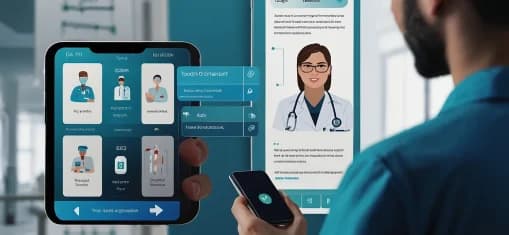
AR enables technicians to receive real-time support from experts while on-site, enhancing problem-solving efficiency.
Augmented reality (AR) is transforming the energy and utilities sector by enhancing operational efficiency and safety. AR solutions integrate immersive technology with real-time data to provide remote assistance, predictive maintenance, and workforce training. In power and utilities, AR facilitates infrastructure visualization, streamlines field service operations, and supports smart grid systems. Furthermore, AR-based training simulations empower utility workers with essential skills, ensuring they are well-prepared for the challenges of modern energy management. As digital twins and IoT integration become standard, the role of AR in optimizing energy infrastructure and monitoring renewable resources will continue to grow, paving the way for a smarter and more efficient energy future.
How AR is Transforming the Energy and Utilities Sector
Harnessing AR for Enhanced Operational Efficiency
AR enables technicians to receive real-time support from experts while on-site, enhancing problem-solving efficiency.
Utilizing AR for predictive maintenance helps in identifying issues before they escalate, reducing operational costs.
AR enhances smart grid systems by visualizing data, helping operators manage resources and respond quickly to issues.
AR simulations provide hands-on training for utility workers, improving their skills and safety awareness in real-world scenarios.
Discover how augmented reality is reshaping the energy and utilities sector.
Energy and utility companies are increasingly adopting augmented reality (AR) to enhance operational efficiency, improve safety protocols, and drive digital transformation. AR technologies are enabling real-time remote assistance, predictive maintenance, and advanced workforce training, ultimately leading to smarter grid management and optimized resource allocation.
AR allows technicians to provide remote support, enhancing service quality and reducing downtime.
Using AR, companies can predict equipment failures and perform maintenance before issues arise.
AR facilitates the visualization and management of smart grid systems for better energy distribution.
AR-based training simulations prepare utility workers for real-world scenarios, enhancing safety and efficiency.
Explore how AR enhances operational efficiency across various applications.
| Application | Description |
|---|---|
| Remote Maintenance | Utilizes AR for real-time support and troubleshooting, enhancing efficiency and reducing downtime. |
| Predictive Maintenance | AR aids in predictive analytics by providing visual data overlays, ensuring timely maintenance. |
| Smart Grid Integration | Enhances the monitoring and management of smart grid systems through immersive visualizations. |
| Workforce Training | Utilizes AR simulations for effective training of utility workers, increasing safety and skill retention. |
| Infrastructure Visualization | Enables clearer visual representation of energy infrastructure, facilitating better planning and management. |
| Digital Twin Technologies | Integrates real-time data with AR environments, allowing for improved asset management and operational insights. |
| Field Service Optimization | AR streamlines field services by providing technicians with necessary information instantly. |
| Renewable Energy Monitoring | Enhances the management of renewable resources through interactive data visualization. |
| Oil & Gas Operations | Improves operational efficiency and safety in oil and gas fields with AR-guided workflows. |
Revolutionizing field operations for better service delivery.
AR enhances the precision of asset inspections by providing real-time data overlays.
Field workers can receive live guidance from remote experts, improving safety and efficiency.
AR enables predictive maintenance strategies by utilizing digital twins and IoT data.
Visualize complex infrastructure easily, aiding in effective management and planning.
Augmented reality (AR) is transforming workforce training in the energy sector by providing immersive, hands-on learning experiences. AR-based training simulations enhance the skills of utility workers, enabling them to interact with digital overlays of equipment and systems in real time. This innovative approach allows for safe practice in complex scenarios, improving both knowledge retention and confidence in field operations. Additionally, AR training can be customized to address specific challenges faced by workers in various segments of the energy industry, including oil and gas, renewable energy, and smart grid systems.
AR training allows workers to learn interactively, enhancing engagement and knowledge retention.
Workers practice in a risk-free environment, preparing them for real-world challenges.
Training modules can be tailored to specific tasks and equipment in the energy sector.
AR training leads to improved worker performance and efficiency in the field.
Leverage Augmented Reality for Enhanced Utility Management
AR allows utility workers to visualize real-time grid data overlaying the physical environment, enhancing decision-making.
Utility companies can use AR to manage assets efficiently, providing insights into infrastructure health and performance.
AR facilitates remote monitoring of grid systems, enabling operators to diagnose issues without being physically present.
5. Renewable Energy Plant Optimization
Pricing & Timelines
Starter
Most Popular
Enterprise
Augmented reality (AR) in energy utilities enhances operational efficiency by providing real-time data overlays for engineers. By integrating AR with IoT, engineers can visualize critical information such as equipment status, maintenance schedules, and energy consumption directly in their field of view. This immersive technology facilitates remote assistance, enabling experts to guide on-site teams through complex tasks, thereby reducing downtime and improving problem-solving capabilities. Additionally, AR applications in smart grids help optimize asset management and enhance grid reliability through better data visualization and predictive analytics. Overall, AR empowers utility workers by providing immediate access to essential information, streamlining processes, and supporting effective decision-making.
Transforming the Energy Sector through Immersive Technologies


Augmented reality (AR) significantly enhances fault detection and repair processes in the energy utilities sector. By overlaying digital information onto the physical environment, AR enables technicians to visualize infrastructure issues in real-time, improving response times and accuracy. This immersive technology not only speeds up the diagnostic phase but also facilitates quicker repairs, ultimately leading to reduced downtime and improved service reliability.
Remote Assistance
AR enables technicians to receive expert guidance remotely, improving fault resolution speed.
Predictive Maintenance
Utilizing AR helps predict equipment failures before they occur, reducing unexpected outages.
Smart Grid Monitoring
AR tools provide real-time data visualization for better monitoring and management of smart grids.
Workforce Training
AR simulates real-world scenarios for effective training of utility workers and technicians.
Streamlining Utility Operations with AR Solutions
Transform your utility operations with cutting-edge AR technology.
Leveraging AR to Enhance Workforce Efficiency and Reduce Costs
Revolutionizing how teams interact in energy utilities.
AR facilitates instant remote support, allowing experts to assist field workers in real time.
Teams can collaborate effectively, sharing insights and solutions through immersive AR experiences.
Utilize AR for proactive maintenance strategies, reducing equipment failure risks.
Train staff with AR-enhanced simulations, ensuring safety and competence in the field.
Leverage Augmented Reality for Improved Utility Operations
Incorporating augmented reality into energy utilities enhances asset management throughout their lifecycle, from installation to maintenance and monitoring. This technology enables utility companies to visualize and interact with their assets more effectively, leading to improved decision-making and operational efficiency.
AR provides real-time remote assistance, helping technicians diagnose issues without being on-site.
Utilizing AR aids in predictive maintenance, allowing teams to foresee and prevent equipment failures.
AR enhances smart grid management, providing intuitive interfaces to monitor and manage grid operations.
Augmented reality facilitates immersive training experiences for utility workers, improving safety and efficiency.
Evaluate the Impact of AR Technologies
| AR Application | Description |
|---|---|
| Remote Assistance | Streamlines maintenance and repair through real-time guidance. |
| Predictive Maintenance | Enhances decision-making with data-driven insights for equipment upkeep. |
| Smart Grid Integration | Facilitates real-time monitoring and management of energy distribution. |
| Workforce Training | Utilizes immersive simulations to improve worker preparedness and safety. |
| Infrastructure Visualization | Provides 3D models and overlays for better asset management. |
| Digital Twin Integration | Enables simulations and forecasting using real-time data. |
| Field Service Optimization | Improves efficiency and reduces downtime through AR-guided processes. |
| Renewable Energy Monitoring | Supports monitoring and maintenance of renewable energy assets. |
| Oil & Gas Operations | Streamlines operations and enhances safety measures in critical tasks. |
A Side-by-Side Comparison
| Feature | Traditional Methods | Augmented Reality |
|---|---|---|
| Remote Maintenance | Limited to physical presence and manual checks. | Real-time visual guidance and remote assistance using AR. |
| Training Efficiency | Standard training programs often lack interactivity. | Immersive training simulations enhance learning and retention. |
| Data Integration | Manual data collection and reporting. | Instant access to IoT-enabled data visualization and analytics. |
| Field Service Optimization | Dependence on paper-based workflows. | AR promotes efficient, streamlined workflows with real-time updates. |
| Predictive Maintenance | Reactive maintenance leading to downtime. | Proactive insights using AR to predict and prevent failures. |
AR overlays digital information onto physical assets, enhancing decision-making.
Technicians receive expert guidance through AR glasses, improving response times.
Immersive training experiences prepare workers for real-world challenges.
AR enhances smart grid systems by visualizing network performance and issues.
Augmented reality is transforming the renewable energy sector by enhancing operational efficiency and safety across solar, wind, and hydroelectric systems. Through immersive technologies, utility companies can visualize complex data in real time, streamline maintenance processes, and improve training for workforce management. AR applications facilitate remote assistance, allowing experts to guide technicians through repairs and inspections, ultimately leading to increased uptime and reduced operational costs.
AR enables real-time monitoring of solar panel performance, identifying issues swiftly.
Utilizing AR for maintenance checks enhances efficiency in wind turbine operations.
AR applications help visualize operational data for better management of hydro facilities.
Interactive AR simulations provide immersive training for workers in renewable energy sectors.
Revolutionizing efficiency with AR solutions.
AR enables real-time remote support for field workers, reducing downtime and improving safety.
Using AR, operators can visualize equipment conditions and predict maintenance needs proactively.
AR-based training simulations prepare utility workers for real-world challenges in a safe environment.
Challenges of AR Adoption in Energy Sector
Leveraging Advanced Technologies for Enhanced Utility Operations
Transforming Remote Maintenance and Training with AR Technology
Future of Augmented Reality in Energy & Utilities
Leverage Augmented Reality to Revolutionize Utility Management
PerfectionGeeks provided excellent service from start to finish. Their team was professional, easy to work with, and delivered exactly what we needed on time. We’re very pleased with the outcome and would gladly recommend them to others.
Thanaboon Mingkaew
CEO, SMART IOT
We partnered with PerfectionGeeks for a custom accounting automation software, and the experience was excellent. Their team delivered a high-quality solution that streamlined our operations and improved efficiency. Professional, skilled, and reliable — we’re already working with them on another project.
Saarthak Gupta
Founder, Ceos Accounting Services
As COO of TRP Construction Management, I’m proud of our growth from 300 to 16,000+ SKUs and 4,000+ vendors since 2022. Thanks to Shrey Bhardwaj and Perfection Geeks for delivering scalable, future-ready technology solutions that transformed our vision into a seamless pan-India platform. Highly recommended technology partner.
Mayank Pathak
COO, TRP Construction Management

PerfectionGeeks Technologies transformed our vision into reality with innovative technology solutions. Their professionalism, timely delivery, transparent communication, and commitment to quality made the entire collaboration smooth, reliable, and highly satisfying.
Armaan
Cofounder, Kzminer

I highly recommend PerfectionGeeks Technologies for mobile and web development services. Their expertise, dedication, creative ideas, and customer-focused approach helped our business achieve impressive digital growth successfully.
Chetna
Founder CEO , Klicked

Choosing PerfectionGeeks Technologies was the best decision for our company. Their skilled developers created a user-friendly platform, provided constant assistance, and ensured exceptional performance beyond our expectations every step.
Mark
CTO, IMSMART

Working with PerfectionGeeks Technologies was an excellent experience. Their team delivered our project on time with outstanding quality, smooth communication, innovative solutions, and professional support throughout the entire development process.
Naveen
Founder Director , Way2Kart

PerfectionGeeks Technologies delivered a smooth, professional experience with excellent communication and technical expertise. Their team understood project requirements clearly, provided timely updates, and ensured high-quality results that exceeded expectations.
Srinivasa Mothay
CTO, Sethu Fishries

PerfectionGeeks Technologies impressed with their innovative solutions, responsive support, and commitment to quality. The team handled every detail professionally, delivered on time, and created a seamless experience from start to finish.
Mervin
Cofounder & CTO, Clover Infinity