Published 1 April 2026 | Updated 26 September 2026
Technology
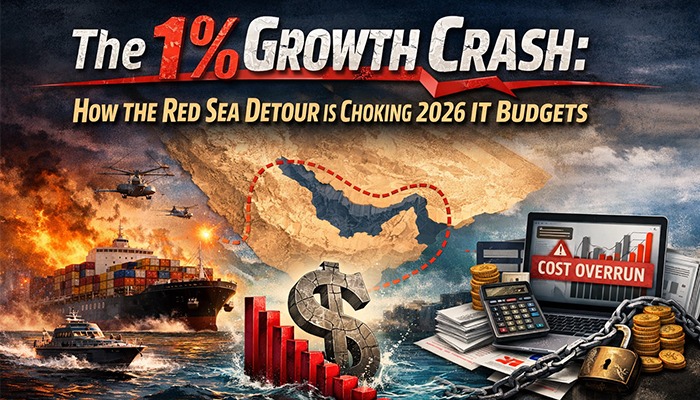
The 1% Growth Crash: How the Red Sea Detour is Choking 2026 IT Budgets
The global technology industry in 2026 is facing an unexpected slowdown—what experts are calling the “1% Growth Crash.” Once projected for rapid expansion, global IT spending is now tightening under the pressure of geopolitical disruptions, supply chain chaos, and rising operational costs.
At the center of this crisis lies a critical but often overlooked factor: the Red Sea shipping disruption. What began as a regional conflict has now evolved into a global economic bottleneck, directly impacting IT budgets, digital transformation, and enterprise innovation strategies.
For companies like PerfectionGeeks, a leading Mobile app development company in Dubai, understanding this shift is crucial to helping businesses adapt, optimize budgets, and stay competitive in uncertain times.
Understanding the 1% Growth Crash
The “1% Growth Crash” refers to the sharp decline in projected global IT spending growth, which has dropped significantly due to macroeconomic instability and geopolitical tensions.
Why is growth slowing?
- Rising inflation and energy costs
- Disrupted global supply chains
- Increased cost of digital infrastructure
- Enterprise budget tightening
As capital becomes expensive, organizations are moving away from experimental innovations and focusing only on mission-critical IT investments.
The Red Sea Crisis: A Global Chokepoint
The Red Sea and Suez Canal are among the most critical global trade routes, handling a significant portion of international shipping.
However, ongoing conflicts have made this route unsafe, forcing companies to reroute shipments via the Cape of Good Hope—a much longer and costlier journey.
Key impacts of the rerouting:
- Shipping distances increased by up to 50–60%
- Transit times extended by 10–15 days or more
- Freight costs surged dramatically due to delays and fuel usage
- Insurance premiums skyrocketed for ships crossing risk zones
Additionally, global container traffic through the Red Sea dropped sharply, with major shipping companies suspending operations or rerouting entirely.
How Shipping Delays Are Crushing IT Budgets
At first glance, shipping disruptions may seem unrelated to IT. But in reality, the entire tech ecosystem depends on global logistics.
1. Hardware Costs Are Rising
Servers, semiconductors, networking equipment, and consumer devices rely on global supply chains. Delays and higher freight costs mean:
- Increased hardware prices
- Delayed infrastructure upgrades
- Reduced IT procurement
Shipping costs and insurance premiums are being passed down the supply chain, ultimately affecting businesses and consumers.
2. Data Center Expansion Is Slowing
Data centers require massive amounts of hardware, cooling systems, and energy—all affected by logistics disruptions.
Impact:
- Higher infrastructure setup costs
- Delayed deployments
- Reduced scalability
3. Software Budgets Are Shrinking
As hardware and operational costs rise, companies are forced to cut spending elsewhere.
Result:
- Reduced investment in innovation
- Fewer experimental projects
- Increased focus on ROI-driven development
Organizations are prioritizing efficiency over expansion.
The Domino Effect on the Tech Industry
The Red Sea crisis is not just a logistics issue—it is creating a ripple effect across the entire IT ecosystem.
🔹 Semiconductor Bottlenecks
Delays in chip shipments are slowing down production and innovation.
🔹 AI Infrastructure Costs
AI systems require expensive GPUs and servers, which are becoming harder to source and more costly.
🔹 Consumer Tech Slowdown
Higher device costs are reducing consumer demand, especially in price-sensitive markets.
Shift in IT Investment Priorities
With budgets tightening, companies are making strategic shifts in how they allocate resources.
Key trends:
1. Focus on Core Technologies
Businesses are prioritizing stable, scalable frameworks like:
- .NET
- React
- Angular
2. Increased Demand for Cost Efficiency
Companies are optimizing existing systems instead of building new ones.
3. Rise of Outsourcing
Organizations are partnering with cost-effective regions like India and the Middle East for development.
This is where a Mobile app development company in Dubai like PerfectionGeeks plays a crucial role in delivering high-quality solutions at optimized costs.
Cybersecurity and Geopolitical Risks
The Red Sea conflict has also triggered a rise in cyber warfare and digital threats.
Key concerns:
- Attacks on financial systems
- Disruption of supply chain networks
- Increased demand for cybersecurity solutions
As geopolitical tensions rise, businesses are investing more in cybersecurity and defense tech.
Inflation and the Hidden Cost of IT
Shipping disruptions are contributing to global inflation, which directly affects IT budgets.
How?
- Increased freight rates → higher hardware costs
- Increased fuel costs → higher operational expenses
- Increased insurance → higher logistics pricing
Freight rates on key routes have surged significantly, adding pressure on global economies and enterprise spending.
Impact on Digital Transformation
Digital transformation initiatives are slowing down as companies rethink their priorities.
Before:
- Rapid innovation
- Aggressive digital expansion
- Experimentation with emerging tech
Now:
- Conservative investments
- Focus on efficiency
- Delayed transformation projects
The result? A shift from “growth-first” to “survival-first” strategies.
How Businesses Can Adapt in 2026
Despite the challenges, companies can take strategic steps to navigate this crisis.
✔ Diversify Supply Chains
Avoid dependency on a single route or region.
✔ Invest in Scalable Software
Focus on solutions that maximize ROI.
✔ Optimize IT Spending
Prioritize essential technologies and reduce waste.
✔ Embrace Outsourcing
Partner with cost-efficient development firms.
✔ Strengthen Cybersecurity
Protect systems against rising digital threats.
Role of PerfectionGeeks in Navigating the Crisis
In times of economic uncertainty, choosing the right technology partner is more important than ever.
PerfectionGeeks, a trusted Mobile app development company in Dubai, helps businesses:
- Build cost-effective digital solutions
- Develop scalable mobile applications
- Optimize existing IT systems
- Implement secure and future-ready technologies
By focusing on efficiency, innovation, and ROI, PerfectionGeeks enables companies to thrive even in constrained budget environments.
The Future Outlook: Crisis or Opportunity?
While the Red Sea disruption has created short-term challenges, it is also driving long-term transformation.
What lies ahead?
- More resilient supply chains
- Increased adoption of digital solutions
- Greater focus on efficiency and sustainability
- Rise of regional tech hubs
The companies that adapt quickly will emerge stronger in the post-crisis economy.
Frequently Asked Questions
Quick answers related to this article from PerfectionGeeks.
1. What is the “1% Growth Crash” in the IT industry?
2. How is the Red Sea crisis affecting IT budgets?
3. Why are businesses reducing investment in new technology projects?
4. How can companies manage IT costs during this crisis?
5. What role does a mobile app development company play in this situation?
Conclusion
The 1% Growth Crash is a wake-up call for the global IT industry.
What seemed like a distant geopolitical issue—the Red Sea conflict—has now become a central force reshaping IT budgets, investment strategies, and digital transformation worldwide.
From rising hardware costs to delayed infrastructure and shrinking innovation budgets, the impact is profound and far-reaching.
However, with the right strategies and partnerships, businesses can turn this crisis into an opportunity.

Shrey Bhardwaj is the Director & Founder of PerfectionGeeks Technologies, bringing extensive experience in software development and digital innovation. His expertise spans mobile app development, custom software solutions, UI/UX design, and emerging technologies such as Artificial Intelligence and Blockchain. Known for delivering scalable, secure, and high-performance digital products, Shrey helps startups and enterprises achieve sustainable growth. His strategic leadership and client-centric approach empower businesses to streamline operations, enhance user experience, and maximize long-term ROI through technology-driven solutions.