Published 6 March 2026 | Updated 6 March 2026
Uncategorized
How Businesses Can Modernize Legacy MVC Systems by Embedding React
Modern businesses often rely on legacy MVC (Model-View-Controller) systems that were once reliable but now struggle to meet modern demands. Customers expect fast, interactive, and mobile-friendly applications, yet legacy systems often fall short. The solution lies in legacy application modernization services, particularly embedding React into existing MVC architectures. This blog provides a detailed guide on how businesses can modernize their legacy systems, covering challenges, strategies, benefits, and best practices.
Overview of Legacy MVC Systems and the Need for Modernization
Legacy MVC systems were designed to separate application logic, user interface, and data handling. While effective in their time, these systems now face limitations:
- Heavy reliance on server-side rendering slows performance.
- Static interfaces fail to meet modern design expectations.
- Integration with modern APIs and tools is difficult.
Businesses need legacy system modernization approaches to remain competitive. Modernization ensures scalability, better performance, and improved user experience. Instead of discarding existing systems, embedding React offers a hybrid solution that maximizes current investments while preparing for the future.
Key Challenges of Maintaining Legacy MVC Applications
Legacy MVC applications can still function well for many businesses, but maintaining them becomes more difficult as technology evolves. Several challenges often arise when organizations continue to rely on outdated systems.
Outdated User Interface: Many legacy applications were designed before modern user interface standards existed. As a result, they may look outdated and lack the responsiveness users expect today.
Slow Development Process: Legacy systems often require developers to modify large sections of code to implement even small changes. This slows down development and increases maintenance costs.
Limited Scalability: Older architectures may not support modern scalability requirements. Businesses that want to grow their digital platforms often find their legacy systems difficult to expand.
Integration Difficulties: Modern businesses rely on multiple digital tools, including cloud platforms, mobile apps, and analytics software. Legacy systems often struggle to integrate with these technologies.
High Maintenance Costs: As technologies age, finding developers who can maintain them becomes more challenging. This increases the cost of maintaining legacy applications.
These challenges highlight why legacy system modernization strategies are necessary for businesses that want to remain competitive.
Why React is a Powerful Choice for Modernizing Legacy Systems
React has become one of the most popular technologies for modern web application development. It offers a flexible way to upgrade existing systems without rewriting the entire application.
Several reasons make React an ideal choice for modernization.
Component-Based Architecture: React uses a component-based structure that allows developers to build user interfaces in smaller, reusable parts. This makes it easier to gradually replace legacy UI components.
Improved Performance: React uses a virtual DOM to update only the necessary parts of a web page. This improves application speed and enhances user experience.
Easier Maintenance: React components are modular, which makes the code easier to manage and update over time.
Strong Developer Ecosystem: React has a large developer community and a wide range of tools. Many businesses choose react js development services because the ecosystem supports rapid development and long-term scalability.
React is also widely used in mobile app development through frameworks that support react native development services and react native app development services. This makes it easier for businesses to create consistent experiences across web and mobile platforms.
Understanding the Concept of Embedding React into MVC Applications
Legacy MVC applications typically render views on the server side. The controller fetches data, passes it to the view, and the view generates HTML that is sent to the browser. While this approach works, it creates limitations:
- Pages reload fully with each request.
- User interactions feel slow compared to modern single-page applications (SPAs).
- Adding dynamic features like real-time dashboards or interactive forms is difficult.
Embedding React means introducing React components into these existing MVC views. Instead of rewriting the entire system, you modernize gradually by layering React on top of the existing architecture. This hybrid approach is one of the most effective legacy system modernization strategies because it reduces risk, cost, and disruption.
How It Works in Practice
Identify UI Pain Points: Look at parts of your MVC application that feel outdated or slow—like dashboards, reporting modules, or forms. These are ideal candidates for React components.
Add React to the MVC Project: React can be bundled with tools like Webpack or integrated using libraries that allow React components to be rendered inside MVC views.
Replace Specific Sections: Instead of replacing the entire page, React components can be embedded into sections of the view. For example:
- A legacy reporting page can keep its backend logic but use React for the charts.
- A form can be rebuilt in React for better validation and responsiveness.
Maintain Backend Logic: The MVC controllers and models continue to handle business logic and data. React only modernizes the front-end experience.
Gradual Expansion: Over time, more parts of the application can be replaced with React, eventually moving toward a fully modernized front-end.
Why This Hybrid Approach Matters
- Risk Reduction: Businesses don’t need to shut down or rebuild their entire system.
- Cost Efficiency: Investments in existing MVC logic are preserved.
- Flexibility: You can modernize at your own pace, starting with the most critical modules.
- Future-Proofing: Once React is embedded, you can extend modernization to mobile with React Native app development services.
Benefits of Integrating React with Existing MVC Architecture
Integrating React into MVC systems offers multiple benefits:
1. Improved User Experience: React allows you to build highly interactive and dynamic interfaces. Instead of static pages, users get real-time updates and smooth transitions, which makes applications feel modern and engaging. This directly improves customer satisfaction and retention.
2. Faster Development: Because React is component-based, developers can reuse UI elements across different parts of the application. This reduces repetitive coding and speeds up the delivery of new features. It also makes maintenance easier since changes in one component don’t break the entire system.
3. Scalability: React’s modular structure makes it simple to add new features without rewriting the entire application. As business needs grow, you can scale the system by embedding more React components. This ensures the application evolves smoothly with minimal disruption.
4. Cost Efficiency: Modernizing with React avoids the need for a complete system replacement. Businesses can retain their existing MVC backend while upgrading only the front-end. This hybrid approach saves money and reduces downtime compared to full migrations.
5. Future-Ready: React integrates seamlessly with React Native development services, enabling businesses to extend modernization to mobile platforms. This means the same logic and components can be adapted for mobile apps, ensuring long-term flexibility and readiness for future technologies.
Step-by-Step Approach to Integrate React into Legacy MVC Systems
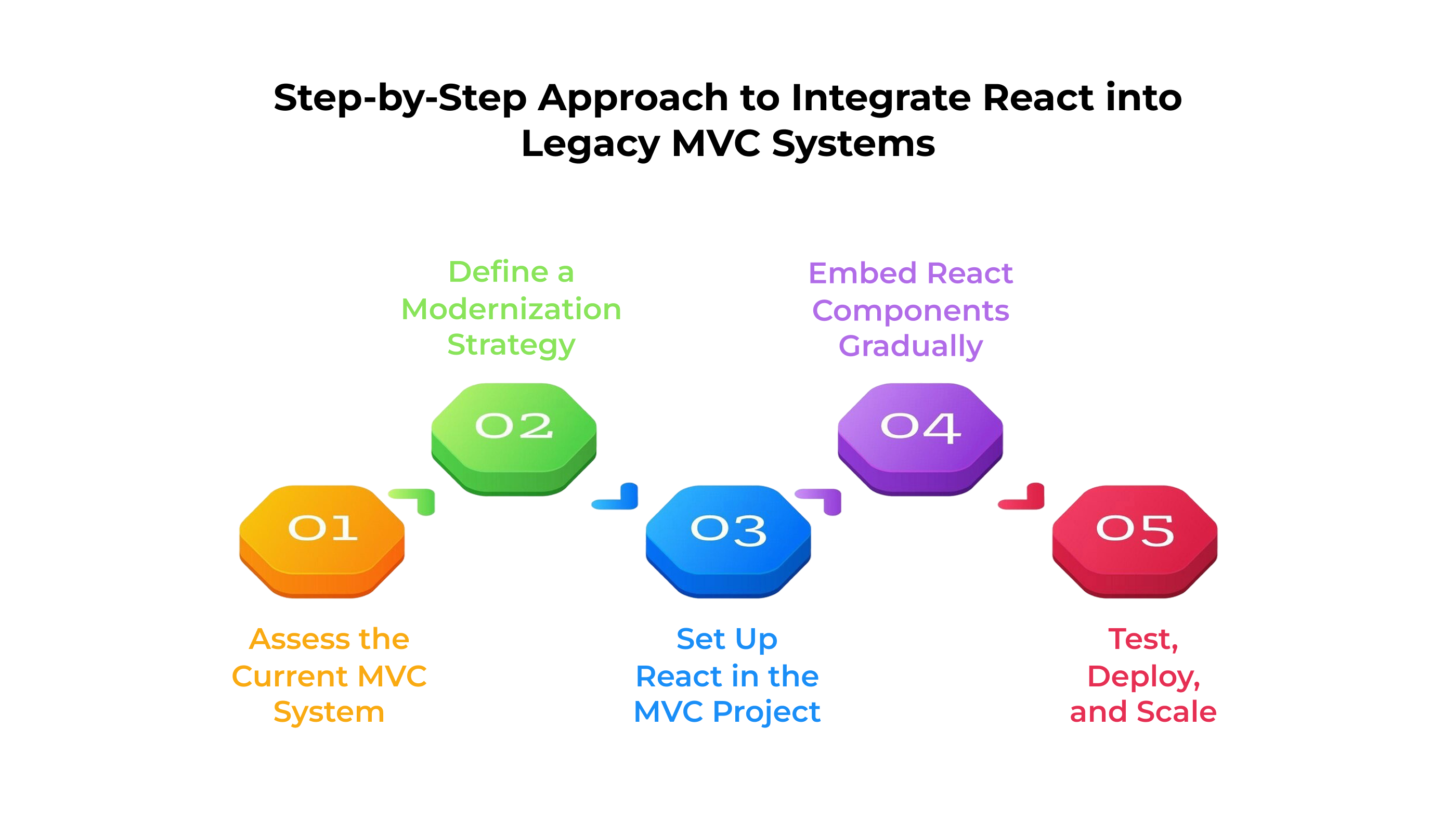
1. Assess the Current MVC System
Begin by analyzing your existing MVC application to identify pain points. Use legacy application modernization tools to evaluate performance, UI limitations, and integration gaps. This assessment helps you decide which modules should be modernized first, ensuring resources are focused where they deliver the most impact.
2. Define a Modernization Strategy
Create a roadmap that outlines how React will be embedded. Businesses can choose gradual modernization—starting with small UI components—or a broader migration plan. This step involves selecting the right legacy system modernization approaches and aligning them with business goals, budgets, and timelines.
3. Set Up React in the MVC Project
Install and configure React within the existing MVC environment. This includes setting up build tools like Webpack or Babel to compile React code. Proper setup ensures React components can coexist with MVC views, allowing modernization without disrupting backend logic.
4. Embed React Components Gradually
Start embedding React components into specific sections of MVC views. For example, replace static forms with React-based forms or modernize dashboards with interactive charts. This incremental approach allows businesses to test functionality, minimize risks, and deliver immediate improvements in user experience.
5. Test, Deploy, and Scale
Thoroughly test React components for compatibility, performance, and usability before deployment. Once validated, roll out updates carefully to avoid disruption. Over time, expand React integration across more modules, scaling modernization efforts in line with legacy application modernization strategies for long-term sustainability.
This 5-step approach ensures businesses modernize safely and strategically. By embedding React gradually, organizations preserve backend stability while delivering modern, responsive, and scalable user experiences. It’s a practical path for companies seeking legacy application modernization solutions without the risks of a full rebuild.
Best Practices for Safe and Scalable Legacy Application Modernization
To ensure success, businesses should follow these best practices:
- Start Small: Begin with non-critical modules.
- Maintain Compatibility: Ensure React components work seamlessly with MVC.
- Use Modern Tools: Leverage legacy application modernization solutions for smooth migration.
- Focus on Security: Protect sensitive data during modernization.
- Partner with Experts: Work with a legacy application modernization company experienced in React.
Business Advantages of Modernizing Legacy Applications with React
Legacy modernization is not just a technical upgrade. It also creates significant business value.
- Better Customer Experience: React enables fast and interactive interfaces that make applications easier and more engaging for users.
- Faster Innovation: Businesses can quickly add or update features because React’s component-based structure speeds up development.
- Reduced Operational Costs: Modernized systems require less maintenance and fewer resources compared to outdated legacy platforms.
- Improved Security: Updating legacy applications allows companies to use modern security tools and frameworks to protect data.
- Competitive Advantage: Modern digital platforms help businesses deliver better services and stay ahead of competitors.
Case study Retail Business Modernizing with React
A mid-sized retail company had been relying on a legacy MVC system to manage inventory, sales, and reporting. While the backend logic was stable, the system had become slow and difficult to use. Employees struggled with outdated interfaces, and managers found it hard to generate reports quickly. The company realized that modernization was necessary but wanted to avoid the cost and risk of rebuilding the entire system from scratch.
Challenge
The main issues were:
- Performance bottlenecks caused by server-side rendering.
- Outdated UI that made navigation and reporting cumbersome.
- Employee frustration due to long load times and inefficient workflows.
These challenges were typical of businesses relying on older systems, highlighting the need for legacy application modernization strategies.
Solution
The company partnered with a legacy application modernization company specializing in React. Instead of replacing the entire system, they adopted a hybrid modernization approach:
- React was embedded into the MVC views for dashboards and reporting modules.
- Interactive charts and forms were rebuilt using React components.
- The backend MVC controllers continued to handle business logic, while React modernized the front-end experience.
This approach allowed the company to modernize gradually, using proven legacy system modernization approaches without disrupting daily operations.
Result
The impact was significant:
- Performance improved: Dashboards loaded faster, and reports were generated in real time.
- Employee productivity increased: Staff could complete tasks more quickly with modern, intuitive interfaces.
- Training costs dropped: New employees found the updated system easier to learn, reducing onboarding time.
By embedding React, the company achieved measurable business value while preserving its existing investments. This case demonstrates how legacy application modernization solutions can deliver both technical and operational improvements.
Key Takeaway
This retail company’s experience shows that modernization doesn’t have to mean a complete rebuild. By embedding React into legacy MVC systems, businesses can solve performance issues, improve user experience, and reduce costs. It’s a practical example of how legacy system modernization strategies combined with React JS development services can transform outdated systems into modern, scalable platforms.
Legacy MVC vs. Modernized MVC with React
| Feature | Legacy MVC System | Modernized MVC with React |
| User Interface | Static, outdated | Dynamic, interactive |
| Performance | Slow, server-heavy | Fast, optimized with Virtual DOM |
| Scalability | Difficult to expand | Easy to scale with components |
| Integration | Limited API support | Seamless API integration |
| Maintenance Costs | High | Reduced with reusable components |
Challenges in Modernizing Legacy MVC Systems
While modernization offers benefits, businesses may face challenges:
Compatibility Issues: Legacy MVC systems are often built using older frameworks and technologies that may not easily integrate with modern tools like React. This can create technical compatibility challenges during modernization. Developers may need to modify existing code or build additional layers to ensure smooth integration between the old and new systems.
Data Migration Risks: When modernizing legacy systems, transferring and maintaining existing data becomes a critical task. There is always a risk of data loss, corruption, or inconsistencies during migration. Proper planning, testing, and secure migration processes are necessary to ensure business data remains accurate and protected.
Skill Gaps: Many development teams may have experience with either legacy technologies or modern frameworks, but not both. This can slow down the modernization process because developers need time to understand the existing architecture while implementing new technologies like React. Businesses often rely on experienced modernization experts to overcome this challenge.
Integration Complexity: Large legacy applications usually have multiple interconnected modules and dependencies. Introducing modern technologies into such systems can be complex and requires careful planning. Without a structured modernization strategy, integration can affect system stability and performance.
Choosing the Right Development Partner for Legacy System Modernization
Choosing the right development partner is important for a successful legacy system modernization project. Businesses should look for a team that has strong experience in legacy application modernization services and understands how to upgrade outdated systems without affecting existing business operations. The partner should also have expertise in modern technologies such as React development services and React native application development services to build fast, scalable, and user-friendly applications.
It is also important to select a company that has a proven track record in delivering effective legacy system modernization approaches and can provide customized legacy application modernization solutions based on business needs. Companies like PerfectionGeeks help organizations modernize legacy applications by combining modern technologies with reliable development strategies to create efficient and future-ready systems.
Frequently Asked Questions
Quick answers related to this article from PerfectionGeeks.
1. Why should businesses modernize legacy MVC systems instead of building new ones?
2. How does embedding React improve legacy applications?
3. What role do legacy application modernization services play?
4. Why choose PerfectionGeeks for modernization projects?
Conclusion
Modernizing legacy MVC systems by embedding React is a smart, cost-effective way for businesses to stay competitive. With the right legacy application modernization strategies, companies can improve performance, scalability, and user experience without discarding existing investments. By combining React JS development services with React native development services, businesses can future-proof both web and mobile applications. For organizations seeking expert guidance, PerfectionGeeks stands out as a trusted partner offering comprehensive legacy application modernization solutions

Shrey Bhardwaj is the Director & Founder of PerfectionGeeks Technologies, bringing extensive experience in software development and digital innovation. His expertise spans mobile app development, custom software solutions, UI/UX design, and emerging technologies such as Artificial Intelligence and Blockchain. Known for delivering scalable, secure, and high-performance digital products, Shrey helps startups and enterprises achieve sustainable growth. His strategic leadership and client-centric approach empower businesses to streamline operations, enhance user experience, and maximize long-term ROI through technology-driven solutions.