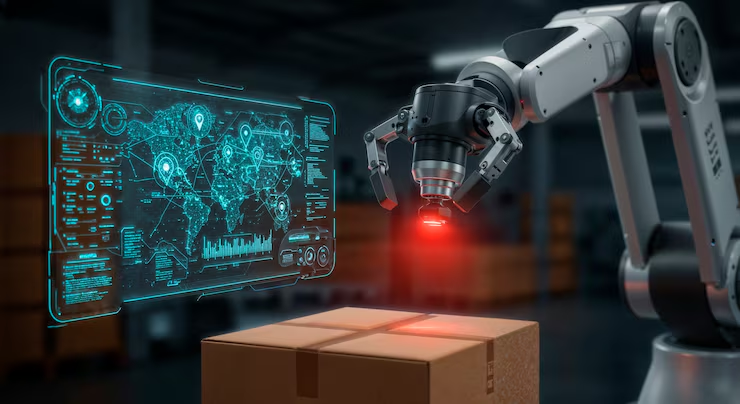
Published 27 April 2026
Technology
Generative AI Solutions for Logistics: Optimize Supply Chain Efficiency
The logistics and supply chain industry is undergoing a massive transformation in 2026. With rising operational costs, global disruptions, and increasing customer expectations, businesses are under pressure to become faster, smarter, and more efficient.
This is where Generative AI Solutions for Logistics are redefining how companies operate. From demand forecasting to route optimization, generative AI is enabling organizations to make intelligent, data-driven decisions at scale.
At PerfectionGeeks, we help businesses leverage cutting-edge AI technologies to streamline logistics operations and build resilient, future-ready supply chains. In this blog, we explore how generative AI is revolutionizing logistics and highlight the Top Supply Chain Strategies 2026 that CEOs and supply chain leaders are adopting.
What is Generative AI in Logistics?
Generative AI refers to advanced AI systems capable of analyzing large datasets and generating new insights, predictions, and operational strategies.
In logistics, generative AI can:
- Simulate supply chain scenarios
- Predict demand fluctuations
- Optimize transportation routes
- Improve warehouse operations
Unlike traditional AI, which provides single predictions, generative AI can generate multiple possible outcomes and recommend the best course of action, enabling smarter decision-making.
Why Logistics Needs Generative AI in 2026
The logistics sector faces several critical challenges:
- Supply chain disruptions
- Increasing fuel and operational costs
- Demand unpredictability
- Complex global networks
Traditional systems struggle to handle these complexities. Generative AI provides a new approach by enabling:
- Real-time decision-making
- Predictive intelligence
- Automated workflows
Studies show that generative AI is becoming a core technology, with over 51% of companies planning adoption in 2026, indicating its growing importance in supply chain operations.
Key Benefits of Generative AI Solutions for Logistics
1. Improved Demand Forecasting
Generative AI analyzes historical data, market trends, and external factors to create accurate demand forecasts.
This helps businesses:
- Reduce stockouts
- Avoid overstocking
- Improve planning accuracy
Accurate forecasting is critical in large supply chains where demand fluctuations can create major disruptions.
2. Intelligent Inventory Management
AI-driven systems can recommend optimal inventory levels by analyzing:
- Warehouse capacity
- Supply timelines
- Demand patterns
This ensures:
- Efficient stock management
- Reduced storage costs
- Better resource utilization
3. Route Optimization and Logistics Planning
Generative AI can simulate multiple delivery routes and choose the most efficient one based on:
- Traffic conditions
- Weather
- Fuel costs
- Delivery priorities
This leads to:
- Faster deliveries
- Reduced fuel consumption
- Lower operational costs
AI-driven logistics systems are already helping companies automate workflows and significantly improve efficiency.
4. Cost Reduction and Efficiency
By automating repetitive tasks and optimizing operations, generative AI reduces:
- Manual errors
- Operational delays
- Labor costs
Businesses can achieve higher efficiency with fewer resources, improving profitability.
5. Enhanced Supply Chain Visibility
Generative AI provides real-time insights into:
- Shipment tracking
- Inventory levels
- Supplier performance
This transparency allows businesses to:
- Identify risks early
- Improve coordination
- Enhance customer satisfaction
6. Scenario Simulation and Risk Management
One of the most powerful capabilities of generative AI is its ability to simulate thousands of supply chain scenarios.
This helps businesses:
- Prepare for disruptions
- Evaluate different strategies
- Make proactive decisions
Core Use Cases of Generative AI in Logistics
| Use Case | Description | Business Impact |
|---|---|---|
| Demand Forecasting | Predict future demand trends | Better planning |
| Inventory Optimization | Manage stock levels intelligently | Reduced costs |
| Route Optimization | Identify best delivery routes | Faster delivery |
| Warehouse Automation | Optimize storage & operations | Increased efficiency |
| Supplier Analysis | Evaluate supplier performance | Improved reliability |
| Risk Simulation | Predict disruptions | Proactive decision-making |
Top Supply Chain Strategies 2026
1. AI-Driven Supply Chain Planning
Businesses are moving from reactive to predictive planning using generative AI.
AI systems analyze:
- Market trends
- Customer behavior
- Economic indicators
This enables smarter planning and improved efficiency.
2. Hyper-Automation in Logistics
Automation combined with AI is transforming logistics operations.
For example, AI-powered systems can automate:
- Dispatch planning
- Order processing
- Documentation
Recent innovations show AI systems can reduce logistics processing time significantly, improving operational speed.
3. Digital Twin Technology
Digital twins create virtual replicas of supply chains, allowing companies to:
- Test strategies
- Monitor performance
- Optimize operations in real time
4. Sustainable Supply Chains
Generative AI helps reduce environmental impact by:
- Optimizing routes
- Reducing fuel consumption
- Minimizing waste
AI-driven logistics can reduce emissions by improving efficiency and resource utilization.
5. Data-Driven Decision Making
In 2026, data is the backbone of supply chain success.
Generative AI enables:
- Real-time analytics
- Predictive insights
- Automated recommendations
Generative AI vs Traditional Supply Chain Systems
| Factor | Generative AI Solutions | Traditional Systems |
|---|---|---|
| Decision-Making | Predictive & dynamic | Reactive |
| Forecasting | Multi-scenario analysis | Single prediction |
| Efficiency | High automation | Manual processes |
| Flexibility | Highly adaptive | Limited |
| Cost Optimization | Advanced | Moderate |
Challenges in Implementing Generative AI
While generative AI offers significant benefits, there are challenges:
1. Data Quality Issues
AI depends on accurate and integrated data. Poor data quality can reduce effectiveness.
2. Integration Complexity
Supply chain systems often operate in silos, making integration difficult.
3. High Initial Investment
Implementing AI solutions requires upfront investment in infrastructure and expertise.
4. Governance and Risk
Organizations must address concerns like AI accuracy and reliability.
Experts highlight that data quality and integration are the biggest barriers to successful AI adoption in supply chains.
Role of PerfectionGeeks in AI-Driven Logistics Transformation
At PerfectionGeeks, we provide advanced Generative AI Solutions for Logistics tailored to modern business needs.
Our Services Include:
- AI-powered logistics solutions
- Supply chain optimization
- Predictive analytics
- Custom AI model development
- Integration with ERP and logistics systems
We also offer Free Cloud Support, ensuring:
- Seamless implementation
- Continuous monitoring
- Performance optimization
Industries Benefiting from Generative AI in Logistics
Retail
- Personalized delivery experiences
- Efficient inventory management
Manufacturing
- Supply chain optimization
- Demand forecasting
E-commerce
- Faster order fulfillment
- Real-time tracking
Healthcare
- Efficient distribution of medical supplies
Future of Generative AI in Logistics
The future of logistics is intelligent, automated, and data-driven.
Key trends include:
- AI-powered autonomous supply chains
- Real-time decision-making systems
- Integration of robotics and AI
- Increased use of digital twins
Experts predict that AI will play a central role in logistics, transforming how supply chains operate globally.
Why Businesses Should Adopt Generative AI Now
Companies that adopt generative AI early will gain a competitive advantage by:
- Improving operational efficiency
- Reducing costs
- Enhancing customer experience
- Building resilient supply chains
Generative AI is no longer optional—it is becoming a core component of modern supply chain management.
Frequently Asked Questions
Quick answers related to this article from PerfectionGeeks.
1. What are Generative AI Solutions for Logistics?
2. How does generative AI improve supply chains?
3. Is generative AI expensive to implement?
4. What industries benefit the most?
Conclusion
In 2026, logistics is no longer just about moving goods—it’s about delivering efficiency, speed, and intelligence. Generative AI Solutions for Logistics are enabling businesses to transform their supply chains into smart, adaptive systems.
At PerfectionGeeks, we help organizations harness the power of AI to implement the Top Supply Chain Strategies 2026 and achieve operational excellence.
If your business is ready to optimize supply chain efficiency and embrace digital transformation, now is the time to invest in generative AI.

Written By Shrey Bhardwaj
Director & Founder
Shrey Bhardwaj is the Director & Founder of PerfectionGeeks Technologies, bringing extensive experience in software development and digital innovation. His expertise spans mobile app development, custom software solutions, UI/UX design, and emerging technologies such as Artificial Intelligence and Blockchain. Known for delivering scalable, secure, and high-performance digital products, Shrey helps startups and enterprises achieve sustainable growth. His strategic leadership and client-centric approach empower businesses to streamline operations, enhance user experience, and maximize long-term ROI through technology-driven solutions.