
Published 29 January 2026 | Updated 29 January 2026
Technology
How Much Does It Cost to Build an App Like Yango in Dubai?
If you’re considering launching a ride hailing app like Yango, understanding the development cost is essential. Yango has become one of the top choices for users in Dubai and beyond, thanks to its smooth interface, real-time tracking, and reliable service. But building an app with similar features requires careful planning and investment. In this blog, we’ll explore the key factors affecting the cost to build an app like Yango, essential features, challenges, and how to make the best decisions for your ride hailing app development project.
Ride-Hailing Market Overview: United Arab Emirates
Dubai is a vibrant market for ride-hailing apps due to its fast-paced lifestyle, tourism, and tech-savvy population. Before diving into costs, it's important to understand what makes the market unique.
- High smartphone penetration and widespread internet access
- Millions of tourists and business travelers every year
- Well-established transportation regulations under Dubai's Roads and Transport Authority (RTA)
- Increasing preference for digital taxi booking apps over traditional taxis
These factors create strong demand for apps like Yango Dubai and make ride-hailing app development a promising business venture.
What Influences the Cost of Building a Ride-Hailing App Like Yango?
The total Yango app development cost depends on multiple factors. Here’s what primarily impacts the budget:
1. App Features and Complexity
The more advanced features your app has, the higher the cost. Basic apps with essential features cost less, while apps packed with extras like real-time tracking, dynamic pricing, multi-language support, and in-app chat increase development time and expense.
2. Platform Choice
Developing for Android, iOS, or both influences cost. Building native apps for each platform costs more than cross-platform frameworks but may offer better performance.
3. Design and User Experience
Creating a simple, clean, and intuitive UI/UX like Yango requires skilled designers. Investing in quality design improves user retention but adds to initial costs.
4. Backend Infrastructure and Scalability
Your app’s backend must handle real-time data, large user volumes, and peak-hour traffic without crashes. More scalable, secure architectures cost more but are necessary for long-term growth.
5. Third-Party Integrations
Using services like Google Maps, payment gateways, SMS, and notification systems can add licensing and integration costs.
6. Regulatory Compliance
Meeting Dubai’s strict RTA guidelines requires time and legal support, which can affect timelines and costs.
7. Development Team Location and Expertise
Costs vary significantly based on whether you hire local developers, offshore teams, or companies like PerfectionGeeks. Experience and expertise often translate to faster, more reliable development.
Cost Breakdown: What Does It Take to Build a Ride-Hailing App Like Yango?
| App Version | Estimated Cost Range | Description |
| Minimum Viable Product (MVP) | $30,000 – $50,000 | Basic features for quick launch, validates business idea |
| Medium Complexity App | $60,000 – $90,000 | Additional features, better UI/UX, more integrations |
| Advanced App | $100,000+ | Full feature set, scalability, custom integrations, multi-language support |
These numbers provide a general idea. The actual cost of building a ride hailing app depends on your specific requirements and market focus.
Steps to Build a Ride-Hailing App Like Yango?
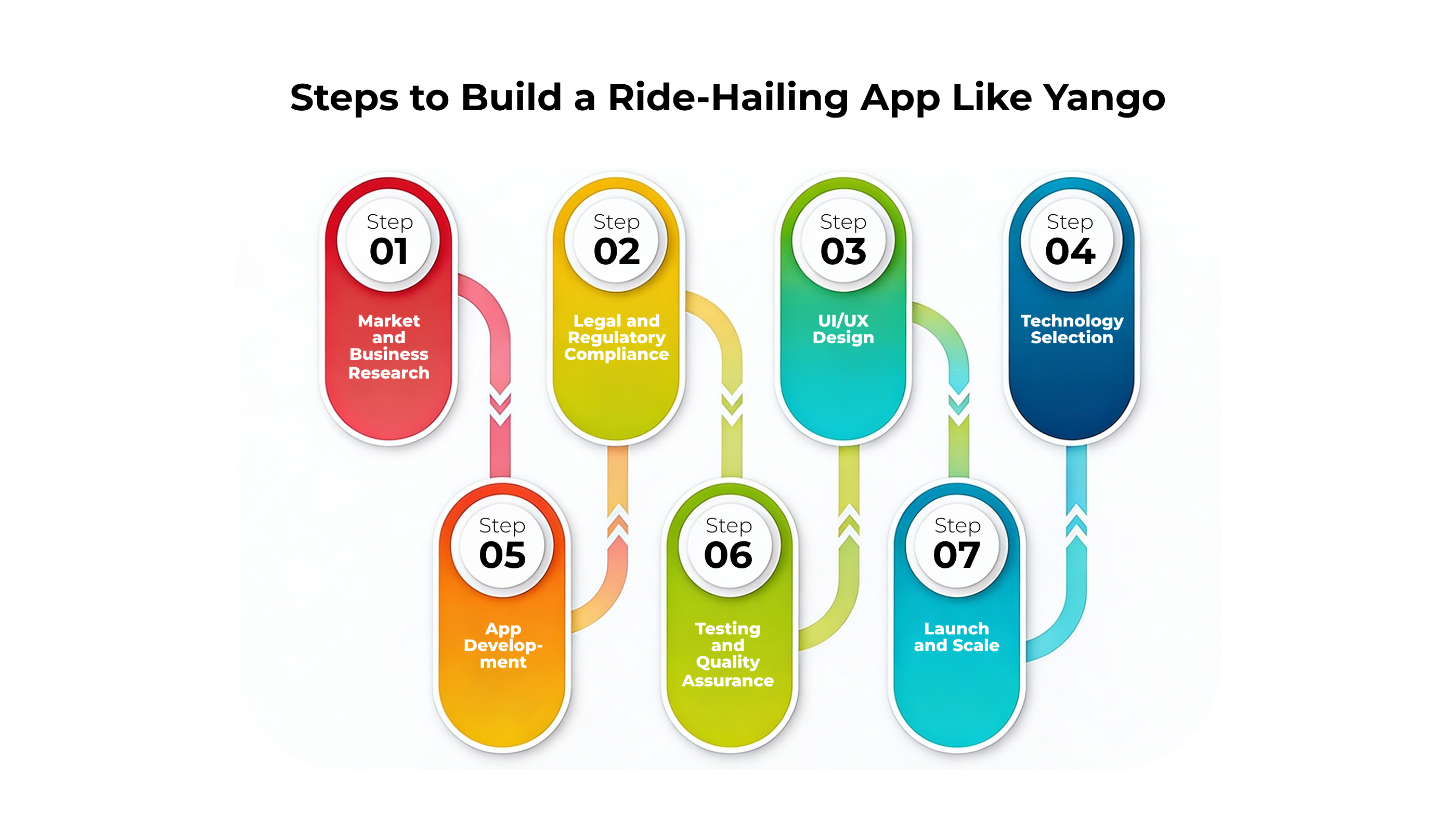
Step 1: Market and Business Research
Begin by understanding who your users are, what competitors are offering, and where gaps exist in the market. This helps you create a unique value proposition and pricing strategy tailored for Dubai’s ride-hailing scene.
Step 2: Legal and Regulatory Compliance
Make sure your app meets all the requirements set by Dubai’s Roads and Transport Authority (RTA), including driver licensing, vehicle standards, and data privacy laws. Compliance is crucial to operate legally and gain user trust.
Step 3: UI/UX Design
Create a clean, intuitive interface that’s easy to navigate for both passengers and drivers. A well-designed app ensures quick bookings and smooth interactions, keeping users engaged and satisfied.
Step 4: Technology Selection
Choose technologies and platforms that can scale with your business and handle heavy traffic during peak times. The right tech stack ensures your app runs smoothly and stays reliable as user numbers grow.
Step 5: App Development
Build the passenger app, driver app, and admin panel simultaneously to maintain seamless communication between all parts of the system. This integrated development approach helps prevent bugs and improves overall performance.
Step 6: Testing and Quality Assurance
Thoroughly test every feature, especially GPS accuracy, payment processes, and app speed. Fixing issues before launch is key to delivering a reliable and secure experience.
Step 7: Launch and Scale
Start by releasing a Minimum Viable Product (MVP) to gather user feedback quickly. Use this data to refine features, improve user experience, and gradually add advanced functionalities while expanding your user base.
Technology Stack Used for Ride-Hailing Apps
Choosing the right tech stack helps ensure performance and scalability.
| Component | Common Technologies |
| Mobile App | Flutter, React Native |
| Backend | Node.js, Laravel |
| Database | PostgreSQL, MongoDB |
| Maps | Google Maps, Mapbox |
| Payments | Stripe, Apple Pay |
| Cloud | AWS, Google Cloud |
A reliable taxi booking app development company helps you make the right technical decisions.
Key Challenges Impacting Development Cost
Developing a ride-hailing app like Yango also faces several challenges that can affect timelines and costs:
Regulatory Compliance
Meeting Dubai’s Roads and Transport Authority (RTA) licensing and safety requirements is crucial for any ride-hailing app operating there. This means your app must follow strict legal standards, which can slow down development and add costs for legal consultations and certifications to ensure full compliance.
Real-Time Accuracy
Developing precise GPS tracking and fare calculation features is technically complex. It requires sophisticated backend systems to provide real-time updates without delays, which demands more time and specialized expertise, increasing development costs.
Driver Onboarding
Verifying driver identities and vehicle details is essential to maintain service quality and safety. Building automated and manual verification systems requires extra resources and testing, extending the development timeline and costs.
Scalability
Your app should handle thousands of users simultaneously, especially during peak hours. This means investing in a robust, scalable backend infrastructure to avoid crashes and slowdowns, which increases the initial development and hosting expenses.
User Trust and Safety
To build trust, features like driver and rider ratings, in-app support, and secure data handling are necessary. Developing these safety and feedback mechanisms requires careful planning and additional development effort, adding to the overall cost..
Monetization Models That Influence Your Budget Planning
Understanding how your app will make money is key to planning costs effectively:
Commission on Each Ride: A percentage fee on every completed trip, usually the primary revenue source.
Surge Pricing: Dynamic fare increases during high demand periods to balance supply and demand.
Driver Subscription Plans: Offering premium features or benefits to drivers for a fixed fee.
Corporate Contracts: Providing tailored services for business travel ensures steady income.
In-App Ads and Promotions: Additional revenue from advertising partners or promotional offers.
Building monetization into the app from the start affects development scope and costs.
Mini Case Insight: Launching a Yango-Like App in Dubai
Let’s look at a real-world example to understand what it takes to launch a taxi booking app in Dubai.
A startup aimed to build an app focused on airport rides and business travelers in Dubai. However, they faced several challenges:
- Regulatory Approvals: Navigating the Dubai RTA’s strict licensing and compliance requirements was complex and time-consuming.
- Handling Peak-Hour Demand: Managing many ride requests simultaneously, especially during busy times, required a robust and scalable system.
- Multi-Language Support: Since Dubai is a multicultural city, the app needed to support multiple languages to serve a wider audience.
The Solution:
The startup decided to launch a Minimum Viable Product (MVP) with the essential features to enter the market quickly. They focused on:
- A clean and simple UI/UX design for easy navigation.
- A scalable backend system capable of handling large numbers of users during peak times.
The Outcome:
- They achieved a faster market entry, beating competitors to launch.
- Strong user adoption thanks to the easy-to-use app and reliable performance.
- Stable app operation, even during the busiest hours, building trust among users.
This case shows that careful planning, starting small with an MVP, and focusing on core features are key to successful ride-hailing app development, especially in a market like Dubai
Why Choose PerfectionGeeks for Taxi Booking App Development?
Building a ride-hailing app like Yango Dubai requires expertise, planning, and knowledge of local regulations. At PerfectionGeeks, we offer custom ride-hailing app development with full RTA compliance. Our scalable, secure solutions come with user-friendly UI/UX designs to ensure a smooth experience for both drivers and passengers. We provide end-to-end support, helping your taxi booking app grow and succeed in Dubai’s competitive market.
Frequently Asked Questions
Quick answers related to this article from PerfectionGeeks.
1. How long does it take to develop a ride hailing app?
2. Can I build a ride hailing app for both iOS and Android simultaneously?
3. What challenges should I expect in developing a taxi booking app?
4. How does PerfectionGeeks help with ride hailing app development?
Conclusion
Building a ride-hailing app like Yango involves multiple cost factors—from features and design to compliance and technology. While a simple MVP can start at around $30,000, a fully-featured, scalable app for the Dubai market can exceed $100,000. Careful planning, choosing the right features, and partnering with an experienced taxi booking app development company like PerfectionGeeks will help you build a trusted, competitive, and profitable app in this booming market.
If you’re ready to start your taxi booking app development journey or want a detailed cost estimate for your ride-hailing app, contact PerfectionGeeks today!

Written By Shrey Bhardwaj
Director & Founder
Shrey Bhardwaj is the Director & Founder of PerfectionGeeks Technologies, bringing extensive experience in software development and digital innovation. His expertise spans mobile app development, custom software solutions, UI/UX design, and emerging technologies such as Artificial Intelligence and Blockchain. Known for delivering scalable, secure, and high-performance digital products, Shrey helps startups and enterprises achieve sustainable growth. His strategic leadership and client-centric approach empower businesses to streamline operations, enhance user experience, and maximize long-term ROI through technology-driven solutions.