
Published 15 January 2026 | Updated 15 January 2026
ai
How to Develop AI-Powered Insurance Software That Complies with UK Regulations
If you're wondering how to build AI-powered insurance software that perfectly complies with UK regulations, you're in the right place. The truth is, combining cutting-edge AI technology with strict regulatory requirements can feel overwhelming. But don’t worry — in this blog, we’ll walk you through everything, step by step, to help you develop AI insurance software that is not only smart and efficient but also legally compliant and trustworthy.
What is AI-Powered Insurance Software and Why is It Useful?
AI-powered insurance software uses artificial intelligence to help insurance companies do their jobs better and faster. Think of it like a smart assistant that can quickly process claims, spot fraud, assess risks, and even suggest the best policies for customers based on their needs.
This combination of AI and insurance, often called ai insurance or insurance ai, is changing how insurance works in the UK and around the world.
Why is AI-Powered Insurance Software Useful?
Here are the main reasons why this technology is so valuable:
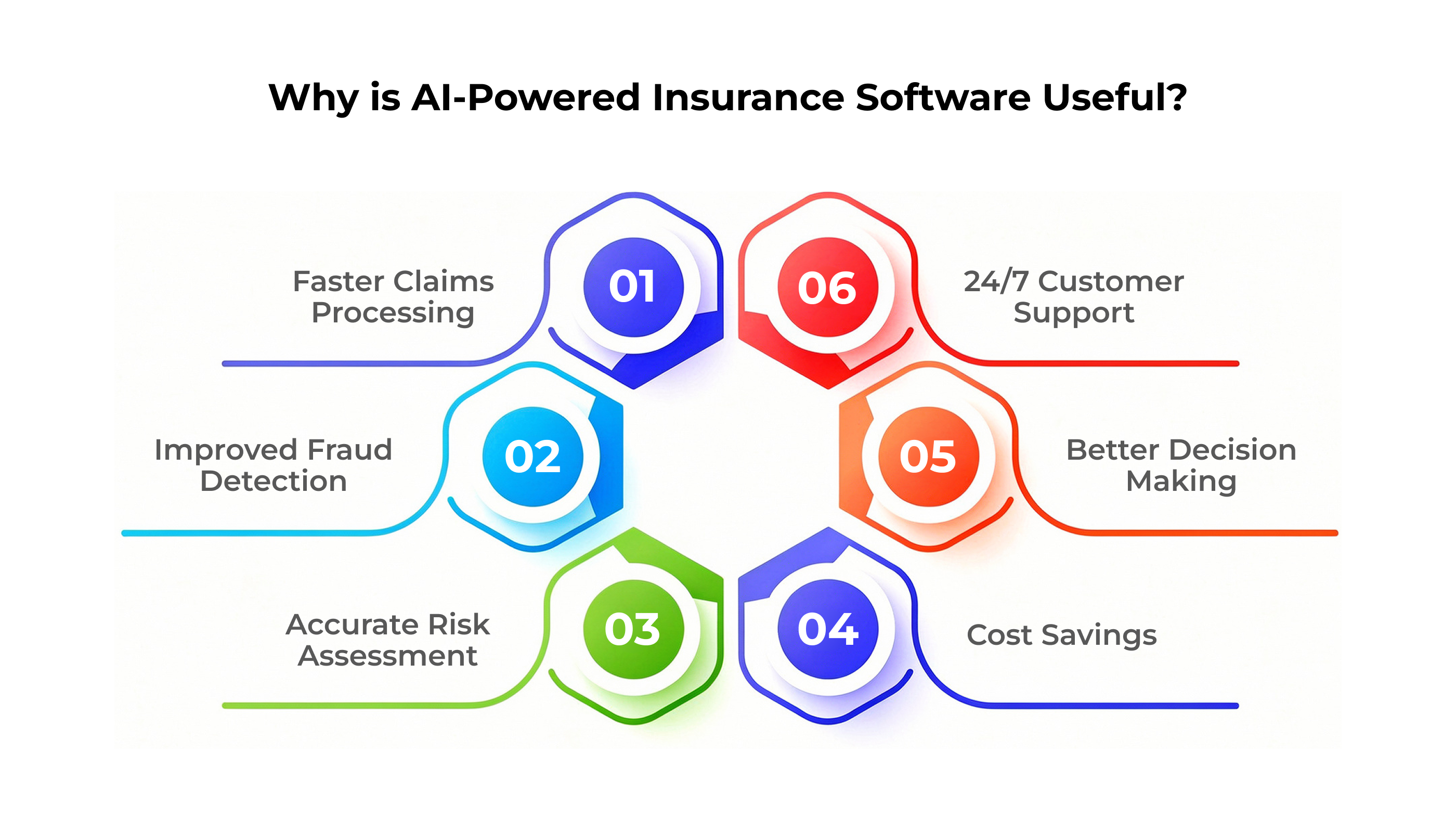
- Faster Claims Processing: AI can quickly review and approve claims, reducing waiting times for customers.
- Improved Fraud Detection: AI spots unusual patterns to catch fraudulent claims before they cost companies money.
- Accurate Risk Assessment: AI analyzes large amounts of data to predict risks more precisely, helping insurers offer fair prices
- Cost Savings: Automating routine tasks saves insurers time and reduces operational expenses.
- Better Decision Making: AI provides data-driven insights that help insurers make smarter business choices.
- 24/7 Customer Support: AI chatbots and virtual assistants offer round-the-clock help, improving customer satisfaction.
What UK Rules Do AI Insurance Software Need to Follow?
The development of insurance software in the UK is not only a matter of technology but also of compliance with the law. Below are some rules that your software must adhere to:
GDPR (General Data Protection Regulation): This law protects personal data and privacy. Your software must get clear consent to use data and keep it safe.
FCA (Financial Conduct Authority) Guidelines: FCA ensures insurance companies treat customers fairly and keep systems secure.
Data Protection Act 2018: Adds UK-specific rules about handling data.
AI Regulations: The UK is developing rules for AI to make sure it is fair, transparent, and trustworthy.
How to Keep Customer Data Safe and Private in AI Insurance Software?
As the insurance software deals with delicate personal information, it is imperative to guard such information. Below are some simple yet paramount measures to take:
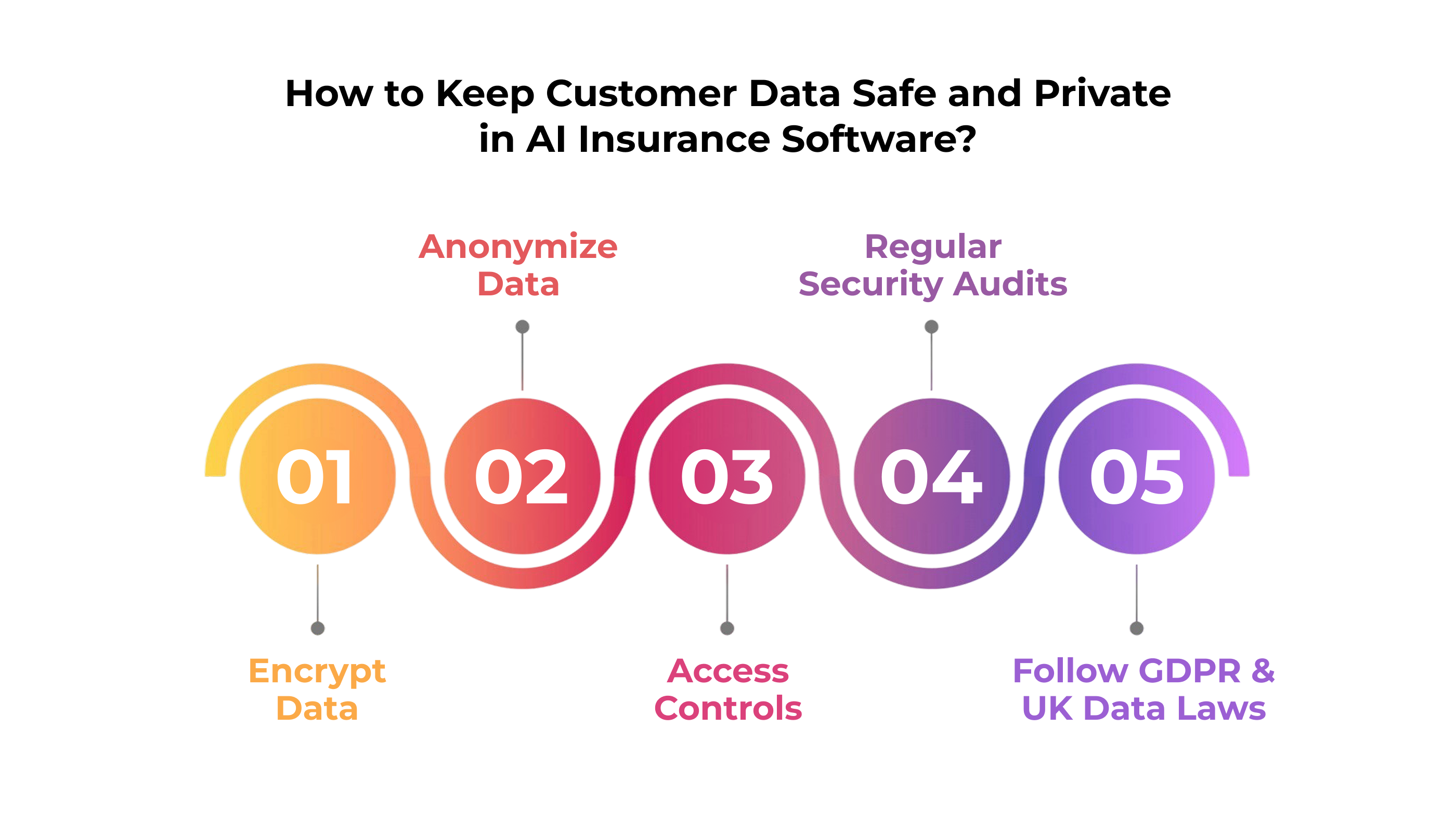
Encrypt Data: Strong encryption should be applied to all data so that it remains protected during both storage and transfer phases.
Anonymize Data: At the stage of AI training, the removal of personal information should be done.
Access Controls: Data should be made accessible only to authorized personnel.
Regular Security Audits: Continually monitor for vulnerabilities and rapidly remedy them.
Follow GDPR & UK Data Laws: Constantly uphold the customers’ rights concerning their data.
What Are the Main Features of AI Insurance Software?
Automated Claims Processing: AI can quickly analyze and process insurance claims by verifying documents, checking policy details, and assessing damages through images or videos. This speeds up approvals, reduces human errors, and improves customer satisfaction by delivering faster responses.
Fraud Detection: Using machine learning, AI detects unusual patterns and suspicious activities in claims data that might indicate fraud. This helps insurers prevent financial losses by flagging high-risk claims for further investigation, keeping the insurance system fair for everyone.
Risk Assessment: AI analyzes vast amounts of customer data and external factors to predict the risk levels associated with insuring a person or asset. This enables insurers to price policies more accurately, balance risk, and minimize unexpected losses.
Customer Profiling: By examining customer behaviors, preferences, and history, AI creates detailed profiles that help insurers understand individual needs better. This information allows for more personalized communication and insurance offers that truly fit each customer.
Personalized Policy Recommendations: AI-powered software can suggest insurance plans tailored to a customer’s specific situation and risk profile. This makes it easier for customers to find the right coverage and increases their satisfaction with the insurer.
Chatbots and Virtual Assistants: AI-driven chatbots provide 24/7 customer support by answering common questions, guiding users through policy details, or assisting with claims. This reduces the workload on human agents and offers quick, convenient service.
Predictive Analytics: AI uses historical data and trends to forecast future outcomes such as claim frequency, customer churn, or emerging risks. These insights help insurers make better strategic decisions and improve operational efficiency.
Document and Image Analysis: AI can automatically scan and interpret documents, photos, and videos related to insurance claims or applications. This reduces manual work and speeds up processing by extracting relevant information efficiently.
How to Build an AI-Powered Insurance Software in the UK? Step by Step
Define Your Goals
Start by deciding what areas of your insurance business you want to improve using AI. It could be speeding up claims processing, detecting fraud more accurately, or enhancing customer service with chatbots. Clear goals help focus your development and measure success.
Understand UK Regulations
Before building anything, study the UK’s key laws like GDPR for data privacy, FCA guidelines for fair insurance practices, and any emerging AI-specific rules. Knowing these rules upfront ensures your software respects legal boundaries and avoids costly compliance issues.
Design Features
Choose the main AI functions your software will have, such as automatic claims handling, fraud detection, risk assessment, or personalized policy recommendations. Prioritize features that align with your goals and offer the most value to users.
Build Transparent AI Models
Develop AI systems that don’t just make decisions but can explain how and why they arrived at those decisions. Transparency helps build trust with customers and regulators and is often a legal requirement in the UK.
Integrate with Existing Systems
Most insurers have legacy software, so build AI modules that can be securely plugged into these existing systems. This modular approach ensures smooth data flow, minimal disruption, and easier maintenance.
Test Thoroughly
Before launch, run extensive tests to ensure your AI works accurately and fairly. Check for biases, security vulnerabilities, and compliance with regulations. Involve real users to get feedback on usability and trustworthiness.
Document Everything
Keep detailed records of your AI’s decision-making processes, data usage, and security measures. Proper documentation is essential for audits and proving compliance to UK regulators like the FCA.
Launch & Monitor
After deployment, continuously monitor how the software performs in real-world conditions. Watch for any compliance issues, performance drops, or user concerns, and be ready to update and improve the system.
Partner with Experts
Work with experienced companies like PerfectionGeeks Technologies that specialize in AI insurance software and understand UK regulations deeply. Their expertise helps you avoid pitfalls and build software that’s secure, compliant, and effective.
How to Test AI Insurance Software to Make Sure It Works and Follows Rules?
Before going live, testing is crucial:
- Check AI Accuracy: Make sure AI decisions are correct.
- Bias Testing: Ensure AI treats all customers fairly.
- Security Tests: Protect against data leaks or hacks.
- Compliance Audits: Verify GDPR, FCA, and other rules are followed.
- User Testing: Get feedback from real users to improve experience.
What Are the Challenges in Building AI Insurance Software in the UK?
Complex Regulations: UK laws around data privacy and AI are strict and constantly evolving. Balancing cutting-edge AI features with these legal requirements can be difficult and needs careful planning.
Protecting Data Privacy: Insurance software deals with sensitive personal data. Ensuring this information is handled securely and in line with GDPR and UK data laws is a major challenge.
Avoiding Bias: AI can unintentionally treat some groups unfairly if not designed carefully. It’s important to build AI models that are unbiased and treat every customer equally.
Legacy System Integration: Many insurers still use older software systems. Integrating new AI solutions smoothly without disrupting existing operations is often complicated.
Keeping AI Transparent: Regulators and customers want to understand how AI makes decisions. Making AI explainable and easy to audit is necessary but technically challenging.
Staying Updated: AI technology and regulations are rapidly changing. Keeping software compliant and up-to-date with the latest rules and AI advancements requires ongoing effort.
Security Threats: AI insurance systems are targets for cyberattacks due to the sensitive data they hold. Protecting against hacking and data breaches is critical.
Customer Trust: Customers expect privacy, fairness, and clear communication. Meeting these high expectations while using AI technology can be tough.
Finding Skilled Developers: Developing compliant AI insurance software needs experts who understand both AI technology and UK insurance laws, which can be hard to find.
Real Business Use Cases in the UK Insurance Context
Two UK insurance giants are already using AI successfully:
Aviva: Faster and Smarter Claims Processing
Aviva uses AI to make insurance claims faster and easier. Instead of checking everything manually, AI helps review claim documents, confirm policy details, and assess damage quickly. This reduces waiting time for customers.
Aviva’s AI follows UK data protection laws like GDPR and keeps customer data safe. The AI also explains how decisions are made, which builds trust. As a result, Aviva works more efficiently and delivers fair and quicker claim results
Zurich UK: Early Fraud Detection and Better Protection
Zurich UK uses AI to spot fraud early. AI studies claims data and customer behavior to find unusual patterns that may indicate fraud.
Their AI systems follow FCA rules and UK insurance regulations. Zurich keeps clear records of AI decisions for audits. This helps reduce fraud losses, protects genuine customers, and builds trust in their insurance services.
Why Choose PerfectionGeeks Technologies for Your AI Insurance Software Development?
When it comes to AI insurance software development UK, choosing the right partner matters. Here’s why PerfectionGeeks Technologies is the best choice:
- Deep Expertise: Professional in AI as well as UK insurance regulations.
- Custom Solutions: Tailors software to your unique business needs.
- Security Focused: Always considers data security and legal adherence as the top priority.
- End-to-End Support: Continues to assist from the initial design phase to the launch and even further.
- Trusted Partner: Always ready to support you in achieving your goals and being compliant.
Choosing PerfectionGeeks as a partner means not only the delivery of a functional AI software but also its being properly compliant with all the UK regulations.
Frequently Asked Questions
Quick answers related to this article from PerfectionGeeks.
1. What exactly is AI insurance software?
2. What is the biggest challenge in AI insurance software development?
3. How does PerfectionGeeks help with AI insurance software?
Conclusion
The creation of AI-based insurance software that is aligned with the UK regulations is full of challenges but also great benefits. It entails meticulous organization, proficiency in technology, and an extensive knowledge of law. However, if you apply the right strategy and have a reliable companion such as PerfectionGeeks Technologies, you will undoubtedly deliver a smart, fair, and efficient insurance solution all taking the utmost care of customers and ensuring their contentment at the same time. If you want to start your AI insurance software journey, PerfectionGeeks is ready to help you every step of the way.

Shrey Bhardwaj is the Director & Founder of PerfectionGeeks Technologies, bringing extensive experience in software development and digital innovation. His expertise spans mobile app development, custom software solutions, UI/UX design, and emerging technologies such as Artificial Intelligence and Blockchain. Known for delivering scalable, secure, and high-performance digital products, Shrey helps startups and enterprises achieve sustainable growth. His strategic leadership and client-centric approach empower businesses to streamline operations, enhance user experience, and maximize long-term ROI through technology-driven solutions.