Enhanced Data Security
Blockchain ensures patient data is securely encrypted and immutable.
Leverage the power of Web3 and blockchain technology to enhance data security, improve interoperability, and ensure patient data ownership. Join PerfectionGeeks in leading the change in healthcare.
Web3 represents the next evolution of the internet, leveraging blockchain technology to enable decentralized applications and smart contracts. In healthcare, this framework enhances data security, promotes interoperability among healthcare providers, and empowers patients with ownership of their medical data. By implementing blockchain-based patient record systems, healthcare organizations can ensure the integrity and accessibility of health data while maintaining stringent security measures. Furthermore, smart contracts can automate medical workflows, streamlining processes and reducing administrative burdens. As healthcare continues to evolve, embracing Web3 technologies will be crucial in fostering a more secure and efficient healthcare ecosystem.
How Decentralization Is Transforming Healthcare Data Management
Discover how Web3 is reshaping healthcare through enhanced security and interoperability.
Blockchain ensures patient data is securely encrypted and immutable.
Seamless data exchange among healthcare providers promotes better care coordination.
Smart contracts automate administrative processes, reducing delays and errors.
Patients have greater control and ownership over their health data.
In the evolving landscape of healthcare, ensuring patient data security is paramount. Blockchain technology offers innovative solutions to safeguard sensitive information, enabling decentralized patient record systems that prioritize privacy. By leveraging smart contracts, healthcare providers can automate workflows while maintaining data integrity and security. Interoperability between various healthcare systems is enhanced, allowing for seamless data exchange without compromising security. PerfectionGeeks specializes in developing cutting-edge blockchain healthcare solutions that empower patients and healthcare providers alike.
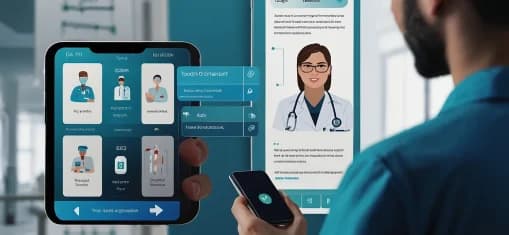
Utilize decentralized systems to secure patient data against unauthorized access.
Facilitate secure data sharing between healthcare providers for better patient care.
Automate medical workflows while ensuring adherence to privacy regulations.
Protect sensitive health information through advanced encryption and decentralization.
Evaluating the Benefits of Blockchain in Healthcare
| Feature | Traditional Systems | Web3-Powered Systems |
|---|---|---|
| Data Security | Vulnerable to breaches and unauthorized access. | Utilizes blockchain for enhanced security and patient control. |
| Interoperability | Limited data sharing between providers. | Designed for seamless data exchange across platforms. |
| Patient Ownership | Patients have minimal control over their data. | Empowers patients with ownership and access to their health records. |
| Workflow Automation | Manual processes lead to delays. | Smart contracts enable automated workflows for efficiency. |
| Implementation Cost | High costs associated with system upgrades. | Potential for lower long-term costs with decentralized solutions. |
Explore how Web3 solutions are transforming healthcare delivery.
Smart contracts streamline billing by automating payment processes between healthcare providers and patients.
They ensure compliance with regulations by automatically executing terms based on pre-set conditions.
Smart contracts enhance data security by ensuring that patient information is only accessible to authorized parties.
By automating processes, smart contracts improve workflow efficiency, reducing the time spent on administrative tasks.
Smart contracts automate insurance claim verification and settlements, reducing processing time and minimizing disputes.
Enable patients to grant, update, or revoke access to their medical records through transparent and tamper-proof smart contracts.
Exploring the Real-World Applications of Blockchain in Health

Explore the advanced tech stack that enhances healthcare systems through decentralization.
Navigating the complexities of adopting Web3 technologies in healthcare.
Enhancing Patient Care through Decentralization and Security
At PerfectionGeeks, we leverage Web3 technology to create robust healthcare solutions that prioritize data security, enhance interoperability, and empower patients with control over their medical information. Our blockchain-based systems streamline workflows and ensure compliance, leading to improved patient outcomes.
Our systems utilize blockchain to secure patient data against unauthorized access.
We facilitate seamless data exchange between diverse healthcare providers.
Automate medical workflows to increase efficiency and reduce errors.
Patients can control their own health data, enhancing transparency and trust.
Future of Healthcare with Web3, AI, and Blockchain Integration
Empower your healthcare organization with cutting-edge blockchain technology.
PerfectionGeeks provided excellent service from start to finish. Their team was professional, easy to work with, and delivered exactly what we needed on time. We’re very pleased with the outcome and would gladly recommend them to others.
Thanaboon Mingkaew
CEO, SMART IOT
We partnered with PerfectionGeeks for a custom accounting automation software, and the experience was excellent. Their team delivered a high-quality solution that streamlined our operations and improved efficiency. Professional, skilled, and reliable — we’re already working with them on another project.
Saarthak Gupta
Founder, Ceos Accounting Services
As COO of TRP Construction Management, I’m proud of our growth from 300 to 16,000+ SKUs and 4,000+ vendors since 2022. Thanks to Shrey Bhardwaj and Perfection Geeks for delivering scalable, future-ready technology solutions that transformed our vision into a seamless pan-India platform. Highly recommended technology partner.
Mayank Pathak
COO, TRP Construction Management

PerfectionGeeks Technologies transformed our vision into reality with innovative technology solutions. Their professionalism, timely delivery, transparent communication, and commitment to quality made the entire collaboration smooth, reliable, and highly satisfying.
Armaan
Cofounder, Kzminer

I highly recommend PerfectionGeeks Technologies for mobile and web development services. Their expertise, dedication, creative ideas, and customer-focused approach helped our business achieve impressive digital growth successfully.
Chetna
Founder CEO , Klicked

Choosing PerfectionGeeks Technologies was the best decision for our company. Their skilled developers created a user-friendly platform, provided constant assistance, and ensured exceptional performance beyond our expectations every step.
Mark
CTO, IMSMART

Working with PerfectionGeeks Technologies was an excellent experience. Their team delivered our project on time with outstanding quality, smooth communication, innovative solutions, and professional support throughout the entire development process.
Naveen
Founder Director , Way2Kart

PerfectionGeeks Technologies delivered a smooth, professional experience with excellent communication and technical expertise. Their team understood project requirements clearly, provided timely updates, and ensured high-quality results that exceeded expectations.
Srinivasa Mothay
CTO, Sethu Fishries

PerfectionGeeks Technologies impressed with their innovative solutions, responsive support, and commitment to quality. The team handled every detail professionally, delivered on time, and created a seamless experience from start to finish.
Mervin
Cofounder & CTO, Clover Infinity