Published 16 March 2026 | Updated 26 September 2026
App
Why Quantum Computing Matters and How It Might Enable Next-gen Apps
Technology continues to evolve at an incredible pace. From cloud computing and artificial intelligence to edge computing, every innovation has transformed how software is built and deployed. The next major technological shift is Quantum Computing, a revolutionary approach that could unlock new possibilities for solving complex problems and enabling next-generation applications.
While classical computers remain powerful, they struggle with extremely complex calculations involving massive datasets, probabilities, and optimization challenges. Quantum computing introduces an entirely new computing paradigm that could drastically improve how software systems handle such tasks.
For businesses, developers, and organizations looking to stay ahead in the digital era, understanding quantum computing is becoming increasingly important. At PerfectionGeeks Technologies, a leading Software Development Company, we closely follow emerging technologies like quantum computing to help organizations build future-ready applications.
This blog explores why quantum computing matters, how it works, and how it may enable next-generation applications across industries.
What Is Quantum Computing?
Traditional computers process information using bits, which represent either 0 or 1. Quantum computers use qubits, which can exist in multiple states at the same time due to a principle called superposition.
Another fundamental concept is entanglement, where qubits become linked so that the state of one directly influences another, even across distances. These properties allow quantum systems to process many possibilities simultaneously.
Key Differences Between Classical and Quantum Computing
| Feature | Classical Computing | Quantum Computing |
|---|---|---|
| Data Unit | Bit (0 or 1) | Qubit (0, 1, or both) |
| Processing | Sequential | Parallel probabilistic computation |
| Problem Solving | Linear calculations | Complex probabilistic simulations |
| Speed Advantage | Suitable for general tasks | Advantage for complex optimization and simulations |
| Architecture | CPU, GPU systems | Quantum processors with qubits |
Quantum computing does not replace classical computers. Instead, it complements them by solving specific types of problems that are difficult or impossible for traditional machines.
Why Quantum Computing Matters for Modern Software
As digital systems become more complex, certain problems grow exponentially difficult to solve. For example:
- Global logistics route optimization
- Financial risk simulations
- Drug discovery models
- AI training with massive datasets
Traditional computing approaches rely on approximations for these problems, while quantum algorithms can evaluate multiple possibilities simultaneously.
This ability opens the door for next-generation applications that require enormous computational power.
Core Principles Behind Quantum Computing
Understanding the basic principles of quantum computing helps explain why it can outperform classical systems for certain tasks.
1. Superposition
Qubits can exist in multiple states at once, allowing quantum systems to evaluate many possibilities simultaneously.
2. Entanglement
Entangled qubits remain interconnected regardless of distance, enabling faster information correlation and processing.
3. Quantum Interference
Quantum algorithms use interference to amplify correct solutions and cancel incorrect ones.
4. Quantum Gates
Quantum circuits manipulate qubits using specialized gates similar to logic gates in classical computing.
These principles allow quantum systems to process complex calculations far more efficiently than classical machines in certain scenarios.
Quantum Computing and Software Architecture
Quantum computing will not replace traditional software architecture. Instead, it will work alongside existing systems through hybrid computing models.
Future applications may:
- Treat quantum processors as external services
- Access quantum algorithms through APIs
- Integrate quantum tasks asynchronously
- Combine deterministic and probabilistic results
This model is similar to how GPUs accelerate AI workloads today. Classical software will handle most application logic, while quantum systems solve specialized computational problems.
Popular Quantum Development Frameworks
Software engineers already have access to several frameworks for quantum programming.
| Framework | Developed By | Primary Language |
|---|---|---|
| Qiskit | IBM | Python |
| Cirq | Python | |
| Q# | Microsoft | .NET ecosystem |
| Amazon Braket | AWS | Multiple languages |
These platforms allow developers to experiment with quantum algorithms through cloud-based quantum processors or simulators.
How Quantum Computing Will Enable Next-Gen Applications
Quantum computing is expected to transform several industries by enabling applications that were previously impossible.
1. Optimization Problems
Many industries rely on optimization problems with thousands of variables.
Examples include:
- Transportation routing
- Manufacturing scheduling
- Supply chain planning
Quantum algorithms can explore enormous solution spaces faster than traditional systems, helping companies find optimal solutions in minutes rather than days.
2. Drug Discovery and Healthcare
Quantum computing can simulate molecular interactions with high precision. This could dramatically accelerate drug discovery and development.
Benefits include:
- Faster vaccine development
- Personalized medicine
- Accurate chemical simulations
Pharmaceutical companies may use quantum systems to identify potential drug compounds much faster than classical computing allows.
3. Financial Modeling and Risk Analysis
Financial institutions deal with highly complex probabilistic calculations.
Quantum computing could improve:
- Portfolio optimization
- Market forecasting
- Fraud detection
- Risk assessment
By analyzing massive datasets simultaneously, quantum algorithms can provide more accurate predictions for financial markets.
4. Artificial Intelligence and Machine Learning
Quantum computing may significantly enhance AI models by improving data processing and pattern recognition.
Possible improvements include:
- Faster training of machine learning models
- Advanced predictive analytics
- Improved natural language processing
- More accurate recommendation systems
Quantum-enhanced AI could unlock powerful data insights for businesses and researchers.
5. Cybersecurity and Encryption
Quantum computing poses both risks and opportunities for cybersecurity.
Potential Risks
Quantum algorithms could break certain existing encryption methods.
Potential Solutions
Quantum technologies can also enable:
- Quantum-safe cryptography
- Quantum key distribution
- Ultra-secure communication protocols
These technologies will shape the future of digital security.
Impact on the Software Development Lifecycle
Quantum computing will also change how software is developed and tested.
Key Changes in the SDLC
| Stage | Traditional Development | Quantum Development |
|---|---|---|
| Requirements | Deterministic results | Probabilistic outcomes |
| Development | Classical algorithms | Quantum algorithms |
| Testing | Exact output verification | Statistical validation |
| Debugging | Step-by-step tracing | Probability analysis |
| Deployment | Standard infrastructure | Hybrid quantum-classical systems |
Developers will need to adapt to probabilistic computing models where outcomes may vary slightly between runs.
Real-World Industry Applications
Quantum computing is expected to impact several industries.
| Industry | Potential Quantum Application |
|---|---|
| Healthcare | Drug discovery and protein modeling |
| Finance | Portfolio optimization and risk simulations |
| Logistics | Route planning and supply chain optimization |
| Energy | Smart grid management |
| Climate Science | Advanced climate modeling |
These industries deal with extremely complex systems where quantum computing could deliver major breakthroughs.
Challenges Slowing Quantum Adoption
Despite its promise, quantum computing still faces several technical and practical challenges.
Major Barriers
| Challenge | Description |
|---|---|
| Hardware instability | Qubits are extremely sensitive to environmental interference |
| High cost | Quantum systems require specialized hardware and cooling systems |
| Limited expertise | Quantum programming skills are still rare |
| Immature ecosystem | Tools and frameworks are still evolving |
These challenges mean quantum computing adoption will likely occur gradually over the next decade.
The Future of Quantum-Powered Applications
Quantum computing will not suddenly replace traditional computing systems.
Instead, the future will likely involve hybrid architectures, where classical software handles most application logic while quantum processors accelerate complex calculations.
Experts predict that early practical applications will appear in areas such as:
- Financial analytics
- Demand forecasting
- Scientific research
- AI training systems
As quantum hardware improves, more industries will adopt quantum-enabled software.
Role of Software Development Companies in the Quantum Era
As quantum computing evolves, businesses will need guidance on when and how to adopt the technology.
A reliable Software Development Company can help organizations:
- Evaluate where quantum computing adds value
- Build scalable hybrid architectures
- Integrate quantum services with existing systems
- Develop quantum-ready applications
This strategic approach ensures companies can benefit from quantum innovation without unnecessary complexity.
Why Businesses Choose PerfectionGeeks Technologies
Organizations exploring emerging technologies need a trusted technology partner.
PerfectionGeeks Technologies is a leading Software Development Company delivering advanced digital solutions across industries.
Our Core Services
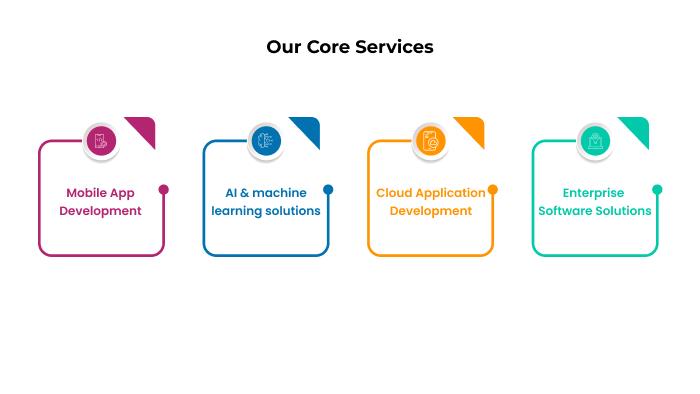
- Mobile app development
- AI and machine learning solutions
- Cloud application development
- Enterprise software solutions
Our engineering team continuously monitors emerging technologies like Quantum Computing to help businesses prepare for the future of digital innovation.
We focus on building scalable, future-ready software systems that can adapt to next-generation technologies.
Frequently Asked Questions
Quick answers related to this article from PerfectionGeeks.
1. What is Quantum Computing?
2. Why is Quantum Computing important for next-generation applications?
3. Which industries can benefit from Quantum Computing?
4. Is Quantum Computing replacing traditional computers?
5. How can businesses prepare for Quantum Computing?
Conclusion
Quantum computing represents one of the most significant technological advancements of the modern era. By leveraging the principles of quantum mechanics, it offers the ability to solve complex computational problems that are beyond the reach of classical computers.
Although the technology is still evolving, its potential to transform industries such as healthcare, finance, logistics, and artificial intelligence is enormous. Future applications will likely combine classical and quantum computing to create hybrid systems capable of solving previously impossible challenges.
Businesses that prepare today will be better positioned to adopt quantum technologies when they become mainstream.
At PerfectionGeeks Technologies, we help organizations stay ahead by developing innovative digital solutions and preparing businesses for emerging technologies like Quantum Computing.
If you want to build future-ready applications powered by advanced technologies, connect with our experts today and explore the possibilities of next-generation software innovation.

Shrey Bhardwaj is the Director & Founder of PerfectionGeeks Technologies, bringing extensive experience in software development and digital innovation. His expertise spans mobile app development, custom software solutions, UI/UX design, and emerging technologies such as Artificial Intelligence and Blockchain. Known for delivering scalable, secure, and high-performance digital products, Shrey helps startups and enterprises achieve sustainable growth. His strategic leadership and client-centric approach empower businesses to streamline operations, enhance user experience, and maximize long-term ROI through technology-driven solutions.