Published 25 August 2026 | Updated 26 September 2026
Technology
How AI Glasses Combine Mobile Apps, IoT, and Artificial Intelligence
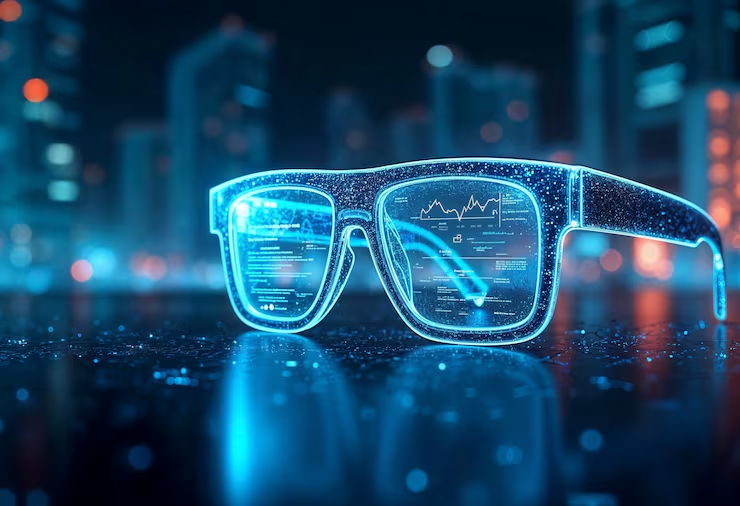
AI-powered glasses are often described as a single smart device, but the experience depends on several connected technologies. The frame contains sensors and controls, a mobile application handles setup and management, internet-connected services extend what the hardware can do, and artificial intelligence turns voice or visual input into something useful.
This combination makes smart eyewear a good example of modern product engineering. Mobile development, IoT architecture, cloud infrastructure, and AI cannot be designed in isolation. A weakness in one layer quickly becomes visible in the entire experience.
- AI glasses combine IoT hardware, mobile apps, cloud services, and artificial intelligence to deliver a connected wearable experience.
- Edge AI can reduce latency, save bandwidth, and support selected features when internet connectivity is limited.
- Cloud AI provides greater computing power for complex tasks such as image recognition and language processing.
- A hybrid AI approach allows smart glasses to balance speed, battery life, privacy, and processing requirements.
- Successful AI-glasses development requires close coordination between hardware, mobile, backend, AI, security, and design teams.
The Glasses Form the IoT Device Layer
At the edge of the system is the physical product. Depending on the model, the frame may contain a camera, microphones, speakers, touch controls, motion sensors, wireless radios, storage, and a battery. Firmware coordinates these components, turning a button press, gesture, or voice trigger into an action the rest of the system can process. In glasses with audio, for example, this hardware layer captures spoken input and delivers audio back to the wearer, while additional processing may take place on the glasses, a connected phone, or in the cloud. For the wearer, this enables hands-free access to calls, audio, and other voice-based features without needing to reach for a separate device.
The hardware has strict limits. It needs to remain light, avoid uncomfortable heat, and last through normal use on a small battery. That means developers have to decide which tasks should happen on the glasses and which should move to a phone or cloud service. Efficient processing is not simply an optimization; it is central to whether the product feels wearable.
The Mobile App Provides a Practical Interface
A companion application acts as the management screen that eyewear itself does not have. It can guide pairing, connect accounts, request permissions, adjust preferences, import media, and install updates. It may also display help content and explain features that would be difficult to configure through audio alone.
The app can contribute network access and processing power. This reduces the amount of hardware required in the frame, but it creates another dependency. Developers need to test different phone models, operating-system versions, permission settings, and background restrictions. A small mobile update can change Bluetooth behavior or interrupt media transfer even when the glasses are working correctly.
IoT Services Keep the Device Connected
The broader IoT layer includes device identity, secure communication, configuration, telemetry, and update delivery. Each pair needs to connect to approved services without exposing credentials. The platform may also need to know the software version and basic health of the device so it can deliver the correct update or support information.
Reliable systems assume that connectivity will sometimes fail. The device should queue safe actions when appropriate, communicate clearly when a feature requires the internet, and reconnect without making the user repeat every step. For business deployments, fleet tools may also be needed to enroll, monitor, and retire devices consistently.
Artificial Intelligence Creates the Smart Experience
AI is the layer that connects a natural request with the available sensors and services. Speech recognition can convert a command into text. Natural-language processing identifies intent. Computer vision can analyze an image, and a language model may generate an answer that is delivered through audio.
This process is what allows AI glasses to feel different from a simple camera or headset. The user does not need to choose a separate tool for every step. A single request can trigger capture, analysis, retrieval, and a spoken response. The challenge for developers is to keep that chain fast enough that the interaction still feels immediate.
Edge and Cloud AI Need to Work Together
Running a model locally can reduce latency, preserve function when connectivity is limited, and keep certain data on the device. The trade-off is that glasses have much less processing power and battery capacity than a server. Cloud models can perform more demanding work and improve without a hardware change, but they require network access and careful data handling.
Most systems use a mixture. A lightweight model may detect a wake phrase or filter sensor data locally, while a phone or cloud service handles complex recognition and language tasks. The right division depends on the sensitivity of the data, the speed required, energy use, and the cost of remote processing.
APIs Turn a Device into a Platform
AI glasses become more valuable when they can work with communication, navigation, productivity, accessibility, or media services. APIs make those connections possible. They can allow an approved application to send a message, retrieve directions, store content, or respond to a business workflow.
Platform design needs firm boundaries. Every integration should request only the permissions it requires, and users should be able to remove access. Developers also need rate limits, versioning, logging, and fallback behavior because an external service can change independently of the wearable product.
Building the Experience as One Product
Successful development requires shared ownership across hardware, mobile, backend, AI, security, and design teams. Testing should follow complete user journeys rather than checking each component separately. A voice command that passes in the AI test environment is not useful if pairing fails or the response arrives too late in a noisy street.
Frequently Asked Questions
Quick answers related to this article from PerfectionGeeks.
1. Why do AI glasses use both Edge AI and Cloud AI?
2. What is the difference between Edge AI and Cloud AI in smart glasses?
Conclusion
Privacy also needs to cross every layer. Recording indicators, app permissions, encrypted transport, retention controls, and model-processing rules should support the same promise to the user. When mobile apps, IoT, and AI are planned as one system, smart glasses can hide much of their technical complexity and deliver the simple, timely assistance that makes wearable computing appealing.

Devanshi specializes in SEO-focused content for AI, web, and mobile app development. She crafts user-centric, search-optimized content that enhances online visibility, strengthens brand authority, and supports sustainable organic growth through strategic content marketing and audience-focused communication.