.webp)
Published 4 May 2026 | Updated 22 May 2026
Technology
GraphQL vs REST API in 2026 Which Should You Choose?
Choosing the right API approach can feel confusing, especially when both GraphQL and REST are widely used and strongly recommended by different developers. If you're trying to understand graphql vs rest api, you're not alone. This decision directly impacts your app’s performance, scalability, and development speed. Instead of treating this as a technical debate, think of it as a practical decision. You are not choosing the “best” technology—you are choosing what fits your product. Let’s break down the GraphQL vs REST 2026 comparison in a simple, clear, and practical way so you can make a confident choice.
What is the Difference Between GraphQL and REST API?GraphQL and REST API are two popular approaches for building APIs in modern software development. REST APIs use multiple endpoints to fetch data, while GraphQL uses a single endpoint that allows clients to request only the exact data they need. GraphQL is widely preferred for flexible and data-intensive applications, whereas REST APIs are commonly used for simpler and resource-based architectures. Both technologies are used in web applications, mobile apps, cloud platforms, SaaS products, and enterprise software systems. |
- APIs are the foundation of modern applications, with over 90% of web applications relying on APIs for seamless frontend and backend communication.
- GraphQL continues to gain popularity due to its ability to deliver precise data, reduce over-fetching, and improve application performance.
- REST APIs remain the industry standard for many enterprise and public-facing systems because of their simplicity, scalability, and mature ecosystem.
- API-driven architectures are essential for cloud-native development, microservices, and scalable digital platforms in 2026.
- Optimized API strategies improve business outcomes by enhancing frontend performance, reducing loading times, and boosting developer productivity.
- GraphQL is particularly valuable for mobile applications, helping reduce bandwidth consumption and improve user experiences on slower networks.
- GraphQL and REST are not competitors but complementary technologies, often used together to balance flexibility, reliability, and scalability.
- Organizations that adopt the right API architecture gain a competitive advantage through faster development cycles, better performance, and improved user satisfaction.
- Modern enterprises increasingly embrace hybrid API strategies, leveraging GraphQL for dynamic data requirements and REST for stable, standardized services.
- The future of software development is API-first, making API design and optimization critical for long-term digital success.
GraphQL vs REST — Quick Comparison
| Criteria | GraphQL | REST |
| Over-fetching / Under-fetching | Eliminated because you request exact data | Common issue due to fixed responses |
| Multiple resource requests | Single query fetches all data | Multiple API calls required |
| Mobile performance | 40–70% smaller payloads | Larger fixed responses |
| API versioning | No versioning (schema evolves) | Requires versioning (v1, v2) |
| Caching | Complex, needs custom logic | Simple with HTTP & CDN |
| Learning curve | Higher due to schema & resolvers | Easier and widely known |
| Best for | Complex apps, dashboards, mobile apps | Simple apps, public APIs |
GraphQL vs REST API: Which One is Better in 2026?
Choosing between GraphQL vs REST API depends on your application architecture, scalability requirements, and data-fetching needs. Both technologies are powerful, but they solve different API development challenges.
GraphQL is ideal for applications that require flexible data retrieval, real-time updates, and optimized frontend performance. Since GraphQL allows developers to request only the required data fields, it reduces over-fetching and improves efficiency for mobile and modern web applications.
REST APIs, on the other hand, are easier to implement for simple systems and traditional client-server architectures. REST follows standard HTTP methods such as GET, POST, PUT, and DELETE, making it highly scalable and easy to integrate across multiple services.
In 2026, GraphQL is increasingly adopted in SaaS platforms, social media applications, AI-powered systems, and enterprise dashboards where frontend flexibility is important. REST APIs continue to dominate microservices, public APIs, and systems requiring caching and standardization.
Businesses should evaluate factors such as scalability, performance, caching, developer experience, security, and infrastructure complexity before choosing between GraphQL and REST API architectures.
PerfectionGeeks helps businesses build scalable API solutions using both GraphQL and REST technologies for web, mobile, SaaS, and enterprise applications.
Advantages of GraphQL for Modern Applications
GraphQL offers several advantages for modern web and mobile application development. One of the biggest benefits is efficient data fetching. Clients can request only the required fields instead of receiving unnecessary data from multiple REST endpoints.
Another major advantage is frontend flexibility. Developers can retrieve complex nested data structures using a single API request, reducing network calls and improving application performance.
GraphQL also improves developer productivity through strong typing, schema introspection, and detailed documentation support. Teams can build APIs faster while maintaining better consistency across frontend and backend systems.
Modern applications using GraphQL often experience:
- Faster frontend performance
- Reduced bandwidth usage
- Improved mobile app efficiency
- Better developer experience
- Simplified API evolution
GraphQL is especially useful for AI applications, SaaS platforms, social media apps, eCommerce systems, and real-time dashboards where data requirements change frequently.
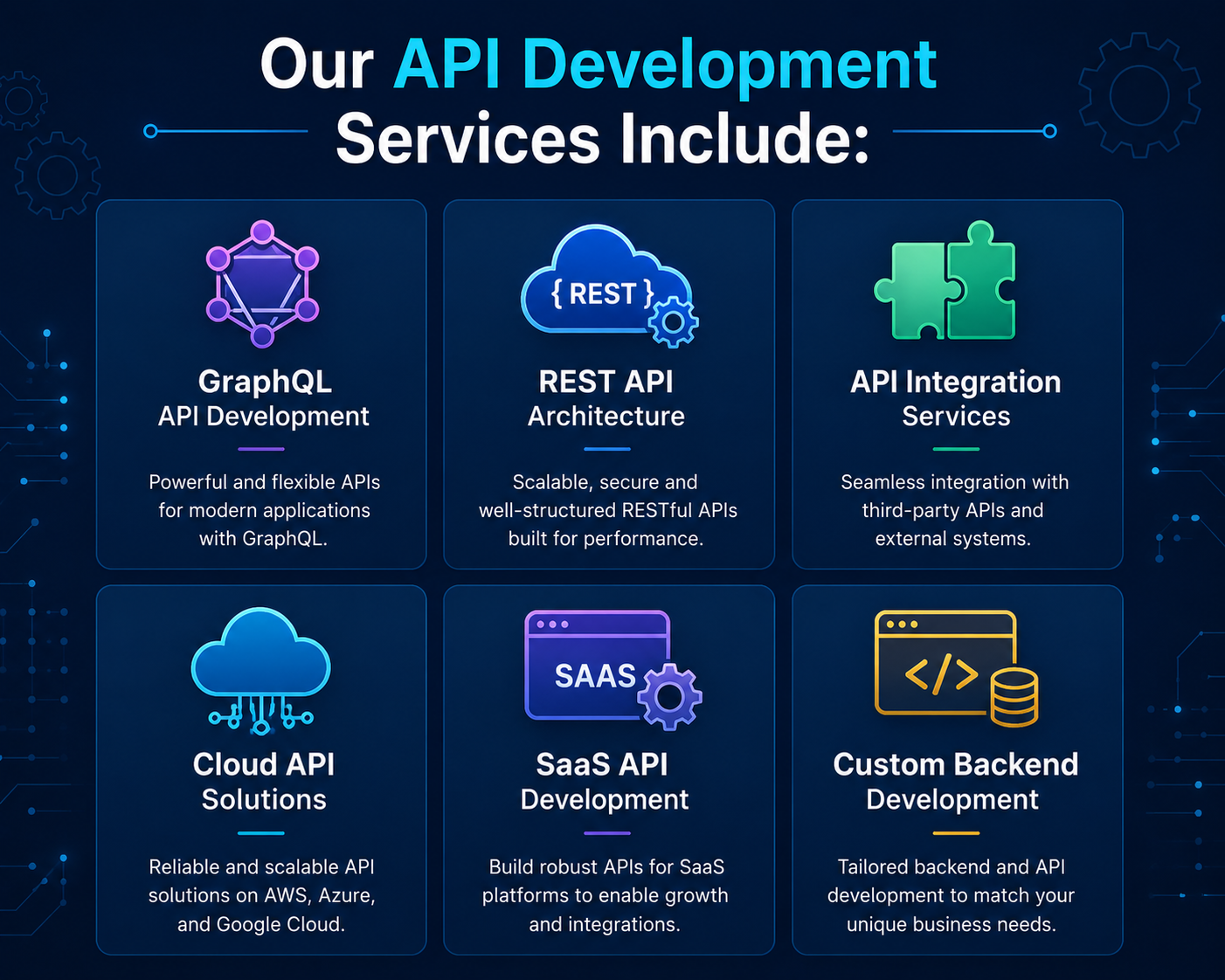
Need Scalable API Development for Your Business?PerfectionGeeks helps startups, enterprises, and SaaS companies build secure and scalable GraphQL and REST API solutions for web applications, mobile apps, cloud platforms, and enterprise systems. Our API development services include:
With 200+ successful projects delivered since 2014, PerfectionGeeks helps businesses build high-performance APIs designed for scalability, security, and future growth. 👉 Get Free Consultation Today |
Advantages of REST APIs
REST APIs remain one of the most widely used API architectures because of their simplicity, scalability, and compatibility with existing systems. REST follows standard HTTP protocols and resource-based endpoints, making it easier for developers to understand and implement.
One of the key advantages of REST APIs is strong caching support. REST endpoints work efficiently with browser caching, CDNs, and HTTP optimization techniques, improving performance for large-scale applications.
REST APIs are also highly suitable for:
- Public APIs
- Microservices architectures
- CRUD-based applications
- Enterprise systems
- Third-party integrations
Another major advantage is ecosystem maturity. REST APIs have extensive tooling, documentation, and community support, making them reliable for long-term software projects.
Businesses looking for stable and standardized API architectures often continue to prefer REST-based systems in 2026.
Understanding the Basics
Before going deeper into the rest vs graphql api comparison, it’s important to clearly understand what each one actually does.
What is REST API?
REST is a traditional way of building APIs where each type of data is accessed through a separate endpoint. For example, if you want users and their orders, you may need to call two or more endpoints. This approach is simple and predictable. That’s why it is still widely used in rest api development services. Developers like REST because it’s easy to understand and quick to implement.
What is GraphQL?
GraphQL works differently. Instead of multiple endpoints, it uses a single endpoint where you can request exactly the data you need. You define your query, and the server responds with only that data. This gives more control to the frontend. It also reduces unnecessary data transfer, which is why many modern companies prefer graphql development services.
When GraphQL Clearly Wins
GraphQL is not just a buzzword — it solves real problems that REST struggles with.
Mobile Applications GraphQL reduces payload sizes by 40–70%, which is critical for mobile apps where bandwidth and performance matter.
Complex Data Relationships Need user → orders → products → reviews in one query? GraphQL handles this elegantly without multiple round-trips.
Multiple Client Types Web, mobile, and third-party clients often need different data shapes. GraphQL lets each client request exactly what it needs.
Rapid Frontend Iteration Frontend teams can move faster without waiting for backend changes, since GraphQL queries are flexible.
When REST Clearly Wins
REST is still powerful and widely used, especially for simpler use cases.
Simple CRUD Operations If your app just needs predictable data shapes, REST is easier and faster to implement.
Public APIs REST APIs are widely understood, making them ideal for third-party developer ecosystems.
Heavy CDN Caching REST responses cache easily with HTTP and CDN, making it perfect for high-traffic public endpoints.
Microservices Internal Communication REST works well for service-to-service communication, though gRPC often outperforms both.
GraphQL Federation for Microservices
Large enterprises often run dozens or even hundreds of microservices. Each microservice might expose its own API, which quickly becomes messy for frontend teams who need to stitch together data from multiple sources. This is where GraphQL Federation comes in it unifies all those microservices into a single, coherent API layer.
How Federation Works
Instead of having separate REST endpoints for each service, Federation allows you to:
- Define subgraphs (individual GraphQL schemas owned by each microservice).
- Combine them into a supergraph (a unified schema that clients query).
- Route queries intelligently to the right microservice, then merge results seamlessly.
This means frontend teams only query one API, even though the data comes from multiple backend services.
Apollo Federation v2 — The Enterprise Standard
- Apollo Federation v2 is the most widely adopted framework for GraphQL Federation.
- It introduces improved directives, better schema composition, and more robust error handling.
- Enterprises rely on it because it scales across hundreds of microservices while keeping schemas manageable.
Apollo Router (Rust-Based) for High-Performance Gateways
- The Apollo Router, built in Rust, is designed for speed and efficiency.
- It acts as the gateway that receives client queries, breaks them into subqueries, and routes them to the right microservices.
- Compared to Node.js-based gateways, Apollo Router delivers much higher throughput and lower latency — critical for enterprise-scale applications.
When Federation Makes Sense
Federation is not for every project. It shines in scenarios like:
- Multiple microservices that need to present a unified API to clients.
- Complex enterprise apps where different teams own different services but need a single API layer.
- Avoiding API gateways that simply proxy requests without schema-level integration.
If you’re running a small SaaS with just one backend, Federation may be overkill. But for enterprises with distributed teams and services, it’s a game-changer.
The Hybrid Approach (Most Enterprise Apps)
In real-world applications, the decision is rarely about choosing only one technology. Most successful companies don’t strictly follow GraphQL or REST—they combine both to get better results.
GraphQL is usually used for client-facing APIs, such as web and mobile applications. The reason is simple: it gives frontend teams flexibility. They can request exactly the data they need without depending too much on backend changes. This improves performance and speeds up development, especially when different devices need different data formats. At the same time, REST is commonly used for internal services. Inside a system, simplicity and reliability matter more than flexibility. REST APIs are easier to build, test, and maintain, which makes them a strong choice for service-to-service communication within the backend.For even faster communication between microservices, many companies use gRPC. It is designed for high performance and low latency, making it ideal for internal operations where speed is critical.
When you combine all three:
- GraphQL handles the frontend experience
- REST keeps backend services simple and organized
- gRPC ensures fast internal communication
This hybrid approach gives you the best balance of flexibility, performance, and scalability. That’s why it is considered one of the most practical outcomes of the rest vs graphql api comparison, especially for large and growing applications.
The N+1 Problem — GraphQL's Biggest Challenge
GraphQL is powerful, but it has a well-known performance issue called the N+1 problem.This happens when GraphQL executes multiple database queries for related data. For example, fetching users and their orders may result in one query for users and multiple queries for each user’s orders.This can slow down your application significantly.The solution is to use tools like DataLoader. DataLoader batches multiple requests into a single query and caches results efficiently.
Every team offering graphql development services must address this issue before launching a production system.
How to Decide Between GraphQL and REST
Instead of overthinking or following trends, the decision between GraphQL vs REST API should be based on your product’s actual needs. Both are valid approaches, but each shines in different scenarios.
Choose GraphQL if:
Your app has complex data relationships: For example, fetching a user along with their orders, products, and reviews in one query.
You need flexible data fetching: Clients can request exactly the data they need, reducing over-fetching and under-fetching.
You are building mobile or multi-platform apps: GraphQL reduces payload sizes, which improves performance on bandwidth-limited devices.
Choose REST if:
Your app is simple and predictable: CRUD operations with straightforward data structures are easier with REST.
You need fast development: REST is widely understood, has a low learning curve, and can be implemented quickly.
You rely heavily on caching: REST works seamlessly with HTTP caching and CDNs, making it ideal for public APIs.
Both approaches are valid. The right choice depends on your use case, not on popularity or trends.
Common Mistakes to Avoid
Many teams fall into traps when choosing between REST vs GraphQL API. Here are the pitfalls to watch out for:
Choosing GraphQL just because it’s popular
GraphQL adds complexity with schemas, resolvers, and caching. If your app doesn’t need flexible queries or complex relationships, REST may be simpler and more efficient.
Sticking to REST when the app becomes too complex
As applications grow, REST can lead to multiple round-trips and over-fetching. Ignoring GraphQL in these cases can cause performance bottlenecks.
Ignoring caching and performance optimization
No matter which approach you choose, planning for scalability is essential. REST relies on HTTP caching, while GraphQL requires custom caching strategies. Neglecting this leads to slow APIs and poor user experience.
When to Use GraphQL vs REST API
Choosing the right API architecture depends on the complexity and scalability requirements of your application.
Use GraphQL When:
- Your frontend requires flexible data fetching
- You need real-time application updates
- Your application handles complex datasets
- Mobile performance optimization is important
- Multiple frontend teams require custom data structures
Use REST API When:
- You need simple resource-based architecture
- Strong caching is required
- Your application uses standard CRUD operations
- Public API consistency is important
- Simpler implementation is preferred
In many enterprise systems, businesses now combine GraphQL and REST APIs together to achieve both flexibility and scalability
Industry Statistics on GraphQL and REST APIs
|
|
.
Frequently Asked Questions
Quick answers related to this article from PerfectionGeeks.
1. Is GraphQL better than REST API?
2. What is the main difference between GraphQL and REST API?
3. Is GraphQL faster than REST?
4. When should I use REST API?
5. Which companies use GraphQL?
Conclusion
The discussion around graphql vs rest api comparison 2026 is not about replacing one with the other. Both technologies are powerful and will continue to coexist. GraphQL offers flexibility, efficiency, and better performance for complex applications. REST offers simplicity, stability, and ease of use for straightforward systems. The smartest approach is to understand your product requirements and choose accordingly. In many cases, combining both approaches works best.

Shrey Bhardwaj is the Director & Founder of PerfectionGeeks Technologies, bringing extensive experience in software development and digital innovation. His expertise spans mobile app development, custom software solutions, UI/UX design, and emerging technologies such as Artificial Intelligence and Blockchain. Known for delivering scalable, secure, and high-performance digital products, Shrey helps startups and enterprises achieve sustainable growth. His strategic leadership and client-centric approach empower businesses to streamline operations, enhance user experience, and maximize long-term ROI through technology-driven solutions.

(1).jpg)