
Published 16 July 2026
Technology
Google Nano Banana for Business Marketing: Building Smarter Creative Workflows
Marketing teams aren't struggling because they lack ideas—they're struggling because every campaign demands more content than ever before.
A product launch might require website graphics, paid social ads, email banners, LinkedIn posts, landing page visuals, and marketplace images, all delivered within days. For many businesses, especially small and mid-sized companies, producing that volume of creative work has become one of marketing's biggest operational challenges.
- Marketing teams need scalable content creation. Modern campaigns require a large volume of creative assets across multiple channels, making efficient production workflows essential.
- Google Nano Banana accelerates visual content creation. AI-powered image generation helps businesses create high-quality marketing visuals in minutes, reducing production time and speeding up campaign launches.
- Integrated workflows improve marketing efficiency. Using AI tools within a unified platform minimizes context switching, streamlines collaboration, and keeps creative assets organized.
- Consistent branding becomes easier to maintain. Centralized creative workflows help businesses produce website graphics, social media posts, ad creatives, and product visuals that align with their brand identity.
- AI enables rapid creative testing. Marketing teams can quickly generate multiple design variations, compare performance, and optimize campaigns using real-world engagement data.
- Creative flexibility supports diverse marketing needs. Businesses can produce a wide range of assets—from product images and promotional banners to marketplace listings and advertising creatives—using AI-powered tools.
- Automation frees teams to focus on strategy. By reducing repetitive design tasks, AI allows marketers to spend more time on customer research, campaign planning, messaging, and performance analysis.
- Scalable AI solutions benefit businesses of all sizes. Small and medium-sized businesses can produce enterprise-quality marketing content without significantly increasing design resources or costs.
- Connected AI ecosystems deliver greater value. Combining image generation, video creation, and campaign asset management within one platform simplifies marketing operations and improves productivity.
- Workflow matters more than individual AI models. Long-term marketing success depends on building efficient, repeatable creative processes rather than relying solely on the latest AI technology.
- Faster execution creates a competitive advantage. Businesses that can move from campaign concept to launch quickly are better positioned to respond to market opportunities and customer demands.
- AI is transforming modern marketing operations. Organizations that adopt connected AI-powered creative workflows can improve efficiency, reduce production costs, maintain brand consistency, and scale content creation with confidence.
Artificial intelligence is helping close that gap. But as more AI models enter the market, business leaders are asking a different question: Which tools actually fit into a workflow that supports growth rather than adding more complexity? Business organizations are increasingly evaluating AI based on its ability to improve productivity and marketing execution, not simply on individual features.
Why Google Nano Banana Is Attracting Business Attention
Image generation has improved dramatically over the past few years, making it possible to produce commercial-quality visuals in minutes instead of days. That speed is particularly valuable for companies running multiple campaigns across different channels.
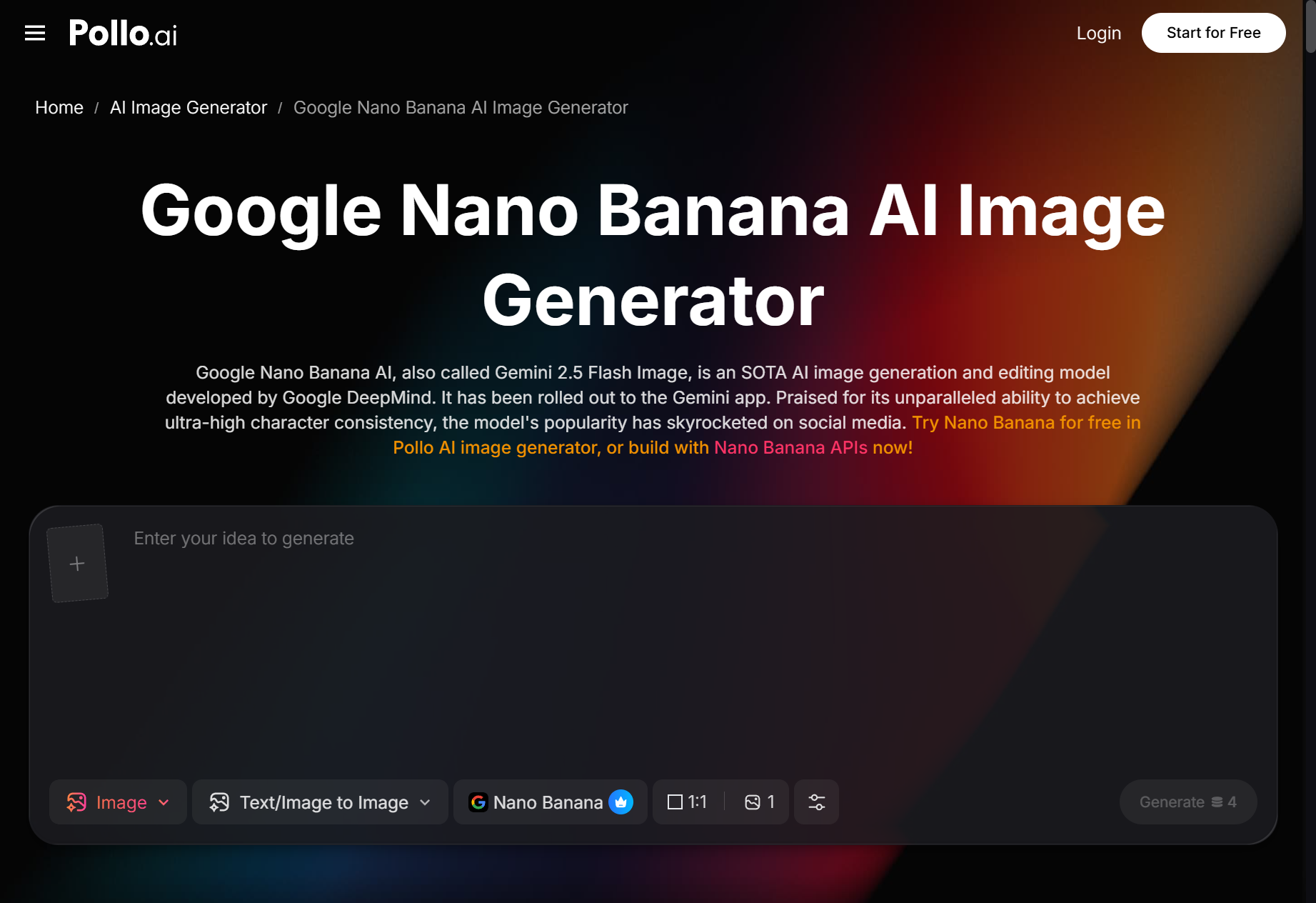
Rather than offering an AI model in isolation, Pollo AI brings Google Nano Banana into its Marketing Studio, where it becomes part of a complete creative workflow for marketers.
Instead of generating only one image at a time, teams can build collections of product visuals, promotional banners, advertising graphics, AI model photography, Amazon A+ content, and social media creatives from the same workspace. This reduces the need to switch between multiple design applications while helping maintain a consistent visual identity throughout a campaign.
For growing businesses, the benefit isn't simply producing content faster—it's creating a repeatable process that allows marketing teams to respond quickly to new opportunities.
Marketing Success Depends on Workflow, Not Just AI Models
Many organizations begin experimenting with AI by adopting individual tools for writing, design, or video production. While each application may solve a specific problem, managing several disconnected platforms often creates unnecessary friction.
As content demands continue to grow, companies are placing greater value on integrated workflows that simplify collaboration and accelerate production. Marketing teams can move from campaign planning to creative production more efficiently when images, videos, and promotional assets are managed within the same environment.
This approach also makes it easier to test multiple creative concepts. Rather than committing to a single visual direction, marketers can quickly compare different designs, gather performance data, and refine campaigns based on real customer engagement.
The result is a more agile marketing process that supports continuous improvement instead of one-time creative decisions.
Businesses Need Creative Flexibility
Every campaign has different objectives. A software company may need clean product illustrations for a website, while a retail brand may prefer bold promotional graphics or seasonal advertising visuals.
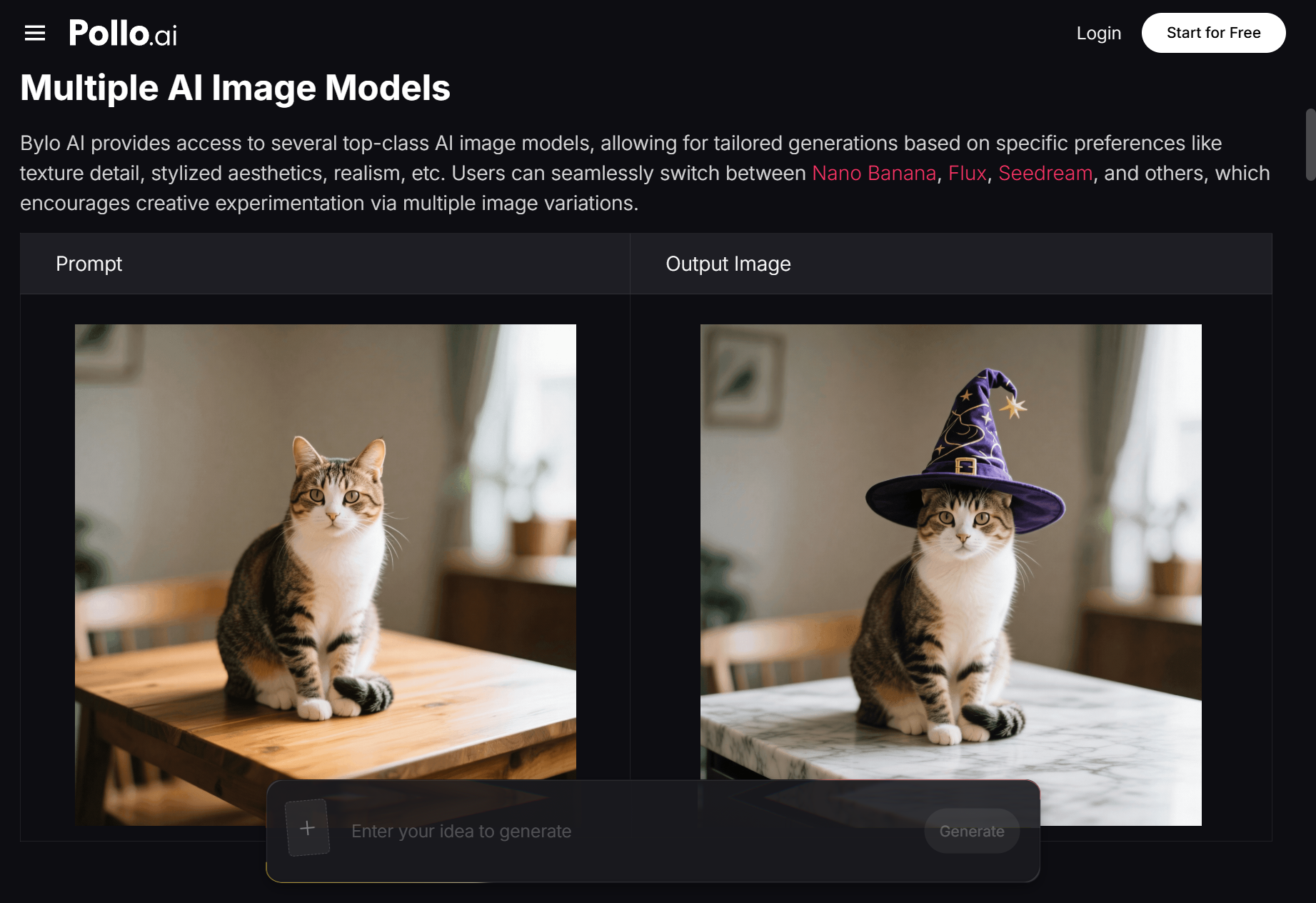
To support different creative needs, Pollo AI also includes Bylo AI within its Marketing Studio. This gives businesses another option for developing visual concepts without interrupting their existing workflow.
Having access to multiple AI-powered creative tools in one platform allows marketing teams to experiment with different styles while keeping projects organized. Instead of managing separate subscriptions and learning new interfaces, they can focus on building campaigns that support measurable business goals.
For agencies and in-house marketing departments alike, this flexibility makes creative production both faster and more scalable.
AI Gives Marketing Teams More Time for Strategy
One of the most valuable outcomes of AI isn't automation for its own sake. It's giving marketing professionals more time to focus on work that creates business value.
When repetitive production tasks become faster, teams can spend more time understanding customers, improving messaging, testing campaign ideas, and measuring results. Many businesses are now integrating AI into everyday marketing operations to improve efficiency while allowing employees to concentrate on higher-value strategic work.
This shift is particularly important for companies competing in fast-moving markets, where the ability to launch campaigns quickly can become a significant competitive advantage.
The Future of Business Marketing Is Built Around Connected Workflows
AI models will continue to evolve, bringing better image quality, improved prompt understanding, and new creative capabilities. But for most businesses, long-term success will depend less on adopting every new model and more on creating efficient systems that support consistent marketing execution.
Frequently Asked Questions
Quick answers related to this article from PerfectionGeeks.
1. How can Google Nano Banana improve business marketing workflows?
2. Why are integrated AI marketing workflows better than using separate AI tools?
3. Is Google Nano Banana suitable for small and medium-sized businesses?
Conclusion
Pollo AI's Marketing Studio reflects that direction by bringing together AI-powered image generation, video creation, advertising assets, product visuals, and campaign production in one environment.
For businesses looking to scale their marketing without dramatically increasing production costs, the real opportunity isn't simply using better AI. It's building a workflow that helps every campaign move from concept to execution faster, more consistently, and with greater creative flexibility.

Written By Shrey Bhardwaj
Director & Founder
Shrey Bhardwaj is the Director & Founder of PerfectionGeeks Technologies, bringing extensive experience in software development and digital innovation. His expertise spans mobile app development, custom software solutions, UI/UX design, and emerging technologies such as Artificial Intelligence and Blockchain. Known for delivering scalable, secure, and high-performance digital products, Shrey helps startups and enterprises achieve sustainable growth. His strategic leadership and client-centric approach empower businesses to streamline operations, enhance user experience, and maximize long-term ROI through technology-driven solutions.