
Published 20 January 2026 | Updated 20 January 2026
Software
What Is Embedded Software Development? A Complete Step-by-Step Guide
Embedded software is the hidden engine powering countless everyday devices from cars and medical equipment to smart home gadgets. Unlike regular apps, this software is specifically designed to control hardware, making devices smarter and more efficient. Understanding embedded software development reveals how these systems work seamlessly behind the scenes. Our guide will cover the definition of embedded software development, its significance, and the step-by-step method of developing it in non-technical terms.
What Is Embedded Software Development?
Embedded software development is the process of making software that operates on specific hardware systems known as embedded systems. This software is not like mobile or web applications; it is designed for one particular purpose and operates in close cooperation with the hardware components.
In simple terms:
“Embedded software is built to control hardware directly and perform one or a few specific tasks reliably.”
Embedded system software development is mainly about performance, reliability, and real-time response, and it does not emphasize visual interfaces at all.
How Embedded Software Works in Embedded Systems
Embedded software is the main connection between the hardware components and the environment. It manages the system's performance and responsiveness to inputs while maintaining accuracy, efficiency, and real-time operation.
Hardware Layer
The hardware layer is made up of the most necessary physical parts such as microcontrollers, processors, sensors, and memory units. These hardware pieces gather data from the environment and provide the necessary support for the software to operate. The embedded system cannot communicate with the outside world without this layer.
Embedded Software Layer
This layer contains the programmed instructions that tell the hardware what actions to perform. The software controls timing, data processing, and decision-making based on predefined logic. It ensures the hardware functions correctly and responds instantly to changes.
Input and Output
Embedded systems receive input from sensors, switches, or buttons, which the software processes in real time. Based on this input, the system produces output through displays, motors, alarms, or signals. This continuous input–output cycle allows devices to operate automatically and accurately.
Example: Automotive Embedded Software Development
In cars, sensors are constantly checking and recording the speed, the pressure applied to the brakes, and the condition of the engine. Embedded software will perform data analysis within milliseconds and choose the quickest option. The system, acting on the analysis, will alter the braking force or the engine performance, respectively, instantaneously to ensure safety and efficiency.
This tight integration between software and hardware is what makes embedded software development unique, highly precise, and more hardware-focused than traditional software development.
Types of Embedded Software Systems
Embedded systems are classified based on their function and usage environment. Knowing the type helps choose the right development strategy.
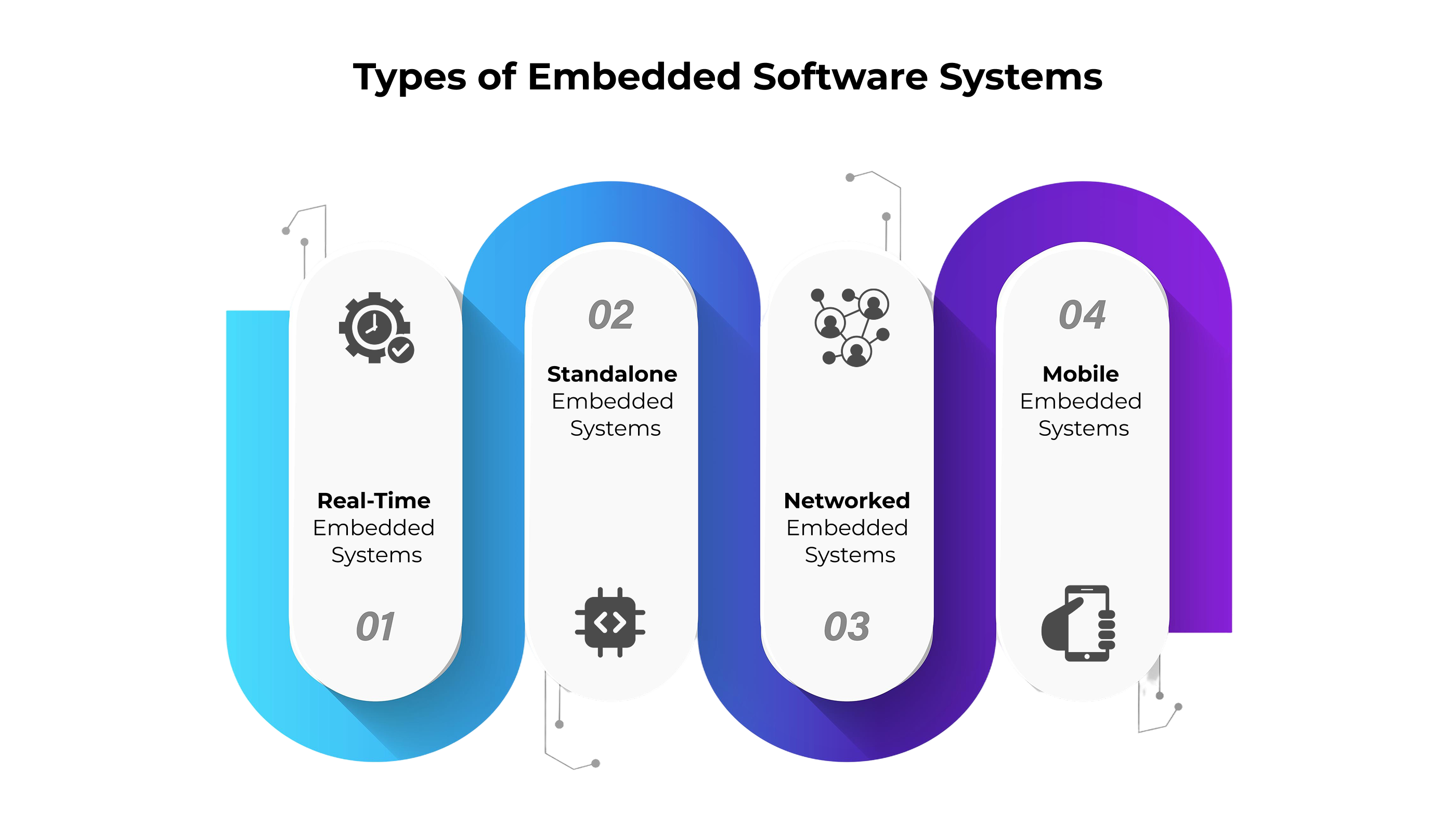
1. Real-Time Embedded Systems: These systems must respond immediately to inputs within strict deadlines to ensure safety and reliability. They are critical in applications like airbags, medical devices, and industrial machines where timing is crucial.
2. Standalone Embedded Systems: Standalone systems work independently without any network connection. They perform dedicated tasks, such as controlling microwave ovens, calculators, and digital cameras, without needing external communication.
3. Networked Embedded Systems: These systems are connected to other devices or the internet, enabling communication and data sharing. Examples include smart TVs, routers, and many IoT devices that rely on network connectivity to function.
4. Mobile Embedded Systems: Mobile embedded systems are small and light-weight, created for easy carrying around, and usually battery-operated. The devices worn on the body, fitness trackers, and smartphones are typical examples that come under this category with emphasis on personal mobility and convenience.
8 Key Steps to Build Embedded Software Effectively
Embedded software development follows a clear, step-by-step process to ensure the system is stable, efficient, and reliable.
Step 1: Requirement Analysis
The first step is to ascertain and lay down the functions of the embedded system in the most practicable way.It includes understanding performance goals, memory constraints, power consumption, and safety standards. Clear requirements of the project help to avoid very expensive mistakes that might happen later.
Step 2: Hardware Selection
Choosing the right hardware is crucial for performance and compatibility. This includes selecting microcontrollers, processors, sensors, and communication modules that best fit the project’s needs and constraints.
Step 3: System Architecture Design
When the development of the systems architecture design is done, it shows how the software modules interact with each other and the hardware. Good architecture will not only guarantee data to be passing smoothly but also the efficient use of the resources.
Step 4: Software Design
This step focuses on creating detailed designs for software components, including how data will be processed and how control logic will operate. It sets the foundation for clean, maintainable code.
Step 5: Coding and Implementation
Using embedded-friendly languages like C or C++, developers write the actual code according to the design. Efficient and optimized coding is essential to meet memory and speed requirements.
Step 6: Testing and Debugging
Testing is a procedure that ascertains if the software operates as expected in every possible scenario. It includes the verification of the different aspects such as functionality, timing precision, memory consumption and error handling. On the other hand, debugging repairs those problems that were found and thus the system becomes more reliable.
Step 7: Integration
In this phase, software is combined with the actual hardware, and the whole system is tested as a unit. This step ensures that the software interacts correctly with hardware components in real-world conditions
Step 8: Deployment and Maintenance
The last stage is where the embedded software gets loaded on the targeted devices and afterwards it continues being monitored over a period of time. System maintenance will consist of supplying updates, repairing defects, and carrying out enhancements so as to prevent any interruptions in system operation.
In embedded systems, testing is not optional it’s critical to guarantee safety, performance, and reliability throughout the product’s life.
Tools & Technologies Used in Embedded Software Development
The right tools make embedded development efficient and reliable.
| Category | Common Tools |
| Programming Languages | C, C++, Embedded C, Python |
| Operating Systems | RTOS, Embedded Linux |
| IDEs | Keil, IAR, Eclipse |
| Debugging Tools | JTAG, Logic Analyzers |
| Hardware Platforms | ARM, AVR, PIC |
These tools support low-level control, memory optimization, and real-time performance.
Benefits, Challenges & Best Practices in Embedded Software Development
Benefits of Embedded Software Development
Embedded software brings several key advantages that make it essential in modern devices:
High Performance and Efficiency: Embedded software is tailored to specific hardware, ensuring fast and efficient operation without unnecessary overhead. This results in smooth and reliable performance even on limited resources.
Reliable Real-Time Response: Many embedded systems must react instantly to inputs, such as in medical devices or automotive safety systems. Embedded software guarantees timely responses critical for safety and accuracy.
Task Optimization: Unlike general-purpose software, embedded software is designed to perform specific functions very well, maximizing system effectiveness.
Low Power Consumption: Since many embedded devices run on batteries or limited power, the software is optimized to conserve energy, extending device life.
Challenges in Embedded Software Development
Developing embedded software comes with unique hurdles that require careful attention:
Limited Memory and Processing Power: Embedded systems often have strict constraints on memory and CPU speed, forcing developers to write highly efficient code.
Hardware Dependency: The software must closely interact with specific hardware components, making portability and updates more complex. Developers need deep hardware knowledge.
Complex Testing Requirements: Testing embedded software is challenging because it must be validated in real-world conditions and on actual hardware, not just in simulations.
Security Vulnerabilities: As embedded devices become connected (IoT), they face new security risks, requiring robust protection measures to prevent attacks and data breaches.
Best Practices for Successful Embedded Software Development
Following proven practices helps ensure embedded software is reliable, maintainable, and efficient:
Write Clean, Modular Code: Organize code into small, manageable modules with clear functions. This makes the software easier to understand, debug, and update.
Optimize Memory Usage: Carefully manage memory allocation and use to fit within hardware limits without sacrificing performance or stability.
Test Under Real-World Conditions: Conduct thorough testing on actual devices and environments to catch issues that simulations may miss. This ensures software behaves correctly in practice.
Follow Coding Standards and Documentation: Maintain consistent coding styles and document all modules clearly. Good documentation supports future maintenance and team collaboration.
Future Trends in Embedded Software Development
Embedded software development is continuously evolving as new technologies emerge, transforming how devices interact with the world. These advancements are driving innovation and creating smarter, more efficient embedded systems across industries.
AI-Powered Embedded Systems
AI (Artificial Intelligence) is becoming a must-have feature in embedded software, which allows machines to make smart choices on-site rather than depending on the cloud for computing power. Faster processing, better automation, and more intelligent responses in applications like voice assistants, predictive maintenance, and image recognition are some of the benefits that AI has brought.
Edge Computing
Edge computing brings data processing closer to the source—right on the embedded device itself. This reduces latency, lowers bandwidth usage, and improves real-time performance, which is essential for applications such as autonomous vehicles, industrial automation, and smart surveillance.
Advanced IoT Integration
IoT is a growing trend that connects numerous embedded devices and at the same time, continues to expand. In the future, embedded systems will have the capability of deeper integration with IoT platforms that will allow them to communicate smoothly, perform better in analytics with the data made available, and create smarter environments that react more quickly.
Cybersecurity-Focused Designs
As embedded systems become more connected, cybersecurity has become a top priority. Future designs will emphasize secure boot processes, encrypted communication, and robust firmware update mechanisms to protect against growing cyber threats and ensure data privacy.
Autonomous Vehicles and Smart Factories
Embedded software is at the heart of autonomous vehicles and Industry 4.0 smart factories. These systems require highly reliable, real-time processing to enable self-driving cars, robotics, and intelligent manufacturing processes, driving the demand for more sophisticated embedded solutions.
How PerfectionGeeks Helps in Embedded Software Development
PerfectionGeeks brings structured expertise and industry experience to embedded system software development. The team works closely with hardware and business requirements to deliver reliable, scalable, and secure embedded solutions.
Their approach focuses on:
- Clear requirement analysis
- Robust embedded software development process
- Industry-specific solutions, including automotive embedded software development
- End-to-end embedded software development services
Frequently Asked Questions
Quick answers related to this article from PerfectionGeeks.
1. What is embedded software development ?
2. How is embedded software different from application software?
3. Which language is best for embedded software development?
4. Is embedded software development difficult?
Conclusion
Embedded software development is the backbone of modern technology. It may not always be visible, but it plays a critical role in making devices smart, responsive, and reliable. By understanding what embedded software development is, how it works, and how it is built step by step, you can better appreciate the complexity and importance of these systems.With industries continually embracing automation and smart devices, embedded software will continue to be a major source of innovation.

Shrey Bhardwaj is the Director & Founder of PerfectionGeeks Technologies, bringing extensive experience in software development and digital innovation. His expertise spans mobile app development, custom software solutions, UI/UX design, and emerging technologies such as Artificial Intelligence and Blockchain. Known for delivering scalable, secure, and high-performance digital products, Shrey helps startups and enterprises achieve sustainable growth. His strategic leadership and client-centric approach empower businesses to streamline operations, enhance user experience, and maximize long-term ROI through technology-driven solutions.