
Published 22 July 2026
Technology
The Refurbishment Bottleneck Nobody Talks About: Device Inspection at Scale
The biggest challenge in the second-hand smartphone industry is not sourcing devices.
It is not pricing them.
And it is not even finding buyers.
The real bottleneck happens much earlier.
It happens during inspection.
Every smartphone entering a refurbishment, buyback, or wholesale operation must be evaluated before it can move to the next stage. Its cosmetic condition must be assessed. Its hardware must be tested. Its value must be determined. Its grade must be assigned.
Until that happens, everything else stops.
- Device inspection is the hidden bottleneck in smartphone refurbishment operations, slowing down inventory processing, pricing, and resale workflows.
- Growing volumes of second-hand devices require scalable inspection solutions that traditional manual processes cannot efficiently handle.
- Manual inspection creates challenges such as inconsistent grading, higher labor costs, longer processing times, and valuation errors.
- Automated inspection systems help standardize device evaluation by using AI, imaging technology, and predefined grading criteria.
- Faster inspection improves inventory turnover, allowing businesses to sell devices sooner and improve cash flow.
- Consistency is more valuable than speed alone, as accurate grading builds trust among suppliers, buyers, and customers.
- Automation does not replace human expertise; it supports inspectors by handling repetitive tasks and enabling better quality control.
- Digital inspection records improve transparency, reporting, audits, and operational decision-making.
- Businesses across refurbishment, trade-in, buyback, wholesale, recycling, and reverse logistics can benefit from automated inspection workflows.
- Modernizing device inspection is essential for companies looking to scale efficiently while maintaining quality and customer satisfaction.
Inventory sits on shelves.
Trade-in offers are delayed.
Orders cannot be fulfilled.
Revenue is tied up in devices waiting to be processed.
As the secondary smartphone market continues to grow, inspection has quietly become one of the industry's biggest operational constraints.
Fortunately, it is also one of the biggest opportunities for improvement.
Why Inspection Has Become the Industry's Hidden Bottleneck
According to IDC, global shipments of used and refurbished smartphones continue to increase as consumers and businesses look for more sustainable and cost-effective alternatives to new devices.
That growth creates new operational challenges.
Every additional device entering a facility requires multiple decisions.
Someone must determine:
- Is the device functional?
- What cosmetic condition is it in?
- Does it have hidden defects?
- What grade should it receive?
- What is its resale value?
Multiply those decisions across hundreds or thousands of devices every day.
Inspection quickly becomes the slowest stage of the workflow.
Unlike inventory management or shipping, inspection cannot simply be accelerated by adding more paperwork.
It depends heavily on skilled labor.
That creates a scaling problem.
The Cost of Slow Inspection
Delayed inspections affect far more than processing times.
They influence the entire business.
When inspection becomes a bottleneck, companies often experience:
- Longer inventory turnaround
- Delayed listings
- Slower trade-in offers
- Increased labor costs
- Inconsistent grading
- Customer service delays
Perhaps most importantly, slow inspection reduces inventory velocity.
A device waiting for inspection cannot be sold.
For businesses operating on tight margins, every additional day in inventory affects cash flow.
Why Scaling Inspection Is So Difficult
Many companies respond by hiring more technicians.
While this increases capacity, it introduces new challenges.
More inspectors often means:
- More training
- Greater inconsistency
- Different grading interpretations
- Higher labor costs
- More quality reviews
Maintaining consistent inspection standards across multiple facilities becomes increasingly difficult.
A scratch considered acceptable by one technician may result in a lower grade from another.
The same device may receive different valuations depending on who performs the inspection.
This inconsistency creates problems throughout the supply chain.
Manual Inspection Was Never Designed for Today's Volumes
Traditional inspection processes evolved when refurbishment businesses handled far fewer devices.
Today's operations are very different.
Large wholesalers, retailers, carriers, and trade-in providers often process thousands of smartphones every week.
At that scale, even small inefficiencies become significant.
If each inspection takes just two additional minutes, processing 5,000 devices adds more than 160 extra labor hours.
That is the equivalent of four full-time work weeks.
Efficiency improvements are no longer optional.
They are essential.
Where Automation Changes the Process
Automation does not eliminate inspection.
It changes how inspection is performed.
Modern automated phone grading robot system solutions combine imaging technology, standardized grading rules, and artificial intelligence to evaluate cosmetic condition more consistently.
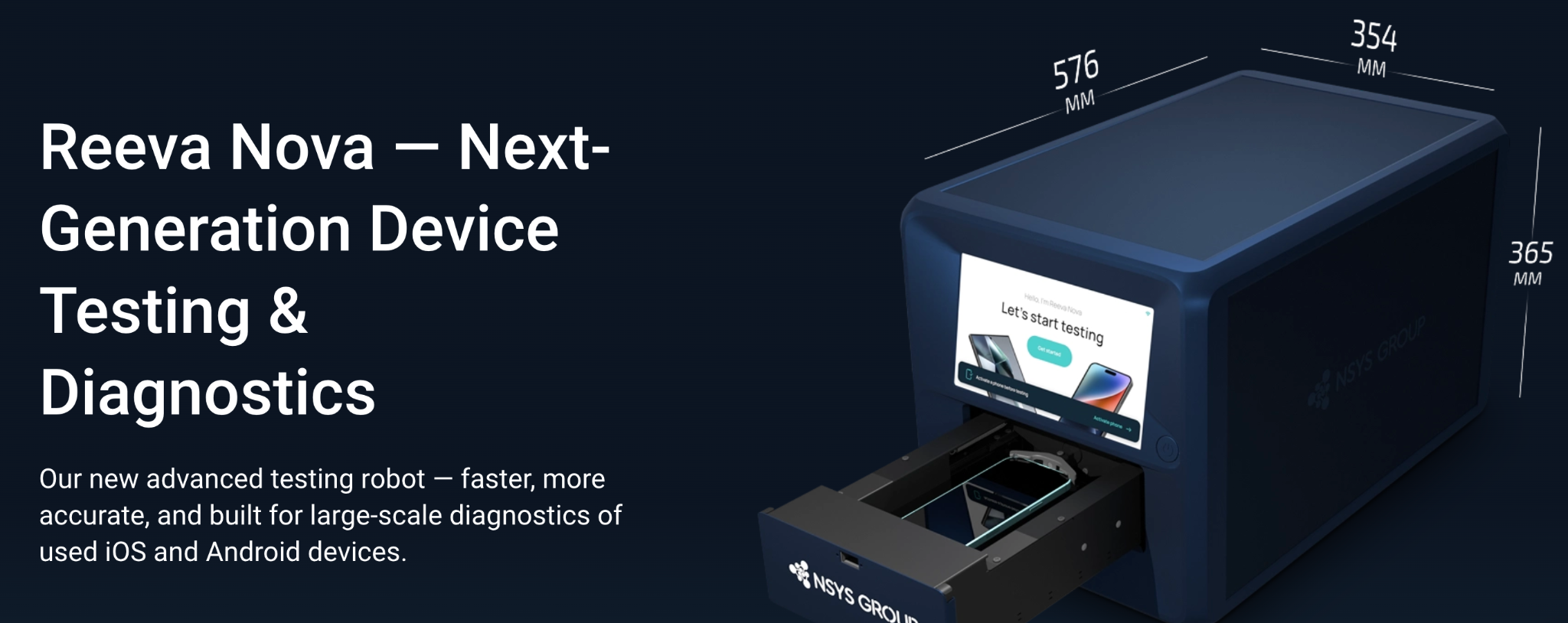
Instead of relying entirely on subjective visual assessments, automated systems analyze devices using predefined criteria.
This helps reduce variability while improving processing speed.
Automation also creates structured records that support quality assurance and future audits.
Inspection Is More Than Cosmetic Grading
Many people associate inspection with scratches and dents.
In reality, inspection covers multiple stages.
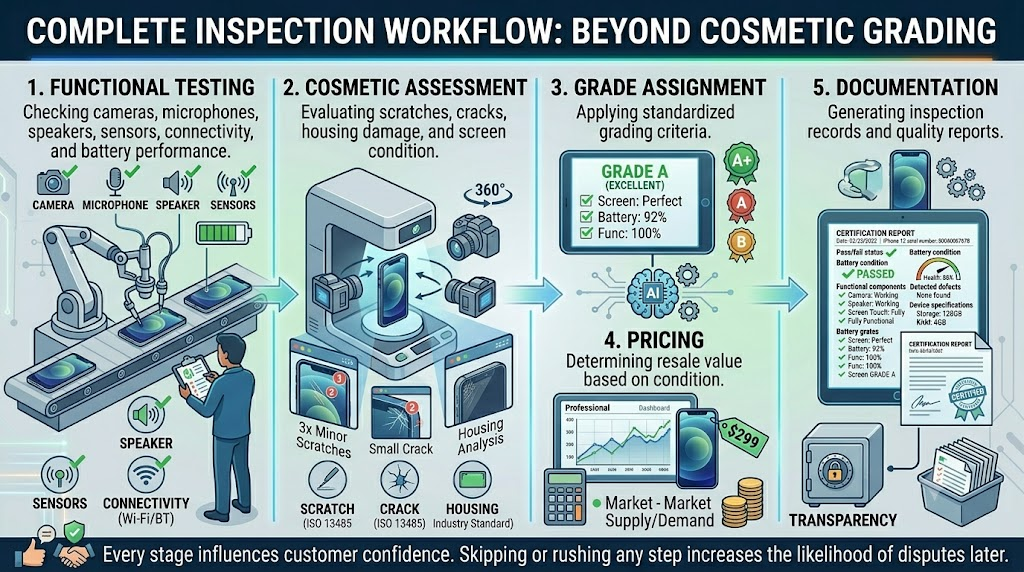
A complete workflow often includes:
Functional Testing
Checking cameras, microphones, speakers, sensors, connectivity, and battery performance.
Cosmetic Assessment
Evaluating scratches, cracks, housing damage, and screen condition.
Grade Assignment
Applying standardized grading criteria.
Pricing
Determining resale value based on condition.
Documentation
Generating inspection records and quality reports.
Every stage influences customer confidence.
Skipping or rushing any step increases the likelihood of disputes later.
Why Consistency Matters More Than Speed
Processing more devices is valuable.
Processing them consistently is even more valuable.
Imagine two facilities processing identical inventory.
One assigns different grades depending on the technician.
The other follows standardized inspection procedures supported by automation.
Which operation is more likely to:
- Produce predictable inventory?
- Build supplier confidence?
- Reduce customer complaints?
- Maintain consistent pricing?
The second operation.
Consistency creates trust throughout the supply chain.
Manual Inspection vs Automated Inspection
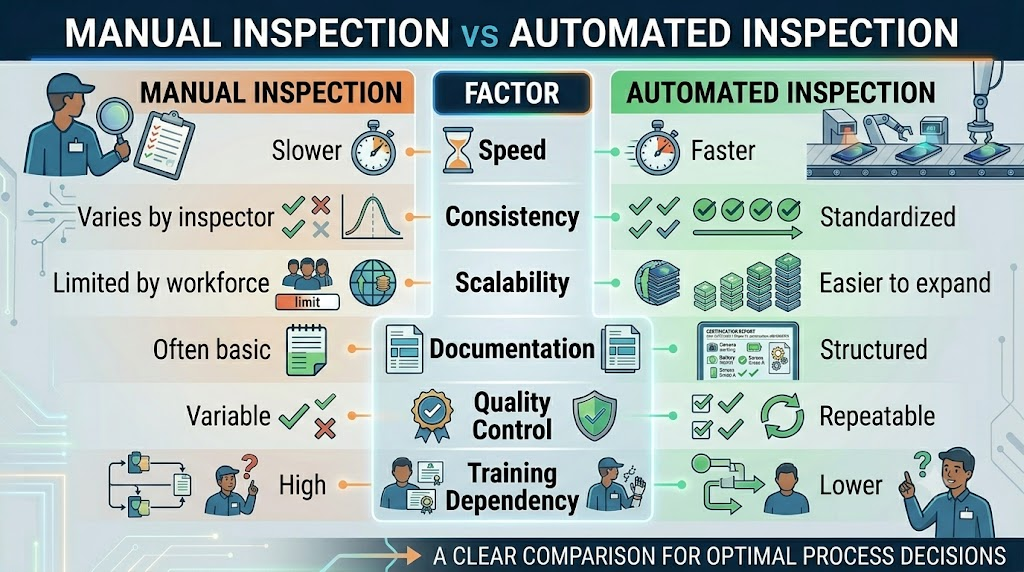
| Factor | Manual Inspection | Automated Inspection |
| Speed | Slower | Faster |
| Consistency | Varies by inspector | Standardized |
| Scalability | Limited by workforce | Easier to expand |
| Documentation | Often basic | Structured |
| Quality Control | Variable | Repeatable |
| Training Dependency | High | Lower |
Automation does not replace experienced inspectors.
Instead, it helps standardize repetitive tasks while allowing specialists to focus on exceptions and quality assurance.
The Operational Benefits of Automation
Businesses adopting automated inspection workflows often focus on more than labor savings.
Automation can help improve:
Inventory Turnover
Devices move through inspection faster.
Pricing Accuracy
Consistent grading supports more reliable pricing decisions.
Supplier Relationships
Standardized evaluations reduce disagreements.
Customer Satisfaction
Accurate grading helps align customer expectations with actual device condition.
Operational Visibility
Digital inspection records improve reporting and process improvement initiatives.
Why This Matters Beyond Refurbishment
Inspection is important across the entire second-hand device ecosystem.
The same challenges affect:
- Trade-in programs
- Buyback companies
- Mobile wholesalers
- Electronics recyclers
- Reverse logistics providers
- Insurance claim processors
Every organization handling pre-owned devices depends on accurate inspection.
Improving this stage benefits the entire workflow.
The Future of Device Inspection
Inspection is no longer just a quality control function.
It has become a strategic business capability.
As processing volumes continue to increase, businesses will need inspection systems that are:
- Faster
- More consistent
- Easier to scale
- Better documented
Automation will play an increasingly important role in achieving these goals.
Not because it replaces skilled professionals.
But because it allows them to work more efficiently while maintaining higher standards.
Frequently Asked Questions
Quick answers related to this article from PerfectionGeeks.
1. Why is device inspection important in refurbishment?
2. What causes inspection bottlenecks?
3. How does automated inspection improve efficiency?
4. Does automation replace human inspectors?
Conclusion
The biggest obstacle to scaling a refurbishment or trade-in operation is not always acquiring more devices.
Often, it is inspecting them quickly enough without sacrificing consistency.
That is why device inspection has become one of the most important operational challenges in the second-hand smartphone industry.
Companies that modernize this part of their workflow will be better positioned to process more inventory, improve quality, reduce disputes, and build stronger customer trust.
The bottleneck has never been the hardware.
It has been the process used to evaluate it.

Written By Andy
Author
Our authors and technology contributors bring valuable industry insights, practical expertise, and research-driven perspectives across emerging technologies, software development, artificial intelligence, mobile applications, and digital transformation. Through thoughtful analysis and experience-backed content, they aim to help businesses, startups, and technology enthusiasts make informed decisions, discover innovative solutions, and stay ahead in an evolving digital landscape.
.png)