Published 8 July 2025 | Updated 26 May 2026
Tech
12 Ways AI is Revolutionizing the Fashion Industry in 2025
Artificial Intelligence (AI) is no longer a futuristic concept—it's here, and it's transforming industries in real-time. One of the most dynamic and creative sectors being reshaped by AI is the fashion industry. From design innovation to customer personalization, AI in fashion is altering how brands create, sell, and connect with their audiences.
As we navigate 2025, artificial intelligence in the fashion industry is making significant strides, introducing smarter, faster, and more sustainable ways of doing business. Here's a look at 12 powerful ways AI is revolutionizing the fashion industry in 2025.
Transform Your Digital Experience
Artificial Intelligence in the fashion industry in India refers to the use of AI technologies like machine learning, computer vision, and predictive analytics to improve design, production, trend forecasting, and customer personalization. It helps fashion brands reduce waste, predict trends faster, and deliver personalized shopping experiences across digital and offline retail channels.
- AI is revolutionizing the fashion industry through automation, personalization, and data-driven decision-making.
- It enables accurate trend forecasting by analyzing social media, customer behavior, and market data.
- Personalized shopping experiences powered by AI significantly improve customer engagement and conversion rates.
- AI-driven tools like virtual try-ons and 3D prototyping are reshaping how fashion is designed and sold.
- Inventory optimization and demand forecasting help reduce overproduction and operational costs.
- Sustainable fashion is supported by AI through waste reduction and efficient resource planning.
- By 2025–2026, AI adoption in fashion is becoming essential for competitiveness and growth.
What is Artificial Intelligence in the Fashion Industry?
Artificial Intelligence (AI) in the fashion industry refers to the use of advanced technologies such as machine learning, computer vision, and predictive analytics to improve how fashion brands design, produce, market, and sell clothing.
In simple terms, AI helps fashion companies make smarter decisions by analyzing large amounts of data—like customer preferences, shopping behavior, social media trends, and sales history—to predict what styles will be popular and how to deliver better shopping experiences.
How AI is Used in Fashion
AI is applied across almost every stage of the fashion lifecycle:
- Design & Creativity: AI tools generate new clothing designs, color combinations, and style ideas based on trend data.
- Trend Forecasting: AI analyzes global fashion data and predicts upcoming trends before they become mainstream.
- Personalized Shopping: E-commerce platforms use AI to recommend outfits based on user behavior and preferences.
- Inventory Management: AI helps brands avoid overproduction by predicting demand more accurately.
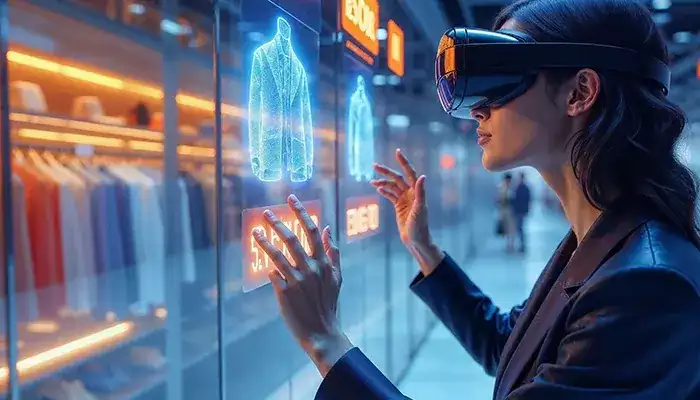
- Virtual Try-On: Customers can see how clothes look on them using AR and AI-powered simulations.
- Supply Chain Optimization: AI improves production planning, reducing delays and waste.
How Artificial Intelligence in Fashion Industry Works
Artificial Intelligence in the fashion industry works by collecting and analyzing large volumes of data from customers, markets, and digital platforms, then using algorithms to generate insights and automate decision-making across design, production, marketing, and retail.
It essentially follows a data → analysis → prediction → action cycle that helps fashion brands operate more efficiently and stay ahead of trends.
1. Data Collection
AI systems first gather data from multiple sources such as:
- E-commerce websites (purchase history, browsing behavior)
- Social media platforms (trending styles, influencer content)
- Customer feedback and reviews
- Sales and inventory systems
- Fashion shows and global trend reports
This data forms the foundation for all AI-driven insights.
2. Data Processing & Analysis
Once collected, AI systems clean and organize the data to remove errors and inconsistencies. Then, machine learning models analyze it to identify patterns such as:
- Which colors and styles are trending
- What customers are likely to buy next
- Which products are underperforming
- Seasonal demand changes
3. Trend Prediction
Using predictive analytics, AI forecasts future fashion trends. For example:
- Identifying upcoming popular fabrics or patterns
- Predicting demand for specific clothing categories
- Forecasting seasonal fashion shifts in different regions
This helps brands design collections that match future demand instead of reacting late.
4. Design & Product Creation
AI supports designers by generating:
- New outfit concepts using generative AI tools
- Fabric combinations and color palettes
- Style variations based on customer segments
Designers still lead creativity, but AI speeds up ideation and reduces trial-and-error.
5. Personalization & Recommendations
AI algorithms personalize the shopping experience by:
- Recommending outfits based on browsing history
- Suggesting complementary products (upselling & cross-selling)
- Customizing homepage feeds for each customer
This increases engagement and conversion rates.
6. Production & Inventory Optimization
AI helps brands manage supply chains by:
- Predicting demand to avoid overproduction
- Optimizing raw material usage
- Reducing waste and improving sustainability
- Managing stock levels across locations
7. Customer Experience Enhancement
AI also improves customer interaction through:
- Chatbots for instant support
- Virtual try-on technologies using AR/AI
- Smart size recommendation systems
Want to Transform Your Fashion Business with AI?
Leverage the power of Artificial Intelligence to improve design, forecasting, and customer experience.
Talk to our AI experts today
Key Benefits / Use Cases of Artificial Intelligence in the Fashion Industry
1. Trend Forecasting
AI analyzes data from social media, fashion shows, and online shopping platforms to identify emerging styles. It helps brands predict future trends before they become mainstream. This allows companies to design collections that match upcoming demand.
2. Personalized Shopping
AI recommendation systems study customer behavior like browsing history and purchases. Based on this, they suggest relevant products tailored to individual preferences. This improves user experience and increases conversion rates.
3. Inventory Optimization
AI predicts product demand more accurately, helping brands manage stock levels efficiently. It reduces overstocking and prevents understocking issues in retail stores. This leads to lower costs and better sales planning.
4. Virtual Try-On
AI-powered virtual try-on tools let customers see how clothes will look on them digitally. Using AR and body mapping, users can try outfits before buying. This reduces return rates and boosts online shopping confidence.
5. Sustainable Fashion
AI helps reduce fabric waste by improving production planning and demand forecasting. It ensures that only required quantities are manufactured. This supports eco-friendly and sustainable fashion practices.
According to Deloitte Insights, AI-driven retail systems can reduce operational costs by up to 20–30%.
Step-by-Step Guide: How AI Is Implemented in Fashion Industry
Step 1: Data Collection
AI collects data from customers, sales, social media, and fashion trends. This data helps understand user behavior and market demand.
Step 2: Data Cleaning & Processing
Collected data is cleaned by removing errors, duplicates, and irrelevant information. This ensures the AI model receives accurate and structured input.
Step 3: Model Selection
Different AI models are chosen based on use cases like forecasting, recommendations, or design generation. Each model serves a specific business function.
Step 4: Integration with Fashion Systems
AI systems are integrated with ERP, CRM, and e-commerce platforms. This allows smooth data flow and real-time decision-making.
Step 5: Testing & Optimization
AI models are tested for accuracy, performance, and reliability. Continuous improvements are made to enhance results over time.
Step 6: Deployment
After testing, AI systems are deployed across retail, online stores, and supply chains. The system is continuously monitored for updates and improvements.
Key Applications of Artificial Intelligence in the Fashion Industry (2026)
1. Predictive Trend Forecasting
In 2025, fashion trends are no longer dictated by instinct or guesswork. AI fashion technology uses big data analytics and machine learning to analyze social media trends, runway styles, and consumer behavior to accurately predict what's next in fashion. Brands now rely on fashion industry AI trends to stay ahead of market demands.
2. Personalized Shopping Experiences
AI is helping brands offer hyper-personalized shopping experiences. AI algorithms track user preferences, body type, browsing history, and even mood to recommend products tailored specifically to each individual. This level of personalization significantly improves conversion rates and customer satisfaction, illustrating how AI and fashion work together for optimal user experiences.
3. AI-Driven Fashion Design
Gone are the days when fashion design was solely a manual creative process. In 2025, AI in fashion design allows designers to use generative AI tools that suggest patterns, materials, and color schemes based on trend analysis and customer data. This speeds up design timelines while still allowing room for human creativity.
4. Virtual Fitting Rooms
Virtual fitting rooms powered by AI fashion technology enable users to try on clothes digitally using augmented reality and computer vision. This solution minimizes returns, boosts confidence in online purchases, and adds convenience for the digital shopper.
5. Sustainable Fashion Production
AI is playing a crucial role in improving sustainability within the fashion supply chain. It optimizes material usage, reduces waste, and identifies opportunities for eco-friendly sourcing. By using artificial intelligence in the fashion industry, brands can forecast demand more accurately and reduce overproduction.
6. Automated Quality Control
Through image recognition and machine learning, AI systems now handle quality inspections faster and more accurately than human eyes. These tools detect fabric defects, stitching errors, and inconsistencies in design, ensuring only top-quality products make it to the shelves.
7. Inventory Management & Demand Planning
Fashion retailers use AI in fashion 2025 to predict which products will sell and when. AI tools analyze sales data, weather forecasts, social media engagement, and more to fine-tune inventory levels. This prevents overstocking and stockouts, saving brands millions annually.
8. AI-Powered Chatbots and Virtual Stylists
AI-driven chatbots are now essential in fashion e-commerce. These virtual assistants can answer questions, recommend products, and guide users through purchases 24/7. Even more advanced are virtual stylists that use AI to offer full outfit suggestions, creating curated experiences for shoppers.
9. Fraud Detection in E-Commerce
With online fashion sales booming, so has the risk of fraud. AI tools help detect unusual purchasing behavior, fake reviews, and return abuse. These protective features make online shopping safer for both customers and businesses.
10. Dynamic Pricing Models
AI enables dynamic pricing strategies based on competitor activity, customer behavior, demand fluctuations, and more. Brands use these insights to price products in real-time, maximizing revenue and staying competitive.
11. 3D Modeling and Digital Prototyping
AI-powered 3D modeling tools allow designers to visualize how garments will look and move in real life—without physical samples. This drastically reduces production cycles and material waste, emphasizing how fashion technology 2025 is streamlining operations.
12. Enhanced Consumer Insights
With AI, fashion brands can gather and analyze consumer feedback from multiple channels—including reviews, social media comments, and chatbot interactions. These insights are then used to improve products, enhance service, and create more targeted marketing campaigns.
The Future of AI and Fashion: What’s Next?
As we look ahead, AI in fashion is poised to grow even more sophisticated. We’re entering an era where creativity and data science go hand in hand. Designers won’t just sketch ideas—they’ll co-create with algorithms. Consumers won’t just buy—they’ll experience fashion in immersive, data-driven ways. Fashion industry AI trends in 2025 are setting the foundation for a more intelligent, sustainable, and user-centric industry. Innovations like neural networks for fabric creation, AI-generated fashion shows, and emotion-detecting wardrobes aren’t far off—they’re already being tested.
The synergy between AI and fashion is not about replacing human creativity; it’s about enhancing it. With tools that can process millions of data points, understand human behavior, and adapt in real time, the industry is more equipped than ever to meet the demands of the digital age.
Build Smarter Fashion Experiences with AI
From virtual try-ons to predictive trend forecasting, AI can completely upgrade your fashion brand.
Get a customized AI solution for your fashion business now
Common Mistakes to Avoid in AI Adoption in Fashion Industry
1. Poor Data Quality
If the data used for AI training is incomplete, outdated, or incorrect, the results will also be unreliable. AI depends heavily on clean and accurate data to make predictions, so poor data leads to wrong fashion forecasts and weak business decisions.
2. Over-Automation Without Human Creativity
Relying too much on AI and removing human designers from the process can reduce originality. Fashion is a creative industry, and without human input, designs may become repetitive or lack emotional appeal.
3. Ignoring Indian Customer Behavior
Indian consumers have unique preferences based on culture, region, and price sensitivity. If AI systems are not trained on local behavior, recommendations may feel irrelevant and reduce customer engagement.
4. Lack of System Integration
When AI tools are not properly connected with existing systems like ERP, CRM, or e-commerce platforms, it creates data silos. This leads to inefficiency, delays, and poor decision-making across departments.
5. Underestimating AI Training Time
Many businesses expect AI to deliver instant results, but models require time to learn, test, and improve. Rushing deployment without proper training reduces accuracy and long-term performance.
Expert Tips for 2026 in AI-Powered Fashion Industry
1. Combine AI with Human Designers
The best results come when AI handles data analysis and humans focus on creativity. This combination ensures both innovation and emotional appeal in fashion design.
2. Use Real-Time Analytics Dashboards
Real-time dashboards help brands track customer behavior, sales trends, and inventory instantly. This allows faster and more informed business decisions.
3. Adopt Generative AI for Design
Generative AI tools can quickly create new clothing designs, patterns, and style variations. This speeds up the design process and reduces time-to-market.
4. Focus on Hyper-Personalization
AI should be used to create highly personalized shopping experiences based on individual user preferences. This increases engagement, conversions, and customer loyalty.
5. Invest in Sustainable AI Solutions
Fashion brands should use AI to reduce waste, optimize production, and support eco-friendly practices. Sustainable AI not only reduces costs but also improves brand reputation.
Frequently Asked Questions
Quick answers related to this article from PerfectionGeeks.
1. What is Artificial Intelligence in the fashion industry?
2. 2. How is AI used in the fashion industry?
3. What are the benefits of AI in fashion?
4. Is AI replacing fashion designers?
5. What is the future of AI in the fashion industry?
Conclusion
The impact of artificial intelligence in the fashion industry is undeniable. From design studios to retail floors, AI is reshaping every touchpoint of the fashion ecosystem. It offers smarter workflows, stronger consumer relationships, and more sustainable practices. In 2025, fashion brands that embrace AI technologies will not just survive—they’ll lead. Whether it’s through predictive analytics, virtual stylists, or AI-driven manufacturing, the future belongs to those who innovate.
If you're in the fashion space, now is the time to explore how AI in fashion design and fashion technology 2025 can elevate your brand.

Written By Shrey Bhardwaj
Director & Founder
Shrey Bhardwaj is the Director & Founder of PerfectionGeeks Technologies, bringing extensive experience in software development and digital innovation. His expertise spans mobile app development, custom software solutions, UI/UX design, and emerging technologies such as Artificial Intelligence and Blockchain. Known for delivering scalable, secure, and high-performance digital products, Shrey helps startups and enterprises achieve sustainable growth. His strategic leadership and client-centric approach empower businesses to streamline operations, enhance user experience, and maximize long-term ROI through technology-driven solutions.