Published 11 June 2026 | Updated 16 June 2026
AI & Computer Vision Development
AI for Image and Video Recognition: Revolutionizing Visual Data Analysis
AI for image and video recognition is at the forefront of technological advancements that enable the extraction of meaningful insights from visual data. By employing sophisticated algorithms and deep learning models, businesses can enhance their operational efficiency, security measures, and customer experiences across various sectors. As organizations increasingly rely on visual data for decision-making, mastering AI-driven recognition systems becomes crucial for staying competitive in today's digital landscape.
Transform Your Digital Experience
AI for image and video recognition empowers businesses to extract valuable insights from visual data using advanced algorithms and deep learning models, enhancing efficiency and decision-making across various industries.
- AI for image and video recognition is revolutionizing how industries analyze visual data.
- Utilizing computer vision AI systems, businesses can process and interpret images and videos efficiently.
- With advanced object detection algorithms, AI can identify and classify various objects in real-time.
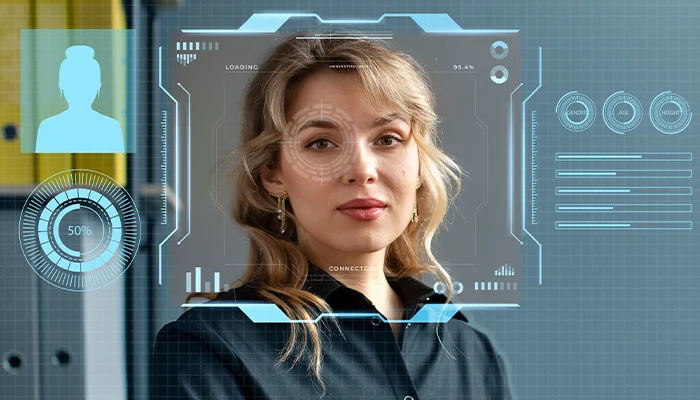
- Facial recognition AI enhances security and personalization across sectors.
- AI-driven video analytics software provides insights that improve operational efficiency.
- Deep learning vision models are at the forefront of transforming raw visual data into actionable intelligence.
- Applications span diverse fields, including healthcare, finance, eCommerce, legal, and SaaS.
- By leveraging real-time processing, organizations can respond swiftly to changing conditions.
- PerfectionGeeks specializes in developing tailored AI and computer vision solutions that meet specific enterprise needs.
- Adopting these technologies can significantly enhance analytical capabilities and drive business growth.
What is AI Image and Video Recognition?
AI image and video recognition refers to the ability of computer systems to identify and process visual information from images and videos. This technology utilizes machine learning and computer vision to analyze visual content, enabling systems to recognize patterns, objects, and even facial features. The applications of these systems are vast, spanning industries such as healthcare, security, retail, and more.
How Computer Vision Works
Computer vision involves the development of algorithms that allow computers to interpret and understand visual data. It encompasses various processes, including image acquisition, processing, and analysis. Key steps in computer vision include:
- Image Acquisition: Capturing images or video through cameras or sensors.
- Preprocessing: Enhancing image quality through techniques such as noise reduction and normalization.
- Feature Extraction: Identifying key characteristics or patterns in the data.
- Classification: Assigning labels to identified features based on learned patterns.
Core Technologies Behind Visual AI
The effectiveness of AI for image and video recognition relies on several core technologies:
- Machine Learning: Algorithms that learn from data to make predictions or decisions.
- Deep Learning: A subset of machine learning using neural networks to model complex patterns in data.
- Image Processing: Techniques that manipulate images to improve their quality or extract useful information.
Applications of Image Recognition Systems
Image recognition systems have diverse applications across various industries:
| Industry | Application | Benefit |
|---|---|---|
| Healthcare | Disease Diagnosis | Improved accuracy in identifying medical conditions from imaging data. |
| Finance | Fraud Detection | Enhanced security through real-time transaction monitoring. |
| Retail | Customer Insight | Personalized shopping experiences based on customer behavior analysis. |
Video Analytics and Real-Time Processing
Video analytics utilizes AI to analyze video data in real-time, offering applications such as surveillance, traffic monitoring, and customer behavior analysis. Key advantages include:
- Immediate Insights: Real-time processing allows for instant decision-making and response.
- Scalability: Systems can handle vast amounts of video data efficiently.
Role of Deep Learning in Vision AI
Deep learning plays a pivotal role in AI image and video recognition by enabling systems to learn from vast datasets. Convolutional Neural Networks (CNNs) are particularly effective for visual tasks, allowing for high accuracy in object detection and image classification. The ability to train on diverse datasets increases the robustness of these models, making them applicable across various scenarios.
Challenges in Visual Recognition Systems
Despite the advancements, several challenges remain in the deployment of visual recognition systems:
- Data Privacy: Concerns over how visual data is collected, stored, and used.
- Bias in Algorithms: The risk of biased outcomes based on the training data.
- Adapting to New Environments: Systems must be trained to recognize objects in diverse conditions.
Future of AI in Computer Vision
The future of AI in computer vision is promising, with continuous advancements in technology. Emerging trends include:
- Integration with IoT: Enhanced data collection and analysis capabilities through connected devices.
- Improved User Experience: More intuitive interfaces and personalized interactions.
- Regulatory Compliance: Increased focus on ethical AI practices.
In summary, organizations looking to implement AI for image and video recognition should consider the following:
- Choose AI solutions if you need to enhance data analysis and operational efficiency.
- Consider implementing computer vision in sectors with high visual data demands, such as healthcare and retail.
- Evaluate the challenges of privacy and bias to ensure responsible AI use.
Frequently Asked Questions
Quick answers related to this article from PerfectionGeeks.
1. What industries benefit from AI for image and video recognition?
2. How do object detection algorithms work in AI vision systems?
3. What challenges are involved in implementing facial recognition AI?
4. How does deep learning contribute to video analytics software?
5. What role does real-time processing play in AI for video recognition?
Conclusion
In conclusion, embracing AI for image and video recognition allows organizations to leverage powerful tools for analyzing visual data, ultimately leading to greater insights and enhanced operational effectiveness. Here are some key considerations for decision-making:
- Choose AI solutions if you need to automate image processing and enhance accuracy in data analysis.
- Consider implementing computer vision in sectors like healthcare for patient monitoring and diagnostics.
- If security is a priority, facial recognition AI can significantly bolster your efforts.
- Video analytics software is ideal for companies looking to improve retail experiences and security operations.
- For businesses in eCommerce, utilizing these technologies can enhance customer personalization and inventory management.
PerfectionGeeks stands ready to assist in integrating these advanced systems into your business processes, ensuring you stay ahead in this fast-evolving landscape. Contact us today to discover how we can help you innovate and thrive.

Shrey Bhardwaj is the Director & Founder of PerfectionGeeks Technologies, bringing extensive experience in software development and digital innovation. His expertise spans mobile app development, custom software solutions, UI/UX design, and emerging technologies such as Artificial Intelligence and Blockchain. Known for delivering scalable, secure, and high-performance digital products, Shrey helps startups and enterprises achieve sustainable growth. His strategic leadership and client-centric approach empower businesses to streamline operations, enhance user experience, and maximize long-term ROI through technology-driven solutions.