Automation
AI technologies automate repetitive tasks, enhancing efficiency.
AI applications encompass a wide range of technologies that are reshaping how businesses operate. Key areas of impact include:
What are AI Applications and Uses?
Discover how AI is reshaping various sectors with innovative solutions.
Artificial Intelligence (AI) is revolutionizing industries by enhancing efficiency, productivity, and decision-making. From healthcare to finance, its applications are driving significant changes. AI tools streamline processes, analyze vast data sets for predictive insights, and automate routine tasks, allowing businesses to focus on strategic goals. Key areas include machine learning for data analysis, natural language processing for customer interactions, and computer vision for operational efficiency. Embracing AI not only improves operational effectiveness but also creates competitive advantages in today's dynamic market.
AI technologies automate repetitive tasks, enhancing efficiency.
Utilize data-driven insights to predict trends and behaviors.
AI-driven chatbots improve customer service and engagement.
Facilitates real-time image processing for better accuracy.
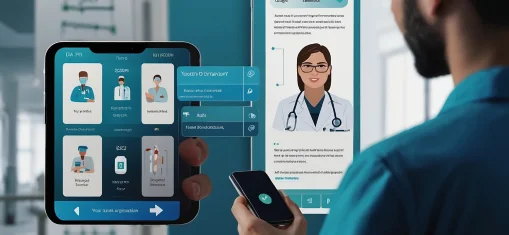
Artificial intelligence is revolutionizing the healthcare industry by improving patient outcomes, streamlining operations, and enhancing decision-making processes. AI applications, including predictive analytics and machine learning, are increasingly being utilized to diagnose diseases, personalize treatment plans, and manage patient data more effectively.
Leveraging AI for Enhanced Financial Services
| AI Application | Description |
|---|---|
| Fraud Detection | Using AI algorithms to identify unusual patterns and prevent fraudulent transactions. |
| Risk Assessment | AI systems analyze data to assess credit risk and ensure better lending decisions. |
| Personalized Banking | AI-driven tools provide tailored financial advice and product recommendations. |
| Automated Customer Service | Chatbots and virtual assistants offer 24/7 support to enhance customer experience. |
| Predictive Analytics | AI analyzes market trends to forecast future financial performance. |
Transforming the Retail Landscape with AI Solutions
AI enables manufacturers to predict equipment failures before they happen, reducing downtime and maintenance costs.
Robotic process automation powered by AI increases production speed and precision, driving higher output.
AI analyzes vast data sets to optimize inventory management and streamline supply chain logistics.
AI tools provide actionable insights that empower managers to make informed decisions quickly.
<p>Artificial Intelligence is revolutionizing the education sector by providing personalized learning experiences, automating administrative tasks, and enhancing teaching methods. AI applications in education include intelligent tutoring systems, adaptive learning platforms, and data-driven insights that assist educators in understanding student needs. These innovations not only improve student engagement but also streamline educational processes, making learning more effective and accessible.</p>
AI-driven systems that provide customized support to learners.
Personalized learning experiences tailored to individual student needs.
Streamlining operations through automation, allowing educators to focus on teaching.
Leveraging analytics to enhance student performance and engagement.
Transforming the way we manage and optimize supply chains.
AI systems analyze vehicle data to predict maintenance needs, reducing downtime and costs.
Machine learning algorithms help in selecting the most efficient routes for delivery, saving time and fuel.
Robotics and AI streamline warehouse operations, increasing productivity and accuracy.
7. Media and Entertainment
Artificial Intelligence (AI) is transforming the agricultural landscape by enhancing efficiency, productivity, and sustainability. AI applications in agriculture include precision farming, which uses data analytics and machine learning to optimize crop yields and resource usage. Technologies such as drones equipped with AI capabilities allow for real-time monitoring of crop health and soil conditions. Intelligent systems also enable farmers to predict weather patterns and manage irrigation more effectively. By integrating AI into their operations, farmers can make informed decisions, reduce waste, and improve overall productivity, leading to smarter farming practices that benefit both the environment and food supply.
Revolutionizing Customer Service through Intelligent Automation


Machine Learning (ML) is revolutionizing industries by enabling systems to learn from data and improve over time without explicit programming. In healthcare, ML helps in predicting patient outcomes and personalizing treatment plans. In finance, it detects fraudulent activities and enhances risk assessment. Retailers utilize ML for personalized recommendations and inventory management. Moreover, it underpins intelligent automation, making business operations more efficient and data-driven. By leveraging ML, organizations can streamline processes, enhance customer experiences, and drive significant growth.
Predictive Analytics
Utilizes historical data to forecast future trends.
Natural Language Processing
Enables machines to understand and respond to human language.
Computer Vision
Empowers machines to interpret and make decisions based on visual data.
Recommendation Systems
Personalizes user experiences by suggesting relevant products and services.
Enhancing Communication and Analysis Through AI
Discover how AI applications can transform your business operations.
Understanding the Process Behind AI Solutions
Exploring the Impact of Robotics and Automation in Modern Business
Robotics and automation are at the forefront of technological advancement, enabling businesses to enhance efficiency, reduce operational costs, and improve accuracy. From manufacturing to healthcare, the integration of robotic systems is transforming industries, allowing for streamlined processes and innovative solutions. Discover how robotics and automation are being leveraged in various sectors to drive growth and efficiency.
Industrial robots enhance production efficiency and reduce human error in manufacturing.
Warehouse automation increases inventory management speed and accuracy.
Robotic systems assist in surgeries and patient care, improving outcomes.
Service robots provide customer assistance and streamline operations in various sectors.
A detailed comparison of AI technologies and traditional systems.
| Feature | AI Applications | Traditional Systems |
|---|---|---|
| Adaptability | High adaptability through machine learning. | Low adaptability, requires manual updates. |
| Data Processing | Processes large datasets in real-time. | Limited processing capabilities. |
| Automation | Automates tasks and improves efficiency. | Manual intervention required for most tasks. |
| Decision Making | Supports intelligent decision-making. | Relies on predefined rules and logic. |
| Use Cases | Diverse applications across industries. | Primarily designed for specific tasks. |
Harnessing Advanced Technologies for AI Solutions
Pricing & Timelines
Starter
Most Popular
Enterprise
Explore how AI is reshaping industries through innovative applications.
Future of AI Applications
Leverage innovative AI solutions to transform your operations and drive success.
PerfectionGeeks provided excellent service from start to finish. Their team was professional, easy to work with, and delivered exactly what we needed on time. We’re very pleased with the outcome and would gladly recommend them to others.
Thanaboon Mingkaew
CEO, SMART IOT
We partnered with PerfectionGeeks for a custom accounting automation software, and the experience was excellent. Their team delivered a high-quality solution that streamlined our operations and improved efficiency. Professional, skilled, and reliable — we’re already working with them on another project.
Saarthak Gupta
Founder, Ceos Accounting Services
As COO of TRP Construction Management, I’m proud of our growth from 300 to 16,000+ SKUs and 4,000+ vendors since 2022. Thanks to Shrey Bhardwaj and Perfection Geeks for delivering scalable, future-ready technology solutions that transformed our vision into a seamless pan-India platform. Highly recommended technology partner.
Mayank Pathak
COO, TRP Construction Management

PerfectionGeeks Technologies transformed our vision into reality with innovative technology solutions. Their professionalism, timely delivery, transparent communication, and commitment to quality made the entire collaboration smooth, reliable, and highly satisfying.
Armaan
Cofounder, Kzminer

I highly recommend PerfectionGeeks Technologies for mobile and web development services. Their expertise, dedication, creative ideas, and customer-focused approach helped our business achieve impressive digital growth successfully.
Chetna
Founder CEO , Klicked

Choosing PerfectionGeeks Technologies was the best decision for our company. Their skilled developers created a user-friendly platform, provided constant assistance, and ensured exceptional performance beyond our expectations every step.
Mark
CTO, IMSMART

Working with PerfectionGeeks Technologies was an excellent experience. Their team delivered our project on time with outstanding quality, smooth communication, innovative solutions, and professional support throughout the entire development process.
Naveen
Founder Director , Way2Kart

PerfectionGeeks Technologies delivered a smooth, professional experience with excellent communication and technical expertise. Their team understood project requirements clearly, provided timely updates, and ensured high-quality results that exceeded expectations.
Srinivasa Mothay
CTO, Sethu Fishries

PerfectionGeeks Technologies impressed with their innovative solutions, responsive support, and commitment to quality. The team handled every detail professionally, delivered on time, and created a seamless experience from start to finish.
Mervin
Cofounder & CTO, Clover Infinity